A scientific article by Lecturer Dr. Aseel Amer Hadi, entitled: The Role of Artificial Intelligence in Clinical Biochemistry
Artificial Intelligence (AI) stands as one of the most prominent scientific developments of the 21st century, wielding a broad influence across the fields of medicine, pharmacy, and clinical biochemistry. Clinical biochemistry seeks to understand the chemical changes occurring in the human body and diagnose diseases based on laboratory analyses. This is precisely where AI emerges as a powerful tool for analyzing vast amounts of data and enhancing the accuracy and speed of diagnosis.
First: The Concept of Artificial Intelligence in the Medical Field
Artificial Intelligence is a branch of computer science that aims to enable machines to think, learn, and make decisions in a manner that mimics human capabilities. In the medical field, AI is used for analyzing radiological images, predicting diseases, designing drugs, and interpreting laboratory test results.
Second: Applications of AI in Clinical Biochemistry
1. Analysis of Laboratory Data
AI algorithms are used to analyze huge volumes of data generated from blood tests, urine tests, enzyme tests, and hormone tests. They are capable of detecting hidden patterns that humans might easily overlook, contributing to the early detection of chronic diseases such as diabetes, liver, and kidney diseases.
2. Automated Diagnosis
Intelligent systems can predict a patient's condition based on various test results. They compare current values with massive databases containing millions of previous results, thereby assisting the physician in making diagnostic decisions more quickly and accurately.
3. Disease Prediction and Patient Monitoring
By analyzing patient data over time, AI can predict the likelihood of the progression of certain medical conditions before clinical symptoms appear, allowing for early preventive intervention.
4. Laboratory Work Automation
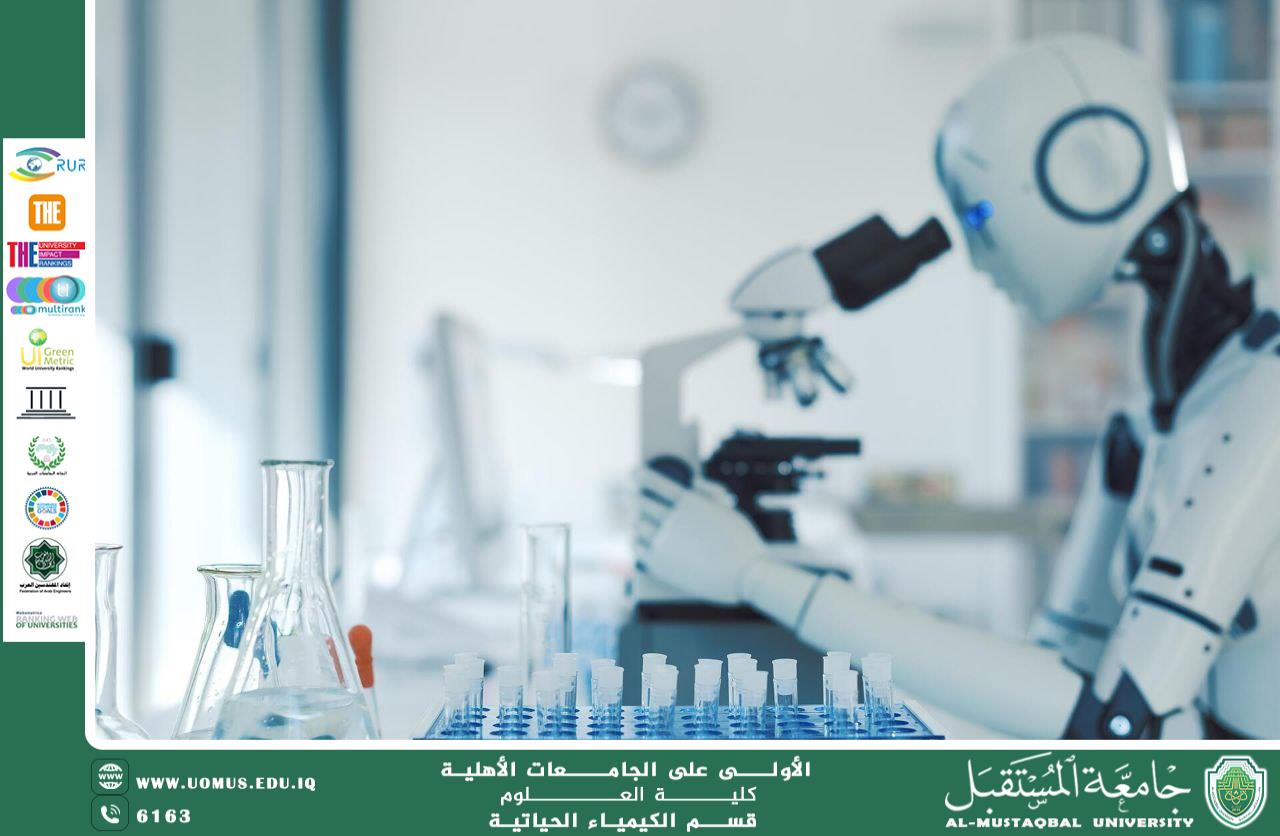
AI technologies contribute to the development of smart laboratories that operate with robotic systems capable of performing tests and analyzing results automatically. This reduces human error and saves time and effort.
5. Biomarker Discovery
AI is used to analyze molecular and proteomic data to discover new biomarkers that help diagnose diseases with higher accuracy or assess the effectiveness of treatment.
Third: Benefits and Challenges
Benefits:
· Increased diagnostic accuracy and speed.
· Reduced human error in analyses.
· Improved quality of healthcare.
· Lowered operational costs for laboratories.
Challenges:
· The need for massive, reliable data to train the systems.
· Protecting patient data privacy.
· The necessity of human expert supervision over the intelligent systems' results to ensure accuracy.
Al-Mustaqbal University, The First University in Iraq.