Air pollution control
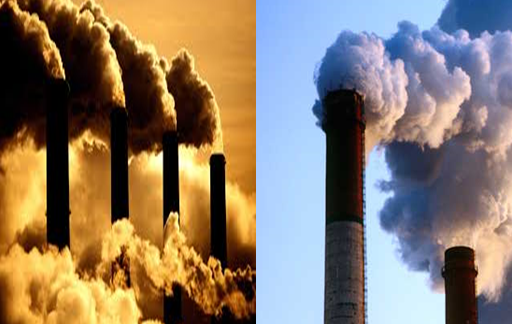
Air pollution control<br />By <br />Asst. Lect. Maryam Jawad<br />An air pollutant is a substance in the air that can have adverse effects on humans and the ecosystem. The substance can be solid particles, liquid droplets, or gases. A pollutant can be of natural origin or man-made. Pollutants are classified as primary or secondary. Primary pollutants are usually produced from a process, such as ash from a volcanic eruption. Other examples include carbon monoxide gas from motor vehicle exhaust, or the sulfur dioxide released from factories. Secondary pollutants are not emitted directly. Rather, they form in the air when primary pollutants react or interact. Ground level ozone is a prominent example of a secondary pollutant. Some pollutants may be both primary and secondary: they are both emitted directly and formed from other primary pollutants.<br />Health & Environmental Effects of Air Pollution<br />1. Health Effects<br />Air pollution can harm us when it accumulates in the air in high enough concentrations. People exposed to high enough levels of certain air pollutants may experience: <br />1. Irritation of the eyes, nose, and throat <br />2. Wheezing, coughing, chest tightness, and breathing difficulties<br />3. Worsening of existing lung and heart problems, such as asthma<br />4. Increased risk of heart attack<br />In addition, long-term exposure to air pollution can cause cancer and damage to the immune, neurological, reproductive, and respiratory systems. In extreme cases, it can even cause death. <br />Environmental Effects<br />1. Acid rain<br />is precipitation containing harmful amounts of nitric and sulfuric acids. These acids are formed primarily by nitrogen oxides and sulfur oxides released into the atmosphere when fossil fuels are burned.<br />2. Eutrophication <br />is a condition in a water body where high concentrations of nutrients (such as nitrogen) stimulate blooms of algae, which in turn can cause fish kills and loss of plant and animal diversity.<br />3. Haze <br />is caused when sunlight encounters tiny pollution particles in the air. Haze obscures the clarity, color, texture, and form of what we see. <br />4. Effects on wildlife<br />Toxic pollutants in the air, or deposited on soils or surface waters, can impact wildlife in a number of ways. Like humans, animals can experience health problems if they are exposed to sufficient concentrations of air toxics over time.<br />5. Ozone depletion<br />Ozone is a gas that occurs both at ground-level and in the Earth's upper atmosphere, known as the stratosphere. At ground level, ozone is a pollutant that can harm human health. In the stratosphere, however, ozone forms a layer that protects life on earth from the sun's harmful ultraviolet (UV) rays. But this "good" ozone is gradually being destroyed by man-made chemicals referred to as ozone-depleting substances, including chlorofluorocarbons, hydro chlorofluorocarbons, and haloes.<br />6. Crop and forest damage<br />Air pollution can damage crops and trees in a variety of ways. Ground-level ozone can lead to reductions in agricultural crop, crop and forest damage can also result from acid rain and from increased UV radiation caused by ozone depletion. <br />7. Global climate change<br />The Earth's atmosphere contains a delicate balance of naturally occurring gases that trap some of the sun's heat near the Earth's surface. This "greenhouse effect" keeps the Earth's temperature stable. Unfortunately, evidence is mounting that humans have disturbed this natural balance by producing large amounts of some of these greenhouse gases, including carbon dioxide and methane. As a result, the Earth's atmosphere appears to be trapping more of the sun's heat, causing the Earth's average temperature to rise - a phenomenon known as global warming.<br />