Insect Environment at the Crime Scene: An Advanced Forensic Study (M.M. Howayda Nazzal Hussein)
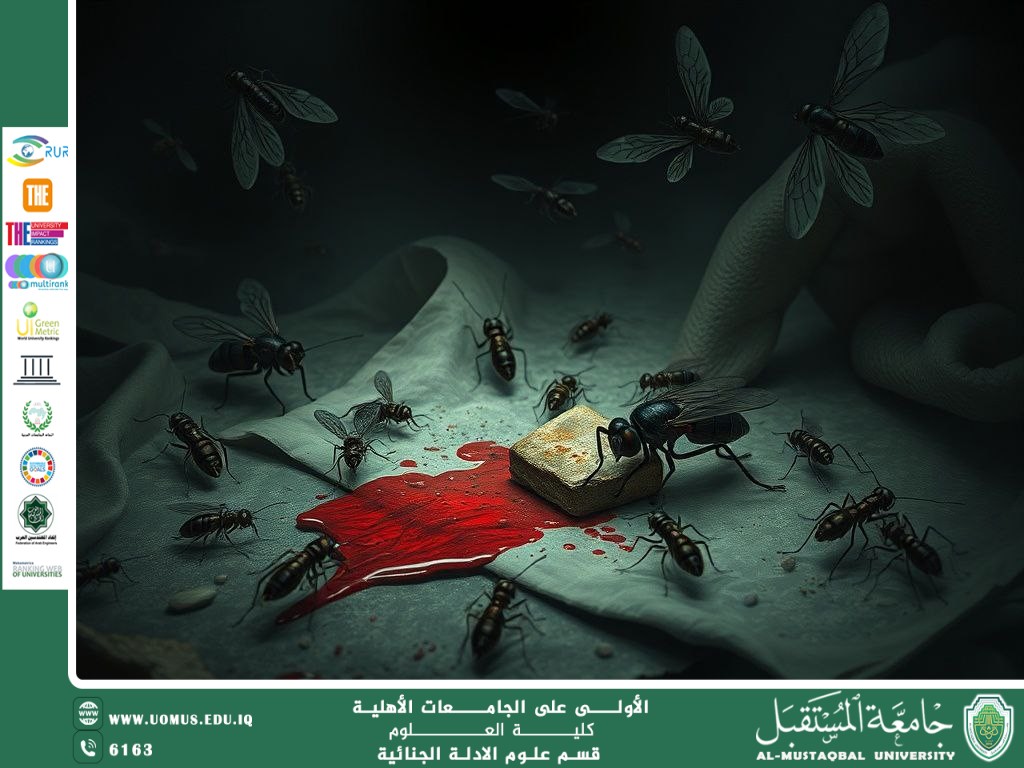
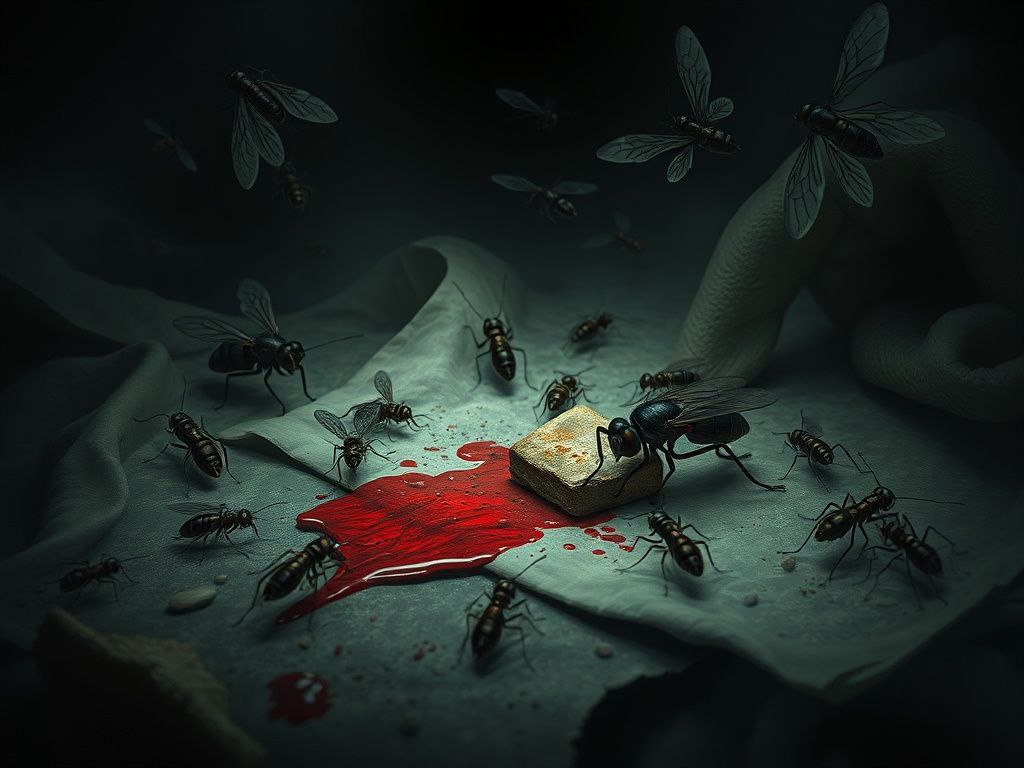
The insect environment at a crime scene represents one of the most advanced areas in forensic science. Forensic entomology is the study of insects associated with decomposing remains, providing valuable information about the postmortem interval (PMI) — the time that has elapsed since death.
Certain species, especially blowflies (Calliphoridae), are among the first to colonize a corpse, often arriving within minutes after death. They lay their eggs in moist body openings such as the mouth, nose, and eyes. By analyzing the developmental stages of these insects — from eggs to larvae, pupae, and finally adults — forensic experts can accurately estimate the time of death.
In addition to time estimation, the types of insects present can reveal whether a body has been moved from one location to another, since insect populations differ between urban and rural areas and vary with seasonal changes.
Moreover, insects can assist in detecting toxins or drugs present in a body, as larvae feeding on the tissues absorb these substances, allowing laboratory toxicological analysis even when human tissues are no longer viable.
In summary, studying the insect environment at crime scenes provides a powerful investigative tool that combines biology, ecology, and forensic medicine to deliver precise scientific evidence and uncover the truth behind suspicious deaths.
Al-Mustaqbal University – the first university in Iraq.
SDG4