Developing the Smart Cane for the Care of the Blind People
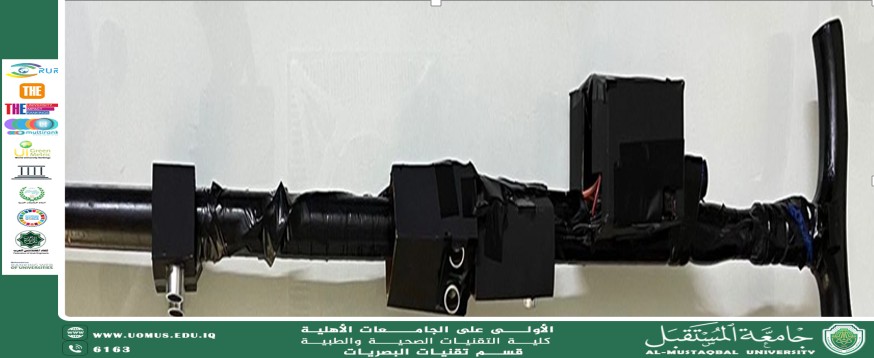
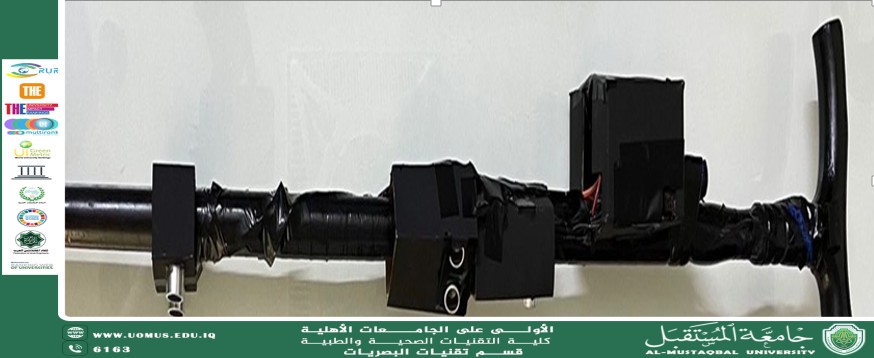
A Scientific Article by Asst. Prof. Dr. Munther Sameen Shakir, Head of the Department of Optics Technologies, The project involves designing and manufacturing a smart cane to serve individuals with special needs, particularly the blind and visually impaired, in order to enhance their safety. The cane is equipped with sensors connected to an electronic circuit that detects different types of obstacles in front of the user, on the sides, and even when ascending stairs. It also identifies obstacles encountered at various angles (from 30° to 75°) and alerts the user when crossing streets with vehicles of different sizes within a distance of 3 meters—without requiring assistance from others.
The cane provides alerts in the form of vibrations, audio signals, or both when approaching an obstacle at a distance of 2 meters, with increased alert intensity at 1 meter. It has been further developed to address several additional types of obstacles.
The new design is simple and includes a tracking device that identifies the blind user’s location in case of an accident or collision. The device can be placed anywhere convenient for the user and sends the location to family members or caregivers to reach them when needed, ensuring their safety.
The cane is manufactured in different heights (1 meter), and it features a noticeable reduction in weight—approximately 50 grams. It can be controlled through a switch and uses a solar panel to charge the battery at 9 volts.
Beneficiary Entities:
Ministry of Health
Ministry of Labor and Social Affairs
Specialized health centers for the blind
Community groups of people with special needs
The smart cane has enabled blind individuals to rely on themselves while navigating roads without needing assistance from others. It has been tested in Baghdad.
We have obtained a patent—an Intellectual Property Certificate—with the project team from the Central Organization for Standardization and Quality Control, Ministry of Planning.