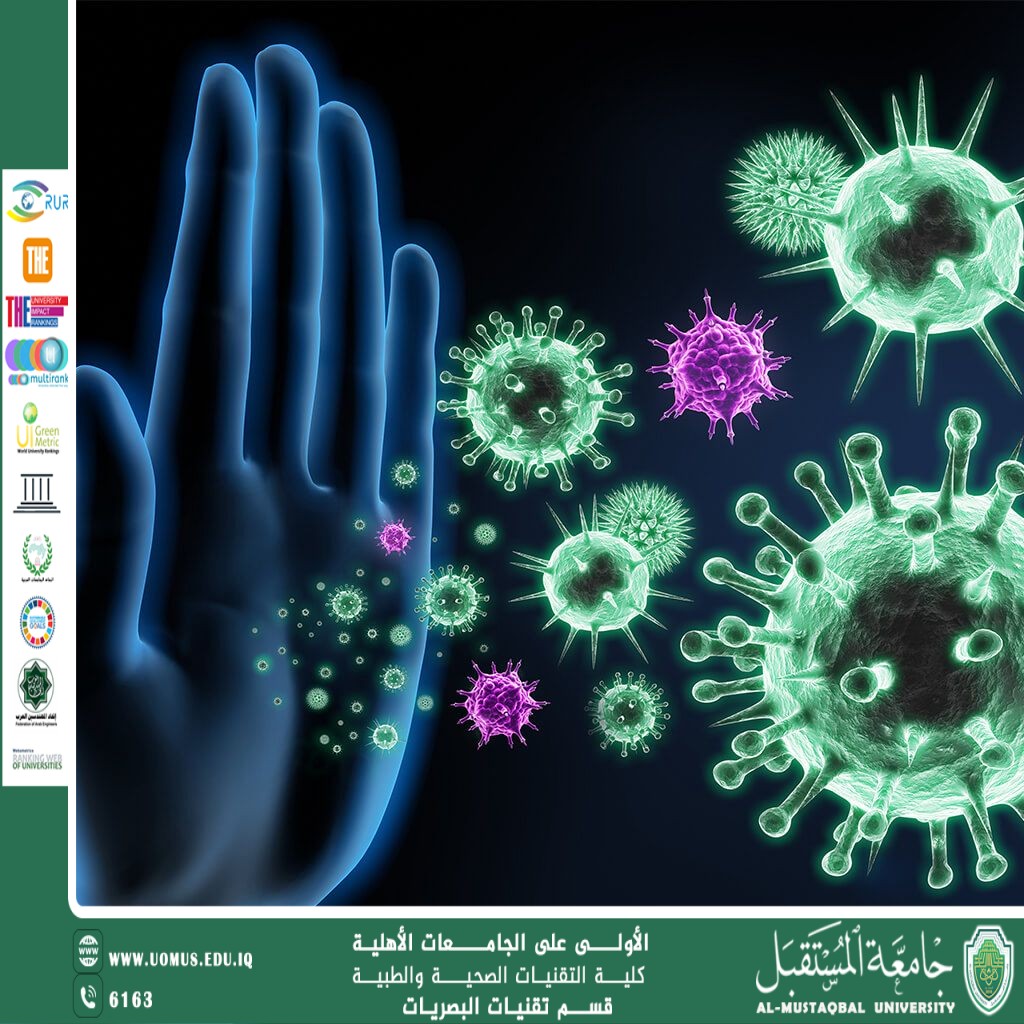
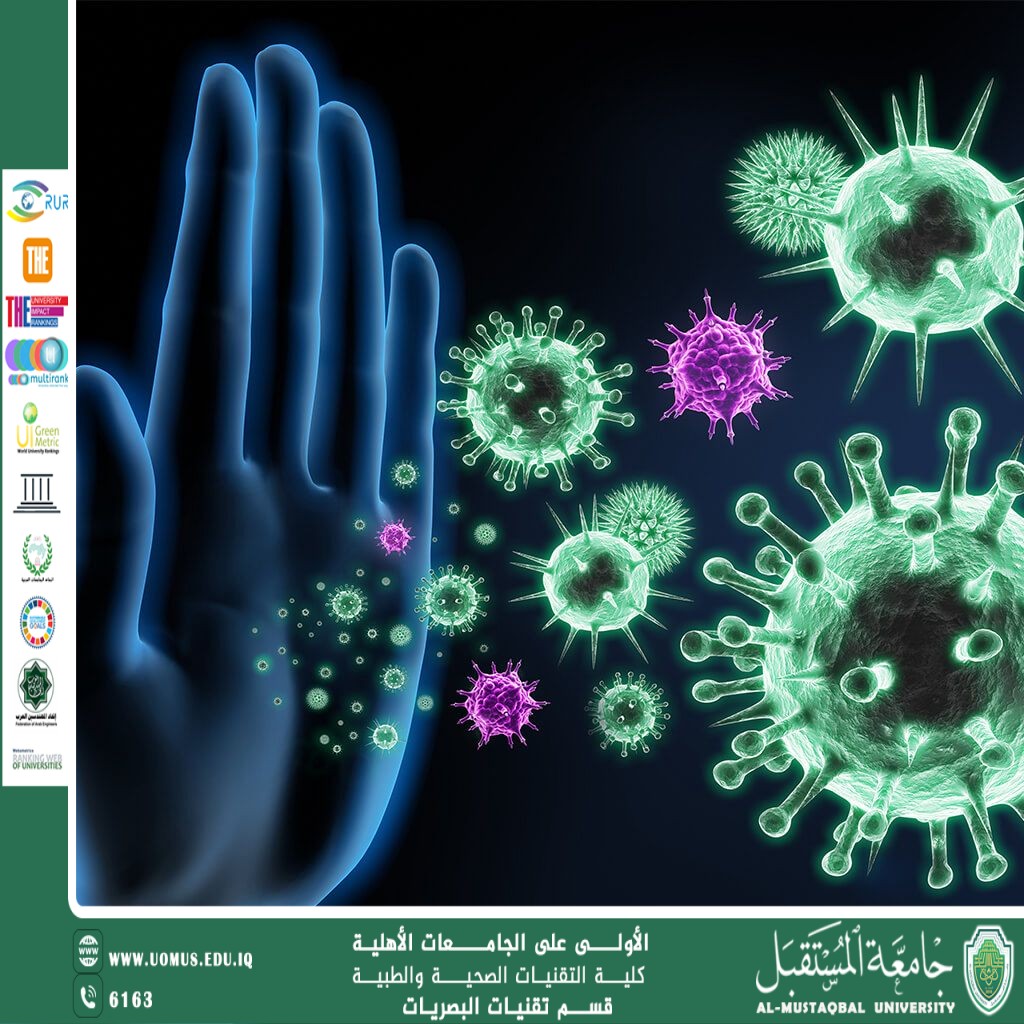
"A scientific article by Ms. Islam Fadel titled “Viruses: How They Work and How the Immune System Fights Them
1. What Are Viruses?
Viruses are extremely small, ranging in size from 20 to 300 nanometers. They consist of genetic material (either DNA or RNA) surrounded by a protein coat called a capsid, and sometimes a lipid envelope.
What distinguishes viruses is that they cannot reproduce on their own; they must infect a living cell and hijack its cellular machinery to replicate. For this reason, scientists classify them as “obligate intracellular parasites.”
2. How Do Viruses Work?
When a virus infects a host, it follows a specific process known as the viral life cycle:
1. Attachment: The virus binds to the surface of the target cell through specific receptors.
2. Entry: The virus or its genetic material enters the host cell.
3. Replication and Translation: The virus uses the host’s cellular machinery to replicate its genetic material and produce viral proteins.
4. Assembly: New viral components are assembled into complete virions.
5. Release: Newly formed viruses exit the cell to infect other cells, often causing cell death.
This rapid process is why viruses like influenza or coronavirus can spread quickly in the body.
3. How Does the Immune System Fight Viruses?
The immune system is the body’s main defense against viruses, operating on two levels:
Innate Immunity (Rapid Response):
This is the first line of defense when a virus enters the body.
• Cells like phagocytes and natural killer (NK) cells attack infected cells.
• Chemical signals called interferons are released to prevent the virus from replicating in neighboring cells.
Adaptive Immunity (Specialized Response):
This response develops after a few days and is more precise and effective.
• T lymphocytes (T cells) directly attack infected cells.
• B lymphocytes (B cells) produce antibodies that bind to the virus and prevent it from entering cells.
• After the infection is cleared, some immune cells remain as memory cells, ready to recognize the virus quickly if reinfection occurs.
4. Vaccines and Their Role
Vaccines are one of the greatest achievements of modern medicine. They train the immune system to recognize a virus without causing the disease.
When vaccinated, the body produces antibodies and memory cells, providing long-term protection against infection.
Conclusion
Despite their structural simplicity, viruses demonstrate remarkable complexity in how they replicate and evade the immune system. Thanks to advances in immunology and genetics, humans can now better understand these microscopic organisms and develop effective preventive strategies, especially vaccines.
The battle between viruses and the immune system is a constant struggle between life and death, adaptation and resistance, making the study of viruses one of the most important and fascinating fields in biology.