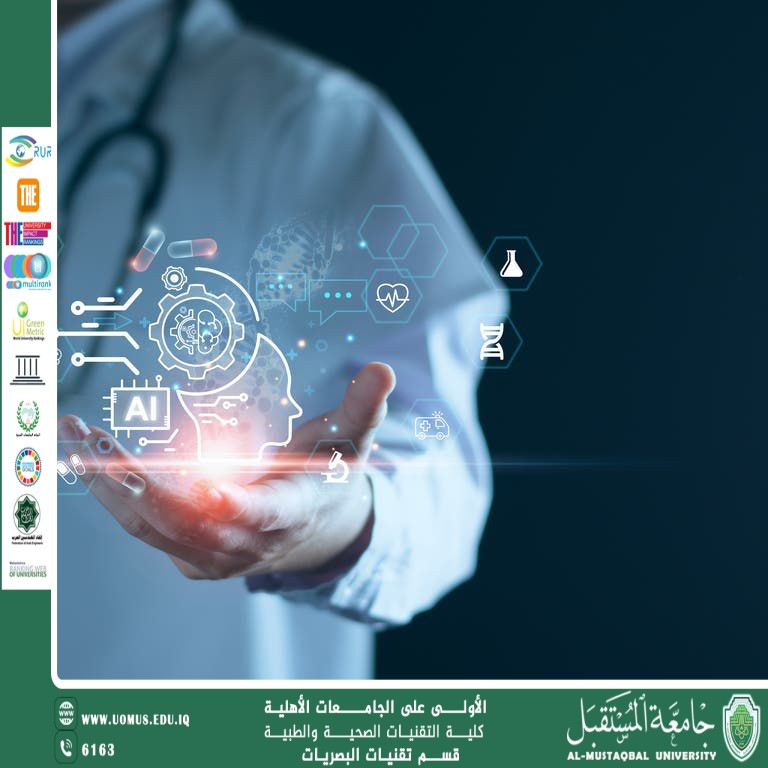
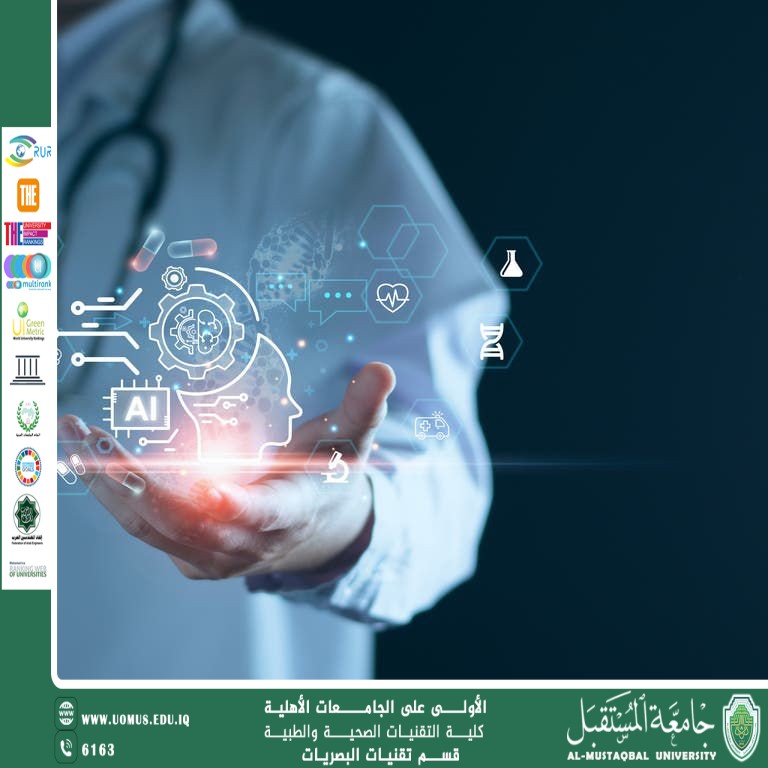
"A scientific article by Ms. Islam Fadel titled "Artificial Intelligence in Medical Disease Diagnosis
What is Artificial Intelligence in Medicine?
Artificial Intelligence refers to the ability of computer systems to simulate human thinking and learn from data to make intelligent decisions.
In the medical field, AI is used to analyze large amounts of medical data such as X-rays, medical records, and laboratory results to identify patterns that help in early diagnosis and effective treatment.
Applications of AI in Disease Diagnosis
1. Medical Imaging Analysis:
AI systems use advanced algorithms to analyze X-rays, MRI scans, and CT scans to detect tumors or subtle abnormalities that might be missed by the human eye.
Example: Google DeepMind systems have achieved accuracy comparable to doctors in diagnosing eye diseases and cancer.
2. Diagnosis of Chronic Diseases:
AI can predict the onset of diseases such as diabetes and heart disease by analyzing patients’ lifestyles and vital data, enabling early prevention.
3. Genetic Data Analysis:
AI is used to study the human genome to identify genetic mutations associated with hereditary diseases and to develop personalized treatments.
4. Smart Medical Robots:
Some robotic systems are capable of collecting vital patient data, diagnosing minor conditions, or assisting in surgeries with exceptional precision.
Advantages of AI in Diagnosis
• Speed and Accuracy: Reduces human error and accelerates diagnosis.
• Ability to Analyze Large Data Sets: AI can process vast amounts of data beyond human capability.
• Early Detection: Enables the identification of diseases at early stages, increasing the chances of successful treatment.
Challenges and Risks
Despite its great potential, AI faces several challenges:
• The need for large, high-quality medical datasets to train models.
• Privacy concerns regarding the security of health information.
• Difficulty in interpreting AI decisions (known as the “black box” problem).
• The necessity for medical supervision to ensure accuracy and prevent misdiagnosis.
Conclusion
Artificial Intelligence has become one of the most important tools in medical disease diagnosis, combining speed, precision, and deep data analysis. As technology continues to evolve, AI is expected to integrate even more with human expertise, shaping the future of intelligent and data-driven healthcare.