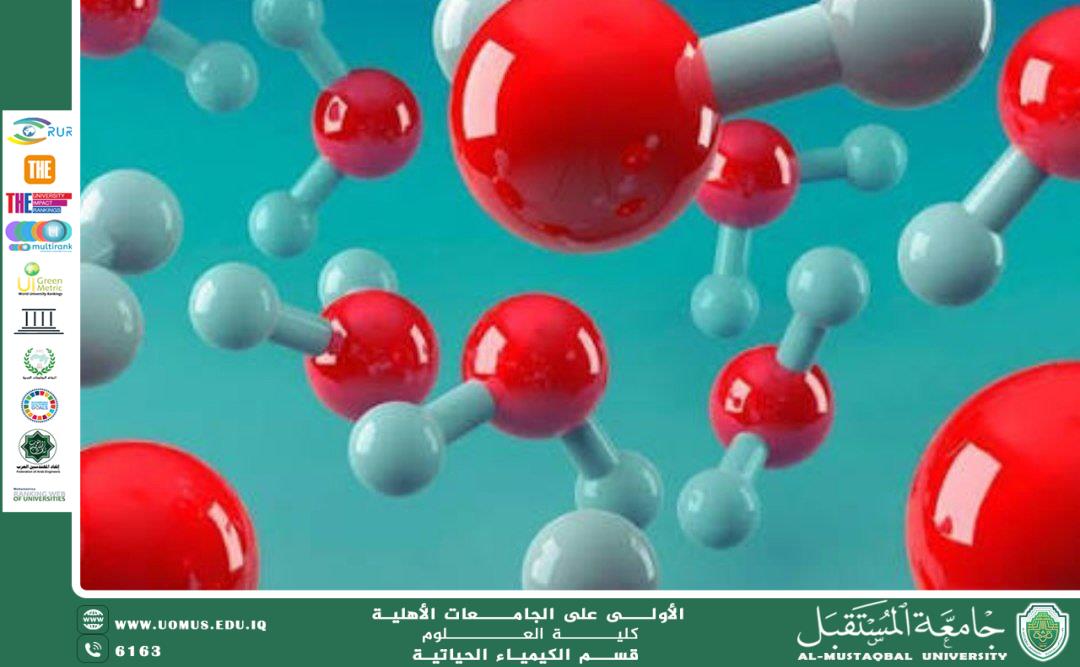

A scientific article for Lecturer M.M. estabraq Arif Mohammad entitled: How do supercomputers predict the behavior of molecules?
In the realm of computational chemistry, laboratory experiments are no longer the sole method for understanding molecular behavior. Supercomputers have become revolutionary tools that enable us to see what the naked eye cannot and predict molecular behavior with astonishing accuracy.
Scientific Foundations of Molecular Prediction:
· Quantum Mechanics: Calculates electron wave functions and their distribution around the nucleus
· Molecular Dynamics: Simulates the movement of atoms and molecules over time
· Mathematical Algorithms: Solves complex Schrödinger equations with millions of variables
Advanced Simulation Techniques:
· Monte Carlo Simulation: Uses statistical randomness to reach optimal solutions
· DFT Methods: (Density Functional Theory) for analyzing electronic structures
· Specialized Software: Such as Gaussian, VASP, and NAMD
Amazing Real-World Applications:
· Drug Design: Predicting how molecules bind to target proteins
· Material Development: Discovering new materials with desired properties before manufacturing
· Energy:
· Designing more efficient batteries
· Developing chemical catalysts to reduce energy consumption
· Environment:
· Studying pollutant degradation
· Designing materials for air and water purification
Live Example: Combating COVID-19
Supercomputers helped identify:
· The structure of the virus's Spike protein
· How it binds to cell receptors
· Designing drug molecules that prevent this binding
Challenges and Future:
· Computing Power: Accurate calculations require massive processing power
· Artificial Intelligence: Integrating machine learning to accelerate computational processes
· Quantum Computing: The upcoming revolution that will transform molecular simulation concepts
Al-Mustaqbal University, The First University in Iraq.