
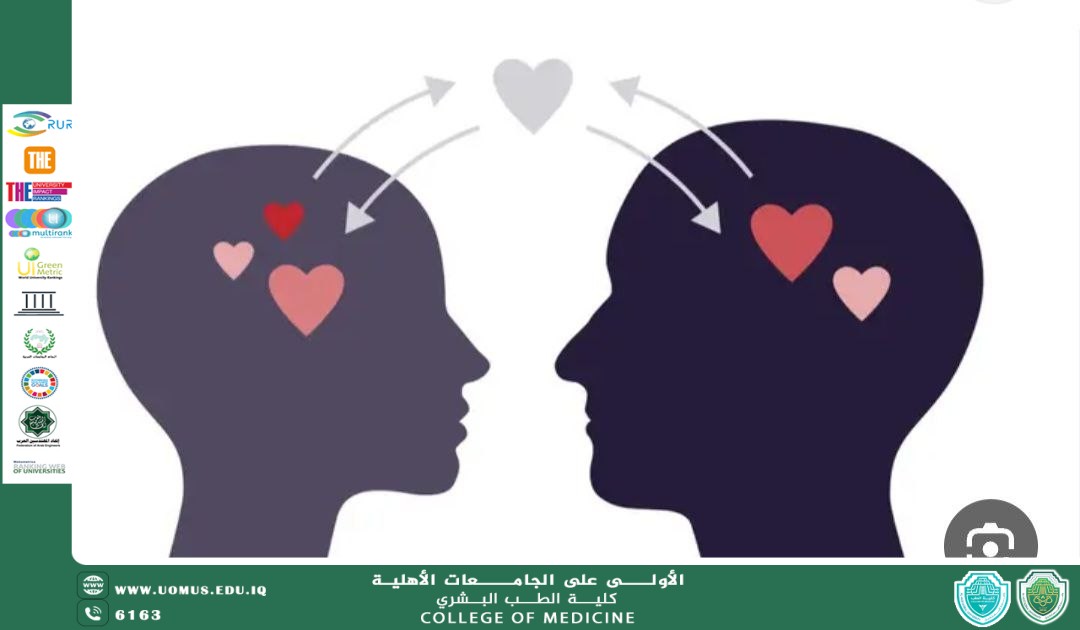

Physiological Study on the Relationship Between Oxytocin Hormone and Strengthening Social Bonding Among People
Abstract
Oxytocin is one of the most important neurohormones secreted by the hypothalamus and released from the posterior pituitary gland. Although it was first discovered for its role in labor and milk ejection, recent research has revealed its profound influence on enhancing social connections, emotional regulation, trust, and cooperation among individuals.
Oxytocin strengthens social bonding through its regulatory effects on the central nervous system, interaction with dopaminergic reward pathways, and reduction of stress responses.
1. Introduction
Social bonding represents a fundamental pillar of human emotional and psychological stability. Oxytocin has been identified as a key physiological factor that connects humans to their social and emotional surroundings.
It is secreted in response to positive social stimuli such as touch, affection, eye contact, and emotional support, leading to a sense of safety and closeness between individuals.
2. Physiological Mechanisms of Oxytocin in Social Bonding
A. Central Neural Effects
• Oxytocin acts through specific receptors (OXTR) concentrated in the amygdala, prefrontal cortex, and nucleus accumbens — brain regions responsible for emotion regulation, social cognition, and trust formation.
• Elevated oxytocin levels decrease amygdala activity (the fear center), facilitating social communication and increasing emotional security.
B. Interaction with the Neural Reward System
• Oxytocin activates dopaminergic circuits within the ventral tegmental area (VTA) and nucleus accumbens, producing feelings of pleasure and reward during social interactions.
• This neurochemical reinforcement makes social behavior intrinsically rewarding, encouraging stronger and more lasting social bonds.
C. Regulation of Stress and Emotional Stability
• Oxytocin acts as a physiological stress buffer by inhibiting the hypothalamic–pituitary–adrenal (HPA) axis, reducing cortisol secretion.
• This action lowers anxiety and promotes emotional calmness, creating a stable environment for healthy social interaction.
D. Role in Social Memory and Recognition
• Oxytocin improves social memory—the ability to recognize and remember familiar faces and previous interactions.
• This function is essential for maintaining long-term human relationships and social cohesion.
3. Clinical and Research Implications
• Autism Spectrum Disorder (ASD): Intranasal oxytocin has been shown to improve social communication and eye contact.
• Depression and Social Anxiety: It reduces fear of social situations and enhances interpersonal trust.
• Family and Romantic Bonds: Oxytocin increases emotional responsiveness and promotes intimacy and attachment.
4. Conclusion
Oxytocin is a principal regulator of human social relationships.
Through its actions on emotional, reward, and stress-regulating neural pathways, it enhances trust, empathy, and emotional connection while reducing fear and anxiety.
Thus, oxytocin represents a physiological bridge between body and emotion, and between brain and social behavior.
Its multifaceted role highlights its importance in maintaining both psychological and interpersonal well-being.
Al-Mustaqbal University — Ranked First Among Private Universities.