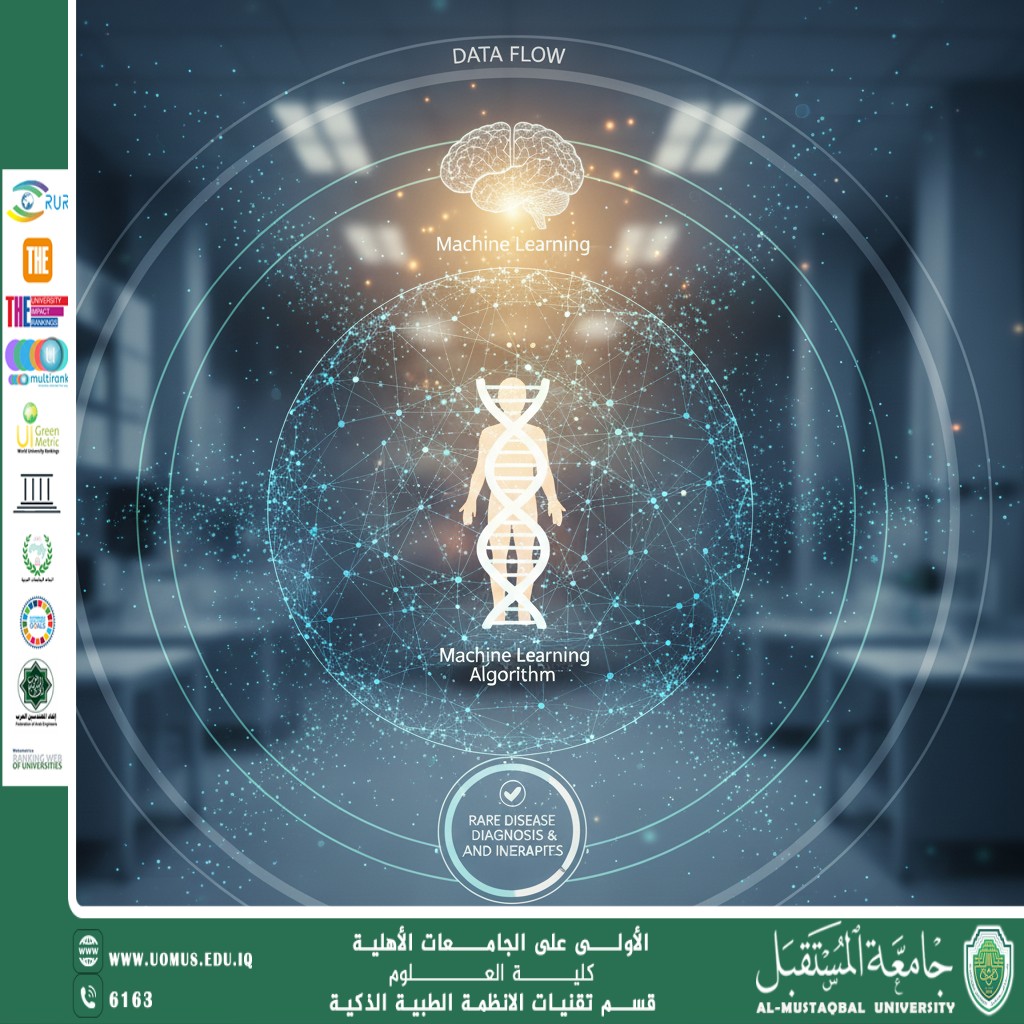

give me a picture about Machine Learning for Phenotype–Genotype Matching in Rare Diseases
Medical imaging analysis is a promising AI application for diagnosing rare diseases, particularly when conditions exhibit distinctive but infrequent imaging signatures. Convolutional neural networks (CNNs) and deep learning techniques automatically extract features from X-rays, MRI scans, and microscopy images. These networks can detect subtle patterns invisible to the human eye, such as minor tissue alterations or atypical cellular arrangements. Success requires accurately labeled, large datasets — a major hurdle in rare diseases. Transfer learning, data augmentation, and multicenter datasets are strategies to increase data diversity. Integrating imaging results with clinical and genomic information enhances discrimination between pathological and benign variations. Transparency and interpretability remain essential; clinicians need to understand how a model reaches decisions before clinical adoption. Early studies suggest AI-augmented systems can act as diagnostic assistants, improving detection sensitivity and speed, though they do not replace comprehensive clinical evaluation.