Abuse of the right to property in Iraqi civil law (M.M.Fatima Abbas Barhi)
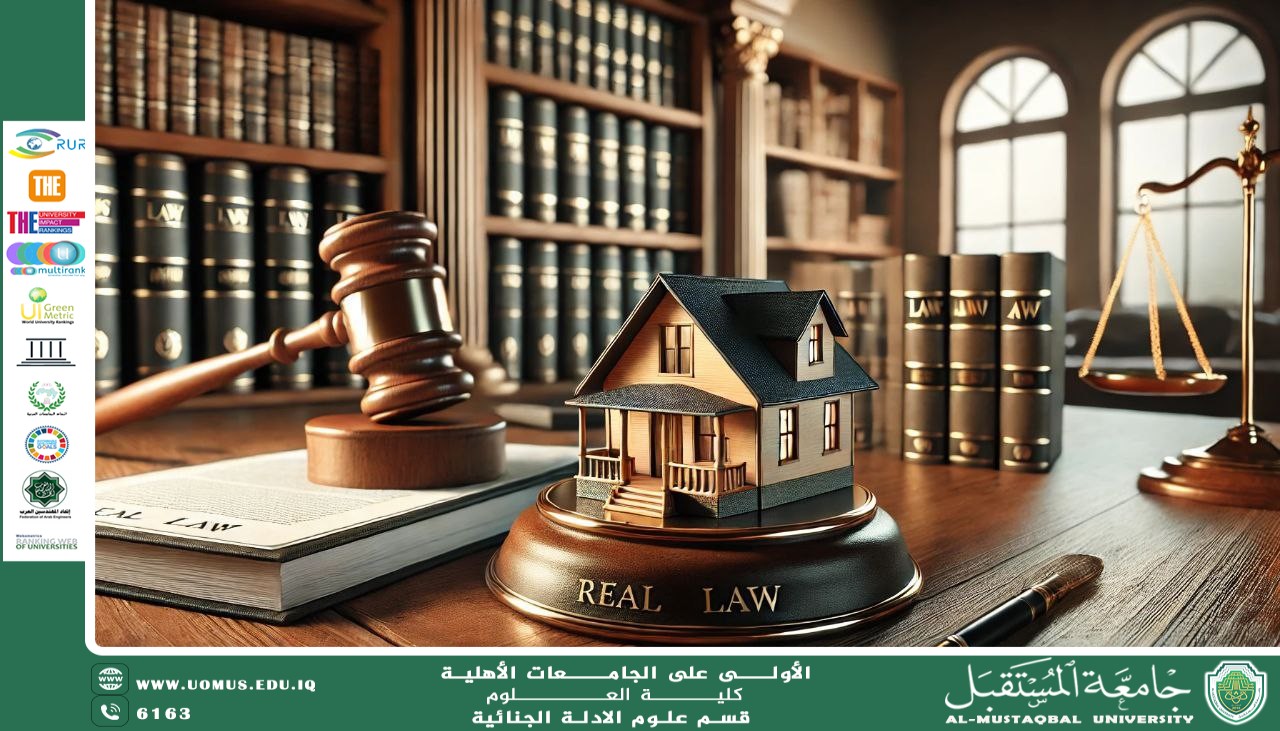
The right to property is one of the broadest real rights granted by law, as it allows its owner the authority to use, exploit, and dispose of within the limits of the law. However, this freedom is not absolute, as using the right illegally may lead to harm to others. Hence the idea of arbitrariness in the use of the right as a legal and moral restriction that limits the exercise of this right, in order to achieve a balance between the interest of the owner and the interests of society and individuals.
First: The concept of arbitrariness in the use of property rights
Abusive use of property rights means that the owner exceeds the limits set by the law for using his right, such that he uses it in a way that harms others without achieving a legitimate interest for himself.
Although the right to ownership grants its owner broad authority, it is restricted by the principle of not harming others, which is a well-established principle in Islamic law taken from the noble hadith:
“No harm, no foul.”
Second: The legal basis for the principle of non-arbitrariness in the use of the
rightThe Iraqi Civil Law No. (40) of 1951 includes several texts that emphasize the necessity of using rights legitimately and not harming others, the most important of which are:
Article (6):
“The right must be used and fulfilled in good faith.”
This article is a general rule that requires the right holder to act with integrity and not to use his right to achieve illegal purposes.
Article (7):
“Whoever uses his right in a lawful manner shall not be responsible for the harm that results from that, provided that the use of the right is unlawful if it is only intended to harm others, or if the interests it aims to achieve are not proportionate to the harm that befalls others, or if the intent is to achieve an unlawful interest.”
This article is the direct basis for the principle of non-arbitrariness in the use of the right, as it specifies three cases in which the use of the right is considered unlawful.
Article (8):
“The use of the right may not cause harm to others, and if harm occurs, compensation must be made.”
This article establishes civil liability for damage resulting from abuse of the right.
Article (105):“Anyone who causes harm by his act or omission, if it was intentional or negligent, and that act was unlawful, is obligated to compensate.”
This article is considered a general rule for tort liability, and also includes cases of abuse of the right as an unlawful act.
That is, the penalty resulting from arbitrariness is the owner's obligation to compensate for the damage caused by his arbitrariness.
Third: Forms of abuse in the use of property rights
Abuse of property rights takes many forms, including:
1. Causing harm to a neighbor without a real interest, such as someone who builds a high wall that blocks light or air with the intention of causing harm.
2. Unusual or harmful use of the property, such as making noise or smell that harms neighbors.
3. Depriving others of legitimate benefit, such as preventing the passage of water or electricity without a legitimate reason.
4. Leaving the property unused with the intention of harming others, such as someone who refuses to repair a shared wall, causing harm to the neighbor.
Fourth: Judicial applications of the principle of arbitrariness
The Iraqi Court of Cassation enshrined the principle of arbitrariness in many rulings. It decided, for example, that an owner who erects a building that blocks light and air from his neighbor without a legitimate justification is considered arbitrary, and that the right Is protected to the extent of the legitimate purpose of its use, not in a way that leads to harm to others.
In another decision of the Iraqi Federal Court of Cassation No. (1043) – issued on March 10, 2008 (3/10/2008), the court applied the principle of arbitrariness to determine compensation in the case of a divorce that was considered “arbitrary” or unjustified, and confirmed that the cause of harm (such as inflicting a divorce without reasonable justification) could be a reason for the obligation to compensate – that is, it showed the expansion of the principle of arbitrariness to include applications in personal status and non-material matters.As well as a discriminatory principle issued by the civil judiciary (mentioned on 1/25/2007 in the circulating judicial references), the judge numbered the discriminatory principle related to suing municipalities and the rights of the plaintiff regarding building permits (where the court undermines the necessity of relying on experience before ruling that the discriminator is not arbitrarily in using his right to grant permission). This principle highlights that denying a right or rejecting justified compromises may not amount to arbitrariness if there are administrative or legal requirements.
Fifth: The penalty resulting from arbitrarinessWe conclude from the texts of Articles (7), (8) and (105) of the Iraqi Civil Code set forth above that if it is proven that the owner has abused his right, this results in:
1.Eliminate harm or stop arbitrary action by court order.
2.Obligating the owner to compensate for damages caused to others.
3.The action is considered invalid or illegal if its purpose is only to harm.
The judge is not satisfied with financial compensation only, but may impose additional penalties depending on the nature of the case, such as:
1.Removal of damage (such as an order to demolish a wall or stop a particular use).
2.Stop arbitrary behavior.
3.Restoring the situation to what it was before the arbitrariness.These penalties are based on the discretionary authority of the civil judge.
Fifth: The principle of non-arbitrariness in the use of property rights is one of the most important restrictions that ensure a balance between the freedom of individuals and the protection of the rights of others. The Iraqi Civil Code, by adopting the texts of Articles (6 to 8), embodied the spirit of Islamic and humanitarian justice that rejects harming others under the guise of exercising the right. Therefore, the use of the right must be to achieve a legitimate goal, not to harm or harass, otherwise it will turn from a right into an illegal means that requires responsibility and compensation.
Al-Mustaqbal University – the first university in Iraq.
SDG4