The World Mosquito Program: Fighting Diseases the Smart Way
As part of our commitment to promoting global health awareness and scientific innovation, the College of Medicine, University of Al-Mustaqbal highlights inspiring initiatives that make a real difference in public health. One of the most remarkable examples is the World Mosquito Program (WMP), a creative, science-based effort to reduce mosquito-borne diseases around the world.
A New Hope Against Mosquito-Borne Diseases
Mosquitoes are tiny, but they cause some of the world’s biggest health problems. Every year, millions of people get sick from diseases like dengue, Zika, chikungunya, and yellow fever, all spread by mosquitoes. Traditional methods such as spraying insecticides or removing standing water help, but they aren’t always enough. That’s why scientists created something new and exciting, the WMP.
What Is the World Mosquito Program?
The World Mosquito Program is a global non-profit organization that uses science to protect communities from mosquito-borne diseases. Instead of trying to kill mosquitoes, WMP works by making them less dangerous to humans.
How Does It Work?
The secret lies in a friendly bacterium called Wolbachia.
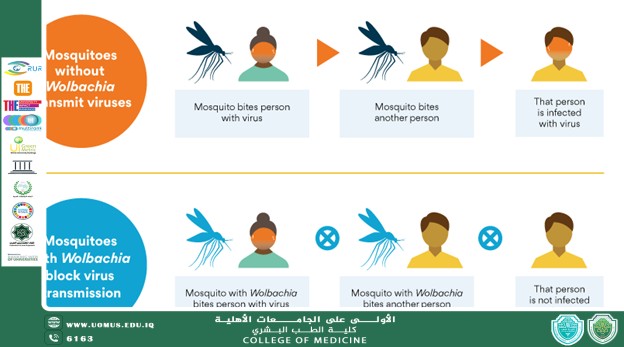
This bacterium is naturally found in many insects, but not in the Aedes aegypti mosquito, which spreads dengue and Zika. Scientists found that when Aedes aegypti mosquitoes carry Wolbachia, they can no longer easily spread viruses to people.
So, WMP breeds mosquitoes that contain Wolbachia and releases them into the environment. These mosquitoes then mate with wild ones and pass Wolbachia to their offspring.
Over time, most mosquitoes in the area carry Wolbachia — and disease transmission drops significantly!
When the WMP first starts releasing both male and female Wolbachia-carrying mosquitoes, two things happen simultaneously: (figure 1)
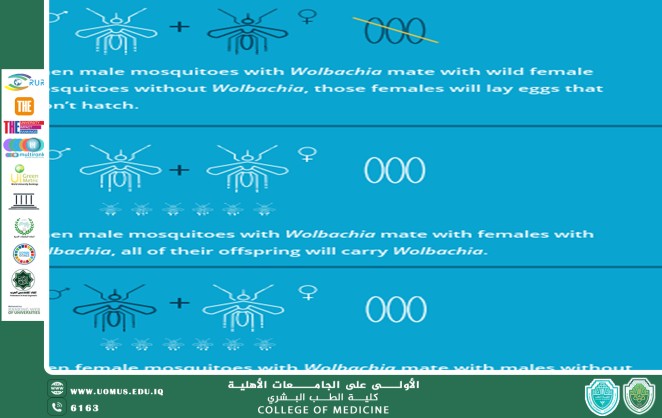
1. Suppression: The released Wolbachia males mate with wild females (without Wolbachia). Due to cytoplasmic incompatibility, these pairings produce eggs that do not hatch. This suppresses the wild population.
2. Replacement (The WMP's Goal): The released Wolbachia females mate with any male (wild or Wolbachia). Because the Wolbachia is passed from the mother, all of her eggs hatch and are Wolbachia-carriers.
Why This Method Is So Smart
• Safe: Wolbachia doesn’t harm people, animals, or the environment.
• Sustainable: Once established, the bacteria stay in the mosquito population naturally.
• Proven: Studies in countries like Indonesia and Brazil showed huge reductions in dengue cases, up to 77% fewer infections.
• The WMP's revolutionary outcome is the change in the mosquito's vector competence, not a reduction in its numbers. (figure 2)
A Global Team Effort
The program started in Australia and has now expanded to many countries across Asia, Latin America, and Oceania. Each project involves not only scientists and health authorities but also local communities, who learn about and participate in the program.
This collaboration ensures long-term success and helps people take ownership of their own public health.
Why It Matters to Medical Students
For us in the medical field, the World Mosquito Program is more than just a public health story, it’s an inspiring example of how science, teamwork, and community engagement can create real change. It reminds us that innovative thinking can solve even the toughest health challenges.
In Summary
The World Mosquito Program turns the fight against disease into a smart, sustainable, and community-driven mission.
By working with nature instead of against it, this program offers new hope for a healthier world, one mosquito at a time.
By: Assistant Professor Dr. Abdulhusein Mizhir Almaamuri
Al-Mustaqbal University ranks first among private universities.