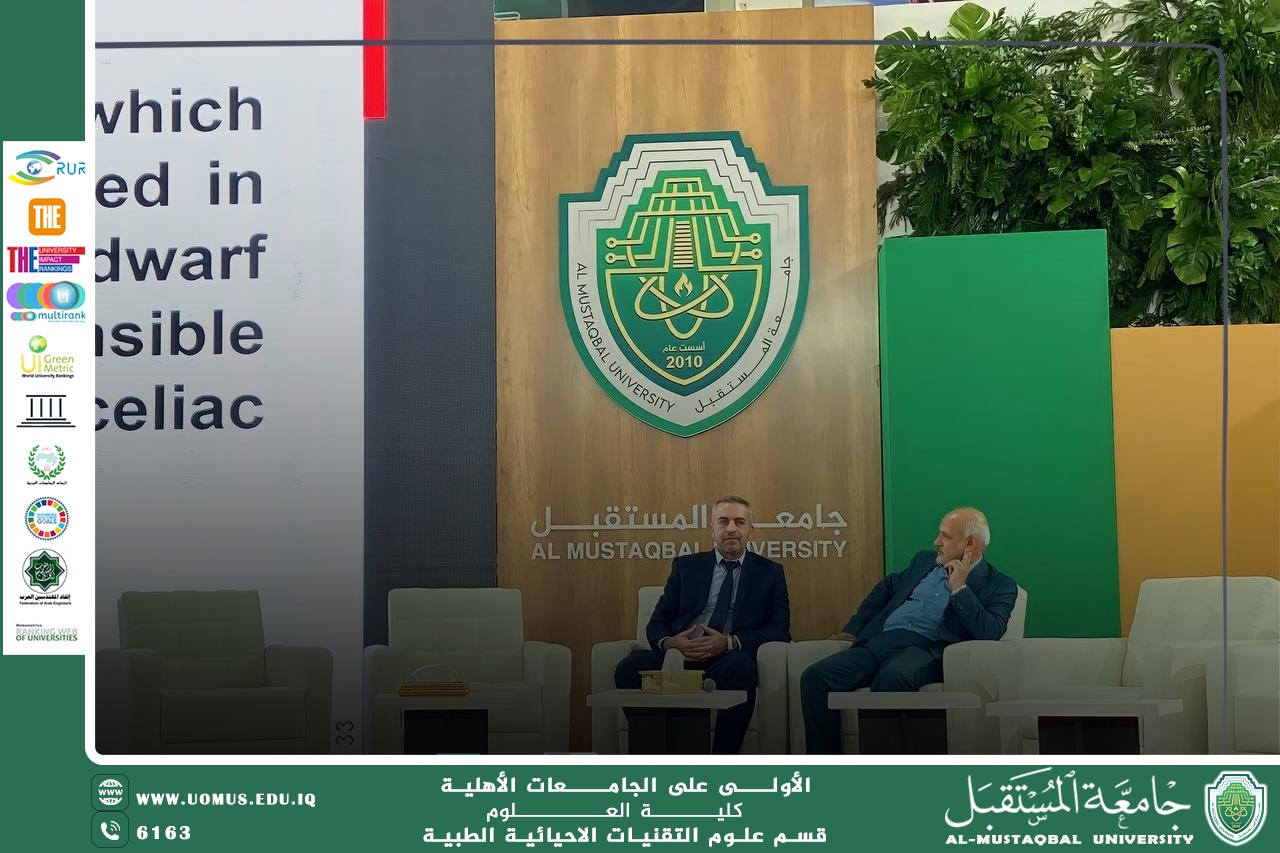
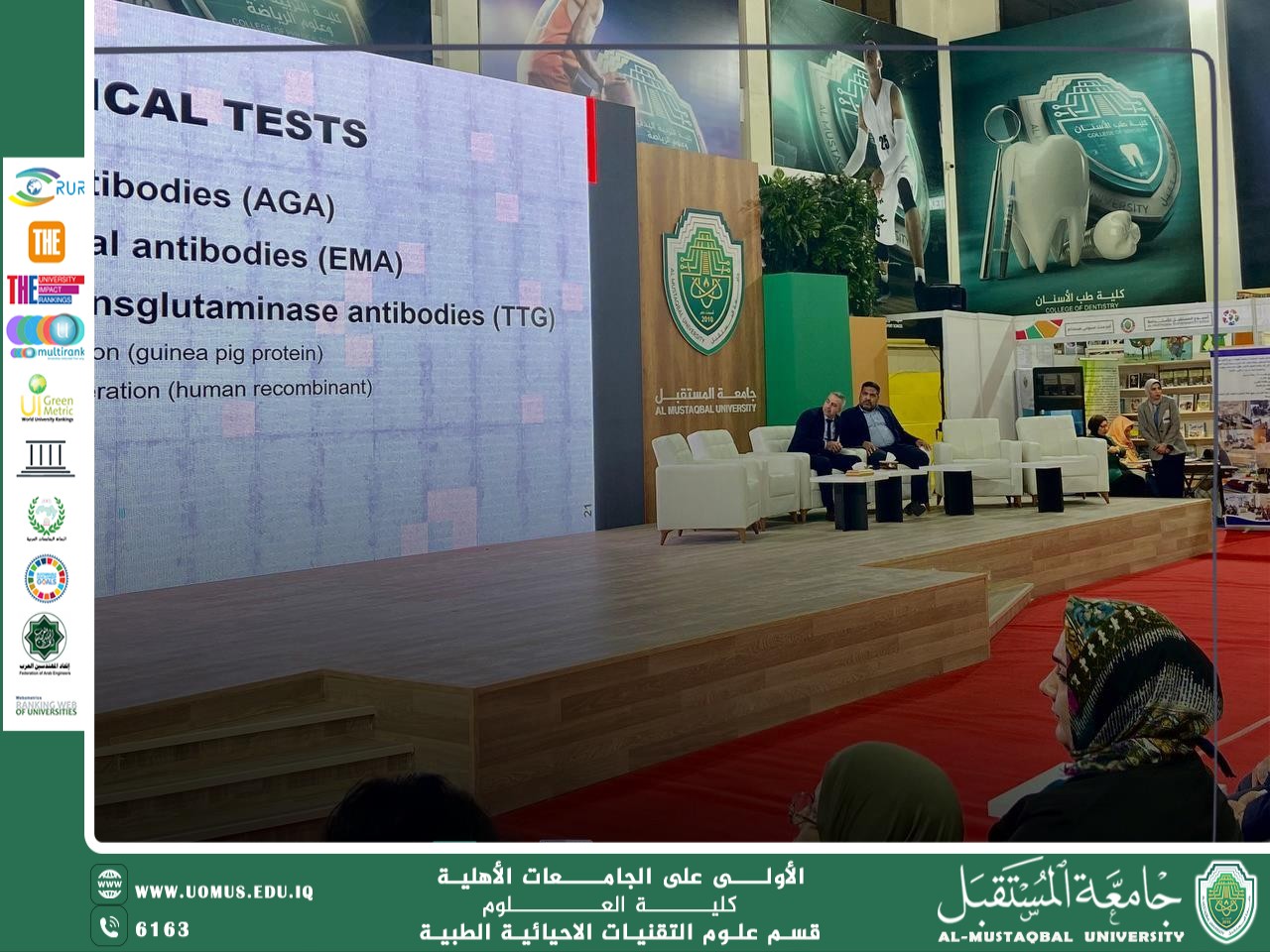
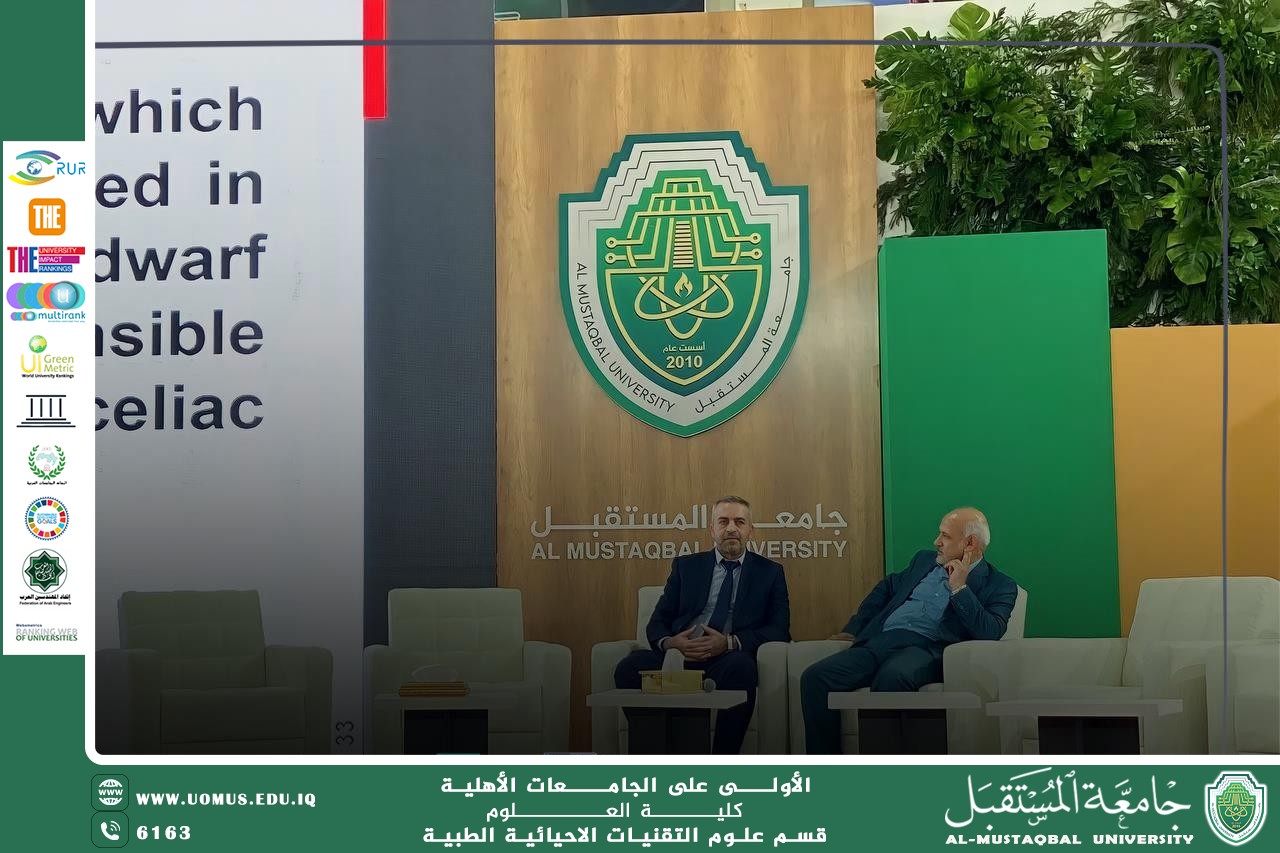
As part of the activities of Al-Mustaqbal Sustainability Week, a panel discussion was held titled: “Intestinal Allergy to Gluten Compounds and Its Treatment with Genetically Modified Food.”
Under the patronage of His Excellency the Minister of Higher Education and Scientific Research, Dr. Naeem Al-Aboudi, and under the direct supervision of Prof. Dr. Hasan Shaker Majdi, President of Al-Mustaqbal University, and as part of the activities of Al-Mustaqbal Sustainability Week, the College of Science / Department of Medical Biotechnology at Al-Mustaqbal University organized, on Tuesday, February 20, 2024, a panel discussion entitled:
“Intestinal Allergy to Gluten Compounds and Its Treatment with Genetically Modified Food.”
The panel discussion included participation from:
Dr. Raheem Ta'mah Abis – Certified Trainer, Babylon Health Directorate – Gastroenterology Center
Dr. Aqeel Shamran Tashi – Certified Trainer, Babylon Health Directorate – Al-Imam Al-Sadiq (AS) Hospital
The session began with a welcoming speech by the session coordinator, Prof. Dr. Hassanein Khalil Ibrahim, who provided an overview of the study’s objectives. He highlighted a case classified among autoimmune diseases with a genetic component and explained how it can be treated using genetically modified foods. This lecture aligns with the third goal of sustainability, which focuses on good health and well-being.
During the session, the speakers discussed intestinal allergy, emphasizing that it involves sensitivity to foods containing gluten compounds, such as wheat, barley, corn, and some types of nuts. This sensitivity causes damage and atrophy in intestinal tissues, particularly the villi responsible for nutrient absorption, leading to multiple health problems due to the inability to obtain essential nutrients necessary for growth.
This condition is widespread worldwide, with Europe being the region recording the highest number of cases, followed by the United States and Canada. In recent years, the condition has begun to spread in Iraq, particularly in Babylon Province, where a high incidence rate has been recorded, indicating an increasing trend in Iraq and especially in Babylon.
Advances in genetic engineering in recent years have provided a therapeutic breakthrough for this condition through genetic modification of wheat to produce gluten-free genetically modified wheat, which can replace regular wheat. This highlights the importance of such treatment in the future and offers hope for eliminating such diseases.
Al-Mustaqbal University — The No. 1 University in Iraq.