A scientific article by Lecturer Gaith Ali Mahmood titled “How Do Drugs Cause Serious Changes in the Eye?
A Brief Overview of the Major Ocular Effects” discusses the wide range of ocular changes that toxic drugs can produce—ranging from mild or absent symptoms to severe vision loss resulting from endophthalmitis.
This article briefly describes some of the ocular effects of commonly abused drugs.
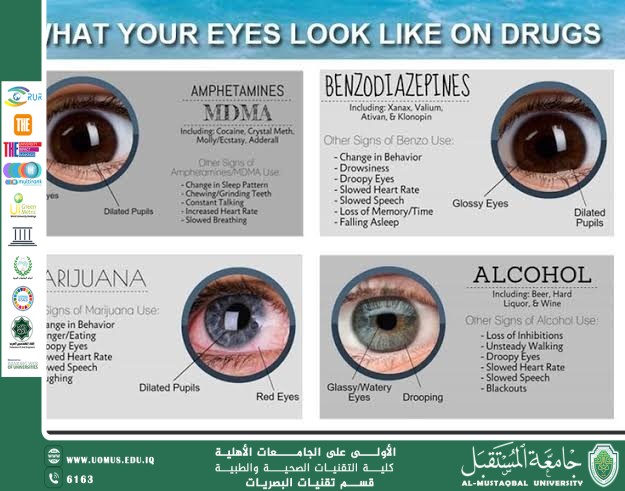
Cannabinoids
Cannabis use can lead to:
Conjunctival injection
Mydriasis
Reduced accommodation amplitude
Impaired oculomotor function in chronic users
Cocaine
Cocaine causes pupil dilation due to inhibition of norepinephrine reuptake.
At high concentrations, it may cause cycloplegia.
Chronic users may also exhibit exophthalmos.
Cocaine users can develop complications such as:
Superficial punctate keratitis
Corneal epithelial defects or erosions
Corneal ulcers due to contamination from eye rubbing, retrograde passage of the substance through the nasolacrimal duct following insufflation, or direct toxic effects from the smoke
Conjunctival lesions and chronic eye redness have also been reported among individuals who use crystallized heroin via the conjunctiva.
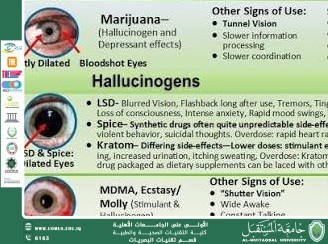
Hallucinogens
This group includes:
LSD, psilocybin, phencyclidine (PCP), and mescaline.
These drugs may cause:
Hallucinations
Insomnia
Slurred speech
CNS hyperarousal
Loss of motor coordination
Mydriasis
Phencyclidine (PCP) does not cause changes in pupil size,
but it often causes both horizontal and vertical nystagmus in intoxicated individuals.
A case of oculogyric crisis induced by PCP has been reported, characterized by involuntary upward deviation of the eyes, while other ocular and systemic examinations were normal.
Conclusion
The use of illicit drugs is a significant public health issue. Recognizing their ocular effects is crucial for timely diagnosis and treatment.
It is essential not only for general practitioners to benefit from ocular signs for early diagnosis, but also for ophthalmologists to ensure proper referral and management.
Early recognition can greatly contribute to visual rehabilitation in these patients.