The role of solar cells in supporting communication systems and electric power syst
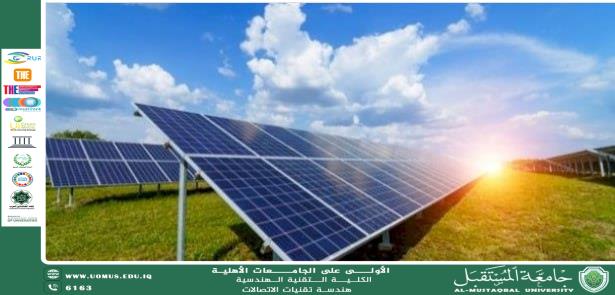
Solar cells, or “solar cells,” are considered one of the most important modern technologies in the field of renewable energy production. They have become a fundamental part of countries’ plans to shift toward clean and sustainable energy sources. A solar cell works by converting sunlight directly into electricity through a phenomenon called the photoelectric effect. This effect relies on semiconductor materials such as silicon, which has the ability to release electrons when exposed to light, leading to the generation of an electric current that can be used to operate various devices.
Silicon is the most commonly used material in manufacturing solar cells because it is widely available and has distinctive electronic properties. A typical solar cell consists of two layers of silicon—one positive and the other negative. When these two layers meet, they form what is known as a PN junction, which is responsible for separating electric charges when light strikes the surface of the cell. Once the cell absorbs light photons, electrons are released from atoms and move through an external circuit, producing usable electrical energy.
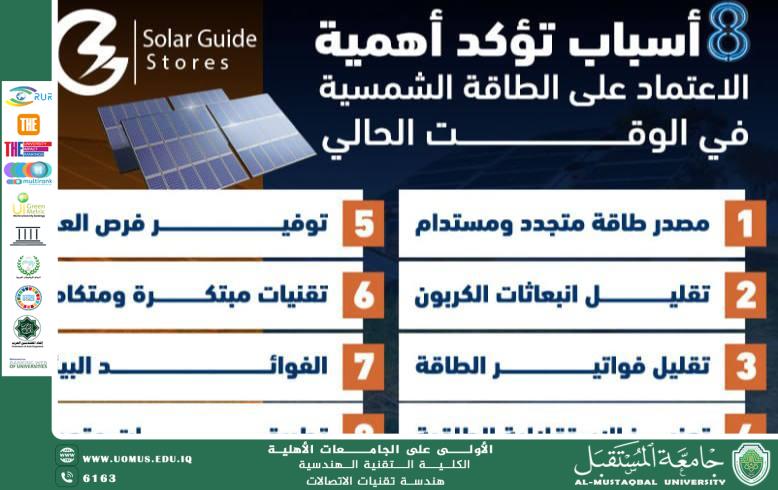
Solar cells are characterized as a clean energy source that does not cause environmental pollution. They are also a sustainable source since sunlight is renewable and inexhaustible. Additionally, solar power systems can be installed on houses, commercial buildings, factories, and even in remote areas where traditional electricity is difficult to provide.
Despite their many advantages, this technology faces certain challenges, including reduced efficiency on cloudy days, the need for large areas to produce significant amounts of energy, and relatively high manufacturing costs—although these costs continue to decrease as technology and production methods develop.
Today, solar cells are used in a wide range of fields, such as powering homes, large solar power plants, satellites, traffic signals, water pumps, and even portable devices. With continuous advancements, their usage is expected to grow even further in the future, contributing to an important solution to the global energy crisis and reducing dependence on fossil fuels, making them a promising option for achieving a more sustainable future.
Al-Mustaqbal University the First in Iraq