"A scientific article by instructor Banin Maan Karim entitled "Classification of Modern Fungi
Mycology has witnessed significant advancements in classification methods in recent decades, with scientists moving from relying on morphological and functional characteristics to employing molecular techniques and genetic analysis. This development has led to a more precise reorganization of the fungal kingdom and the separation of some groups previously considered fungi, such as algae and slime molds.
First: The Concept of Fungi
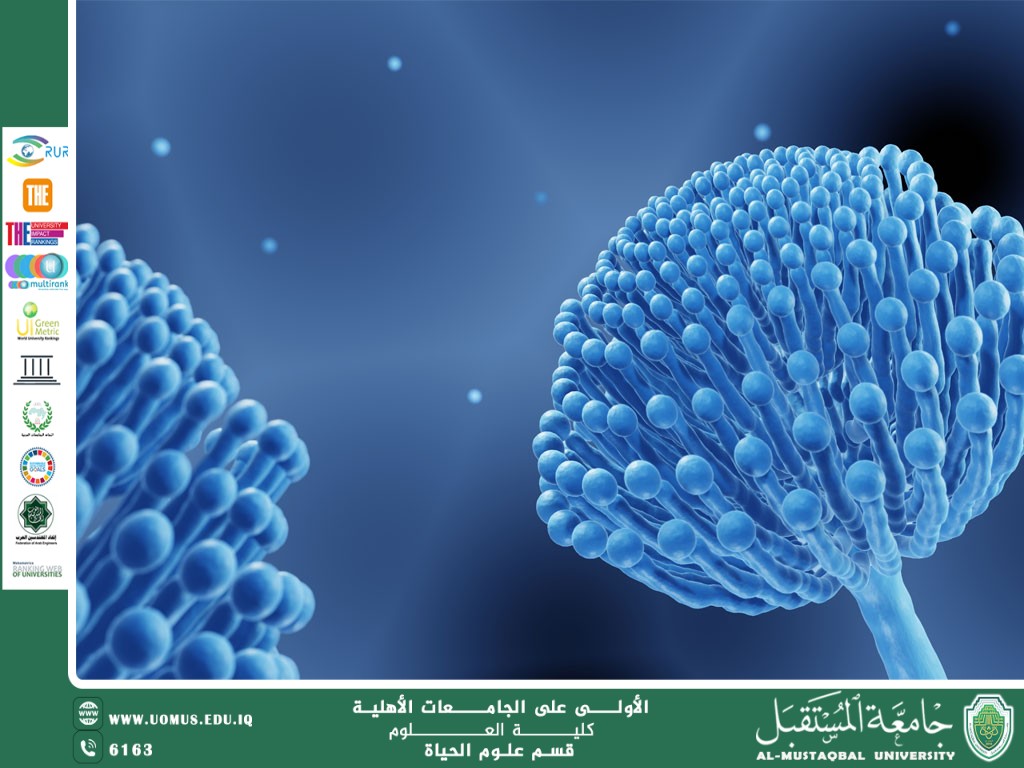
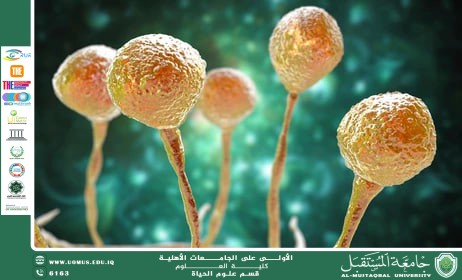
Fungi are eukaryotic, heterotrophic organisms that obtain their nutrients through absorption. They vary in form, ranging from unicellular organisms like yeast to multicellular organisms like bread mold, filamentous fungi, ascomycetes, and caps.
Second: Foundations of Modern Fungal Classification
Modern classification relies on several criteria, the most important of which are:
1. Genetic Analysis (DNA Sequencing)
This is considered the most accurate basis, especially using:
rRNA genes
The ITS gene used for species identification
2. Cellular Structure and Cell Wall
Cell wall composed of chitin
Presence of mycelium and fungal hyphae
3. Methods of Reproduction
Sexual Reproduction (Spores)
Asexual Reproduction (Conidia – Budding)
4. Phylogeny
A phylogenetic tree is drawn to determine the closeness or distance between species.
Third: Main Groups in Modern Fungal Classification
1. Kingdom Fungi
This includes several major phyla:
🔸 1. Phylum Basidiomycota
Includes cap mushrooms, oyster mushrooms, and other mushrooms.
Characterized by the production of basidia (spore-bearing spores).
🔸 2. Phylum Ascomycota
The largest phylum of fungi.
Includes yeasts, molds, and truffles.
Produces spores within an ascus (sac).
🔸 3. Phylum Zygomycota (Recently Reclassified)
Includes bread mold (Rhizopus).
Reclassified into smaller groups such as Mucoromycota.
🔸 4. Phylum Chytridiomycota (Older Conjugate Fungi)
Often live in water.
Characterized by spores with flagella. For Movement
🔸 5. Phylum Neo-Chytrid Fungi (Blastocladiomycota)
Separated from the Chytridia
Characterized life cycle with alternation of generations
🔸 6. Phylum Microsporidia
Formerly classified as protozoa
Added to the Kingdom Fungi after DNA analysis
Microscopic parasites within animal and human cells
Fourth: Groups no longer classified as fungi
1. Oomycetes
Such as downy mildew
Their cell wall is made of cellulose, not chitin
Now classified as protists (Stramenopiles)
2. Myxomycetes
Their life cycle resembles that of an amoeba
Not true fungi
Fifth: Importance of Modern Classification
Understanding the evolutionary relationship between species
Accurate diagnosis of fungal diseases
Development of antifungal drugs
Improved use of fungi in industry and agriculture (Yeasts – Antibiotics – Biological Control)
The modern classification of fungi is based primarily on molecular genetics, leading to a reorganization of the fungal kingdom and the separation of groups previously considered fungi. This development has contributed to a deeper understanding of the role of fungi in the environment, industry, and medicine.
Al-Mustaqbal University is the first university in Iraq.