
Robotics and Automation: The Technology Driving Modern Industry Artical by Noor firas
Robotics and automation have become essential pillars in the transformation of modern industries, enabling unprecedented levels of efficiency, precision, and innovation. With rapid technological advancements, automation has evolved from being an optional upgrade to a strategic necessity for companies seeking higher productivity, reduced human error, and enhanced quality.
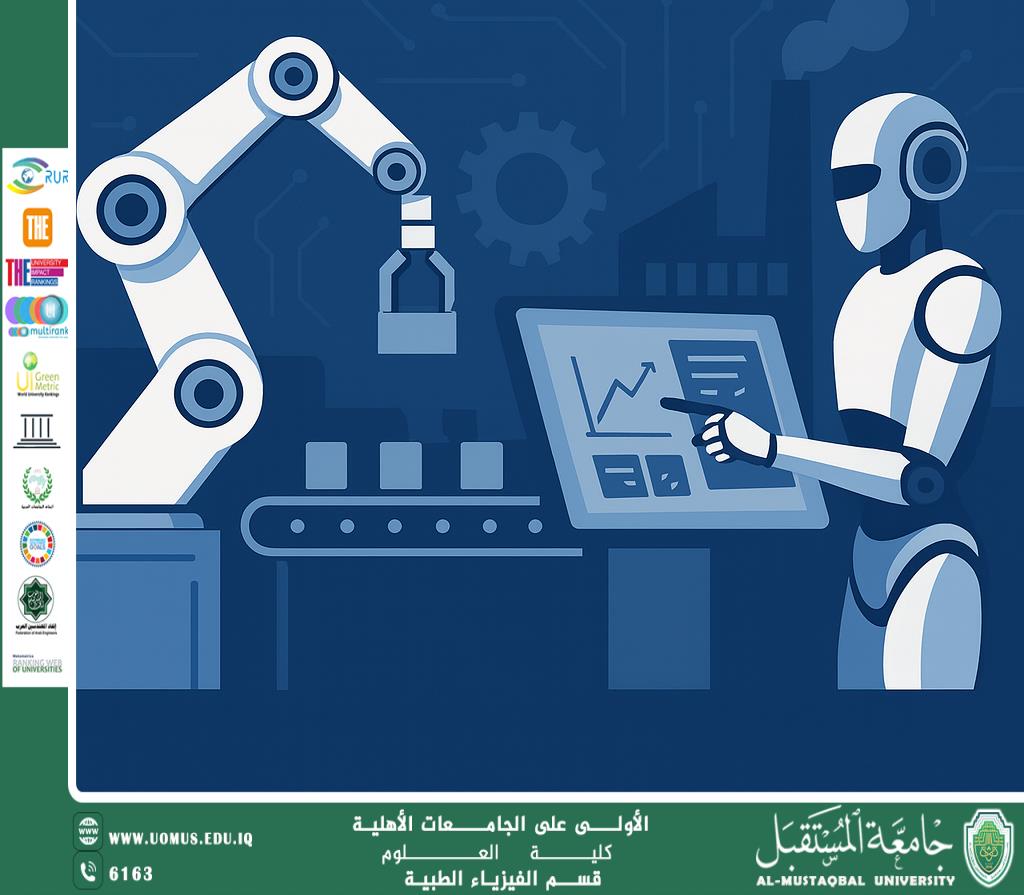
Industrial robots perform repetitive and complex tasks with remarkable accuracy, significantly reducing production time and improving overall workflow efficiency. Their applications span a wide range of industrial processes, including welding, assembly, packaging, transportation, and high-precision operations that exceed human capabilities.
Automation systems complement this progress by connecting machines and equipment through intelligent platforms powered by artificial intelligence and the Internet of Things (IoT). These systems allow factories to monitor real-time performance, detect potential failures before they occur, and minimize resource waste—leading to higher production efficiency and operational stability.
Collaborative robots (Cobots) have further strengthened the role of automation within workplaces. Designed to work safely alongside humans, Cobots enable workers to shift their focus toward creative and strategic tasks instead of repetitive manual labor.
Despite the numerous benefits, automation also presents challenges, such as the need to upskill the workforce to operate modern systems and the initial costs associated with implementing advanced technologies. However, these investments ultimately yield long-term advantages by boosting industrial competitiveness and supporting sustainable development.
It is evident that robotics and automation will continue to drive the future of industry, shaping smarter manufacturing environments and opening new horizons for economic and technological evolution.
"AL_mustaqbal University is the first university in Iraq"