
Electric Shock First Aid
Electric shock is a medical emergency that can become life-threatening within seconds, potentially causing cardiac or respiratory arrest. The severity of injury depends on the current strength, duration of exposure, and the path electricity takes through the body. Rapid and correct first aid significantly reduces the risk of death and severe complications such as deep burns and cardiac arrhythmias.
1. Medical Mechanism of Electric Shock
When electric current passes through the human body, several effects may occur:
1. Cardiac Effects
• Electrical current may cause arrhythmias, such as ventricular fibrillation.
• In severe cases, it can lead to complete cardiac arrest.
2. Respiratory Effects
• Current can cause temporary paralysis of the respiratory muscles.
• Breathing may stop even if the heart is still beating.
3. Neurological Effects
• Strong muscle contractions may prevent the victim from pulling away from the electrical source.
• Central nervous system disturbances may lead to loss of consciousness or seizures.
4. Tissue Effects (Burns)
• Electrical current generates heat within tissues, causing second- or third-degree burns.
• These burns are often deeper than typical thermal burns.
2. Correct Steps for First Aid in Electric Shock
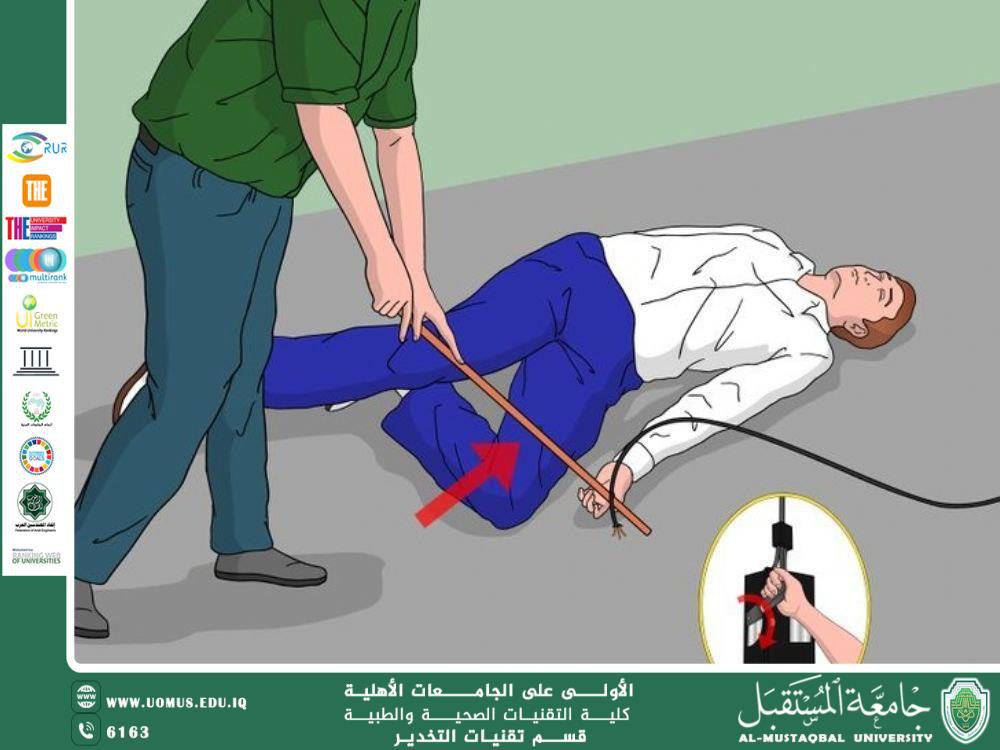
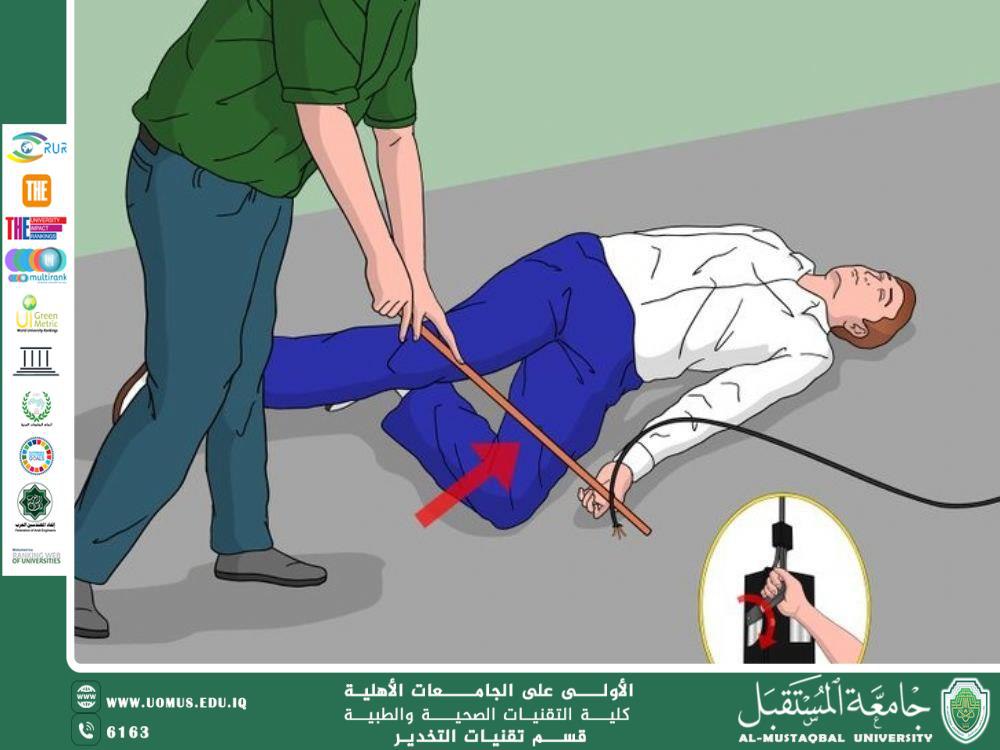
1. Ensure Your Own Safety First
• Do not touch the victim until the power source is disconnected.
• Turn off the circuit breaker or move the wire using a non-conductive object such as wood, plastic, or dry cloth.
2. Check Responsiveness and Breathing
• If the victim is unresponsive, check:
• Breathing
• Carotid pulse
3. Perform CPR if Necessary
Begin CPR immediately if:
• There is no breathing
• There is no pulse
CPR Steps:
• Push hard and fast on the center of the chest at a rate of 100–120 compressions per minute.
• Give two rescue breaths after every 30 compressions if you are trained.
4. Treat Burns
• Rinse the burn area with lukewarm water for 10 minutes.
• Do not use ice or unapproved ointments.
• Cover the burn with a sterile non-adhesive dressing.
5. Prevent Complications
• Keep the victim warm to prevent shock.
• Raise the legs slightly if there are signs of low blood pressure.
6. Transport to the Hospital
Even if the victim appears fine, medical evaluation is necessary because:
• Heart arrhythmias may appear hours later.
• Internal injuries may not be visible externally.
3. Severe Cases Requiring Intensive Care
• Loss of consciousness.
• Deep entry-and-exit electrical burns.
• Cardiac rhythm disturbances.
• Difficulty breathing or respiratory failure.
• Seizures or partial paralysis.
4. Prevention of Electric Shock
• Use circuit breakers.
• Avoid operating electrical devices with wet hands.
• Repair or replace exposed/damaged wiring.
• Educate children about electrical hazards.
Conclusion
Electric shock is a life-threatening emergency, but rapid intervention—especially disconnecting the current and performing CPR—can be lifesaving. Awareness of proper first-aid steps is essential at home and in the workplace.
Hasan Najeh
Al-Mustaqbal University
The First University in Iraq.