Modern Nursing Practice Between Holistic Care and the Advanced Technology Revolution
The nursing profession is considered the cornerstone of any effective healthcare system. The modern nurse's role extends beyond merely providing clinical care to active participation in decision-making, leadership, research, and health education. Demographic and epidemiological changes, alongside technological advancements, have led to a radical transformation in the nature of contemporary nursing practice, making it an integrated blend of scientific competency and comprehensive humanistic practice.
Expanding the Modern Nurse's Role: From Care Provider to Leader and Educator
Nurses no longer focus only on the physical aspects of illness; they have adopted the concept of Holistic Care, which encompasses the patient's and their family's physical, psychological, social, and cultural dimensions. This transformation is reflected in the following professional roles:
1. Care Coordinator
The nurse takes a leading role in developing integrated care plans for patients, especially those with chronic or complex conditions. This role requires effective coordination among various medical disciplines (physicians, pharmacists, physical therapists) to ensure continuity of care both inside and outside the healthcare facility, including planning for patient discharge and community reintegration.
2. Health Educator and Advocate
Health education has become an essential part of the nurse's work. They provide guidance on how to modify lifestyle (e.g., weight loss, smoking cessation, dietary changes) for disease prevention and health promotion. The nurse also plays the role of an Advocate for patients' rights and needs, providing them and their families with sufficient information to make informed decisions about their treatment.
3. Quality and Patient Safety Leader
The nurse is the first line of defense for Patient Safety. Due to their continuous and direct presence with the patient, they are responsible for implementing infection control protocols, preventing falls and injuries, and using Clinical Decision Support systems to reduce medical errors. Nurses also contribute to nursing research that provides the necessary evidence to support and improve care practices.
Integrating Advanced Technology with the Digital Nursing Era
The nursing profession has witnessed a revolution in the integration of modern technologies that have contributed to enhancing the efficiency and accuracy of care:
1. Electronic Health Records (EHRs)
Electronic Health Records replace paper charts, allowing the nurse quick and immediate access to patient data, thus reducing the likelihood of errors resulting from illegible handwriting. Electronic documentation systems also facilitate follow-up and ensure compliance with health standards.
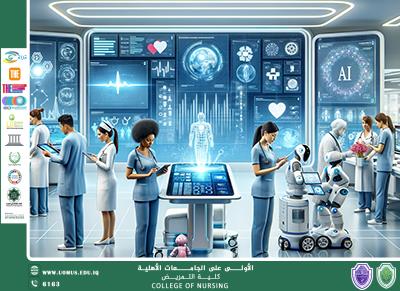
2. Advanced Monitoring Systems and Artificial Intelligence (AI)
Advanced Monitoring Systems provide immediate readings of vital signs, alerting the medical team to any abnormal changes. Artificial Intelligence is used to develop analytical tools that help nurses to:
• Predict clinical deterioration in patients based on the analysis of massive amounts of data.
• Automate some routine tasks, granting the nurse more time for direct patient care.
• Provide supported clinical insights for more informed treatment decisions.
3. Tele-nursing and Mobile Health Applications (m-Health)
Tele-nursing has expanded the scope of nursing services to include remote areas and patients who face difficulties visiting healthcare facilities, especially the elderly and those with chronic diseases. Through home health monitoring devices (like blood pressure and glucose monitors) and mobile health applications, the nurse can:
• Monitor the patient's condition remotely.
• Conduct virtual health assessments.
• Adjust the treatment plan and ensure patient adherence to medications.
Summary
Modern nursing practice is a profession based on Evidence and Critical Thinking, requiring a continuous commitment to lifelong learning and professional development to keep pace with medical and technological advancements. The contemporary nurse is not merely an executor of medical orders but a pivotal member and intellectual leader working to achieve the highest standards of quality in healthcare and promote community health as a whole. Their integration of modern technologies underscores their vital role in shaping the future of healthcare.
Dr. Mahdi Hamza Manthoor / College of Nursing
Al-Mustaqbal University — the first university in Iraq.
الهدف الثالث من اهداف التنمية المستدامة -الصحة الجيدة والرفاه
The Third Goal of the Sustainable Development Goals – Good Health and Well-being