Nutrition of pregnant women
Good nutrition is important during pregnancy to maintain the health of both mother and fetus; the quality of food is more important than the quantity, so it is advisable to choose healthy foods with high nutritional value. Avoiding unhealthy foods is important, and good nutrition helps manage the body's increased demands as pregnancy progresses. The goal is to achieve a balance in obtaining sufficient nutrients to support fetal growth and maintain a healthy weight.
The importance of good nutrition during pregnancy:
Building the fetus's bones and blood cells.
Reducing pregnancy discomfort and complications.
Boosting immunity to prevent infectious diseases.
Preventing iron deficiency anemia.
Strengthening the body in preparation for childbirth.
The amount of nutrients a pregnant woman needs:
Nutrient | Recommended Daily Amount
Protein 70 grams
Meat, fish, poultry, eggs, dairy products, legumes, and nuts
Calcium 1000 mg
Dairy products, leafy green vegetables, orange juice, and almonds Iron 27 mg
Whole-grain bread, legumes, leafy green vegetables, prunes, apricots, and raisins
Folate (folic acid) 600 micrograms
Leafy green vegetables, legumes, whole grains, orange juice, and asparagus
Pyridoxine (vitamin B6) 1.9 mg
Wheat germ, meat, whole grains, cauliflower, bananas, avocados, peanuts, sunflower seeds, soybeans, and corn
Vitamin A 770 micrograms per day
Carrots and sweet potatoes.
Vitamin C (85 mg).
In citrus fruits, broccoli, tomatoes, and strawberries.
Vitamin D
600 IU: Sun exposure at appropriate times. It is also found in fortified milk and fatty fish such as salmon and sardines.
Recommended foods:
Protein: It is recommended to obtain it from lean meats (such as chicken, fish, eggs, meat, legumes, etc.) every day.
Aim for two servings of fish per week, ensuring that one of them is oily fish (such as salmon). For mackerel and sardines, it is recommended to limit consumption to no more than two servings per week.
Carbohydrates (such as: bread, grains, potatoes, rice and pasta)
Fats: It is recommended to obtain them from plant sources (such as olive oil). They can also be obtained from certain foods (such as some fish, avocados, nuts, and olives), while avoiding saturated fats.
Pasteurized dairy products: (such as yogurt, milk, and cheese), preferably low-fat varieties.
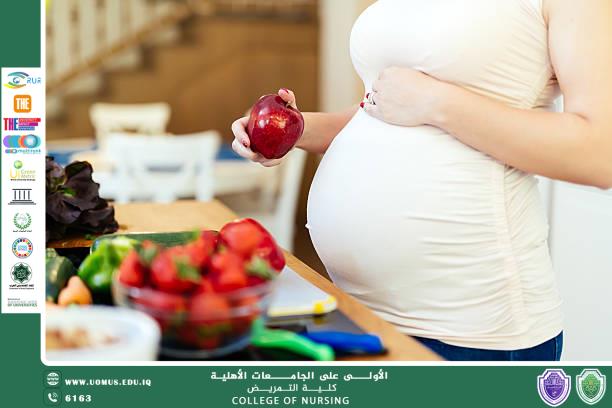
Fruits and vegetables: Aim for five servings daily, avoiding those with added sugar or salt, to obtain the necessary vitamins and minerals and increase your fiber intake.
Foods to avoid: Avoid raw meat or eggs, as they may contain Listeria bacteria, which can be transmitted to the fetus through the placenta, causing miscarriage or stillbirth.
Fish – Avoid eating raw fish or uncooked shellfish, which may contain germs (bacteria, viruses, or parasites).
Avoid certain types of fish because they contain high levels of mercury, which can damage the nervous system of a fetus (such as shark, swordfish, and marlin).
Limit your intake of albacore tuna to 186 grams per week.
Caffeine: This substance occurs naturally in foods (such as tea, coffee, and chocolate), some soft drinks, energy drinks, and some painkillers. It is advisable to limit its intake during pregnancy, as excessive consumption increases the risk of miscarriage and low birth weight.
Unpasteurized milk and all its products (such as cheese, etc.)
Al-Mustaqbal University — the first university in Iraq.
الهدف الثالث من اهداف التنمية المستدامة -الصحة الجيدة والرفاه
The Third Goal of the Sustainable Development Goals – Good Health and Well-being