
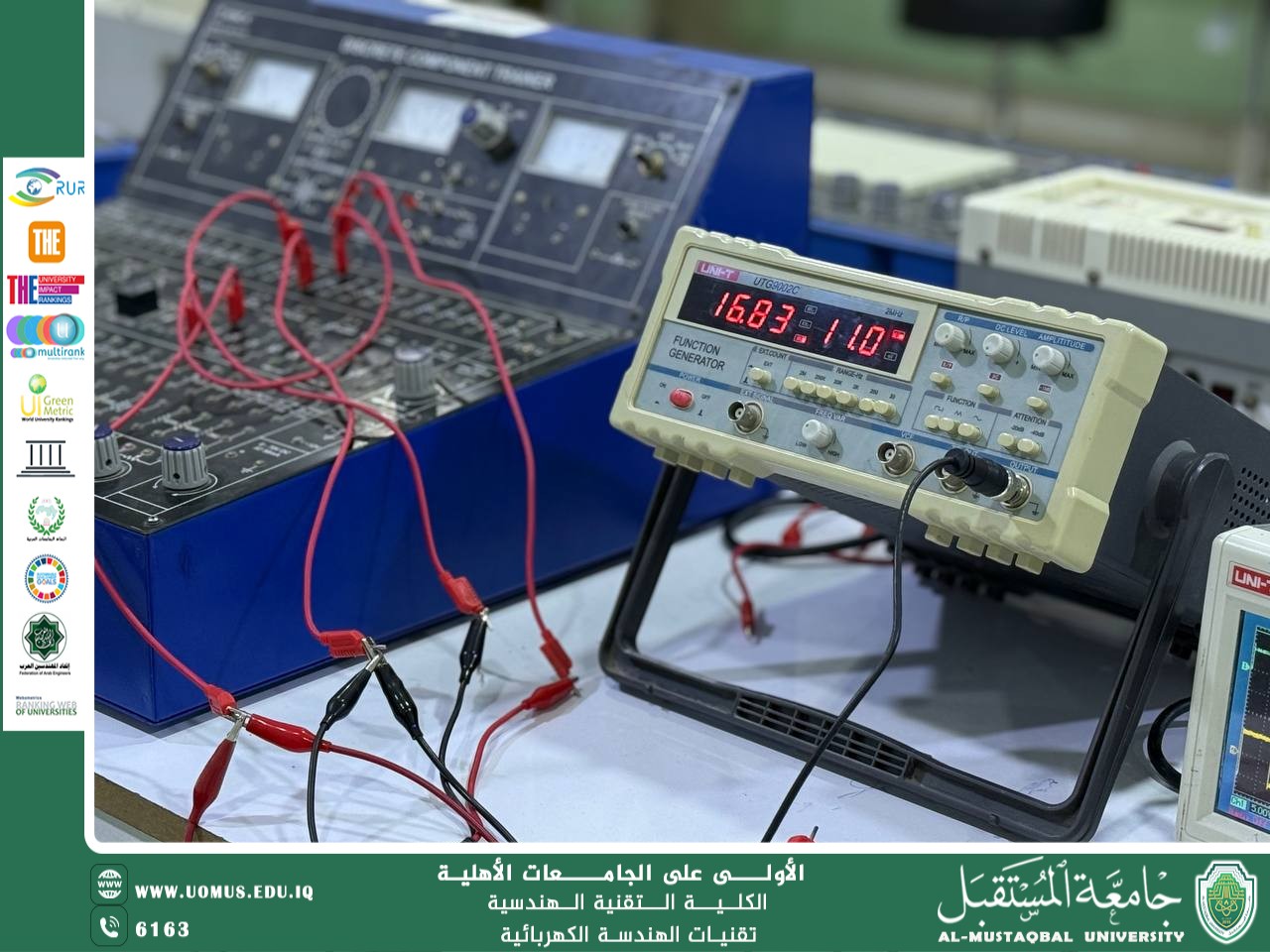
The Importance of Laboratories in Engineering Education
Engineer Esraa Issa Ibrahim Issa
Laboratories are considered one of the most essential components in the engineering education system, as they form a bridge between theoretical knowledge and practical application. Engineering, by its nature, is a field that relies on experimentation, analysis, and design, and students cannot acquire the necessary professional skills without hands-on practice in a laboratory environment that facilitates learning through application. Therefore, laboratories have become an integral part of the curricula across various engineering disciplines.
1. Enhancing Deep Understanding of Theoretical Concepts
In the laboratory, students have the opportunity to apply the laws and concepts they learn in theoretical lectures. For example, studying electrical circuits, materials, or fluid mechanics theoretically does not achieve full comprehension unless students practice connecting circuits, measuring values, or testing material properties. This direct interaction helps consolidate knowledge and bridge the gap between theory and practice.
2. Developing Scientific Thinking Skills
Laboratories encourage students to use the scientific method through observation, measurement, analysis, and inference. During experiments, students deal with real results that may not always match their calculated expectations, learning to interpret discrepancies, understand sources of error, and improve their experiments. These skills are essential for any successful engineer.
3. Acquiring Practical and Technical Skills
Laboratories provide a rich environment with equipment, tools, and software necessary for an engineer’s professional life. By working in the lab, students learn to:
Use various measuring instruments
Handle complex equipment
Apply safety procedures
Read engineering schematics
Operate electronic and electromechanical systems
This practical experience gives them greater confidence when transitioning into the workforce.
4. Developing Teamwork and Problem-Solving Skills
Laboratory work is often collaborative, encouraging students to cooperate, divide tasks, and manage time effectively. They also face technical challenges that require collective thinking to find appropriate solutions. This highlights the true value of laboratories as training environments for developing communication skills and performing under pressure.
5. Supporting Creativity and Innovation
Laboratories play a crucial role in encouraging students to innovate through practical projects and engineering designs. A free experimental environment allows students to think creatively, potentially leading to solutions or prototypes for future projects. Thus, laboratories act as a key driver of creativity in engineering universities.
6. Enhancing Job Market Readiness
With the advancement of modern technologies and companies’ reliance on advanced systems, laboratory experience has become an important factor in evaluating graduates’ skills. Students with hands-on laboratory experience are better prepared to integrate into industrial and engineering work environments, making laboratory education a significant factor in improving graduate quality.
Almustaqbal University – The Leading University in Iraq