Solar Energy in Operating Healthcare Centers (by M. Aheeb Hashem Karim)
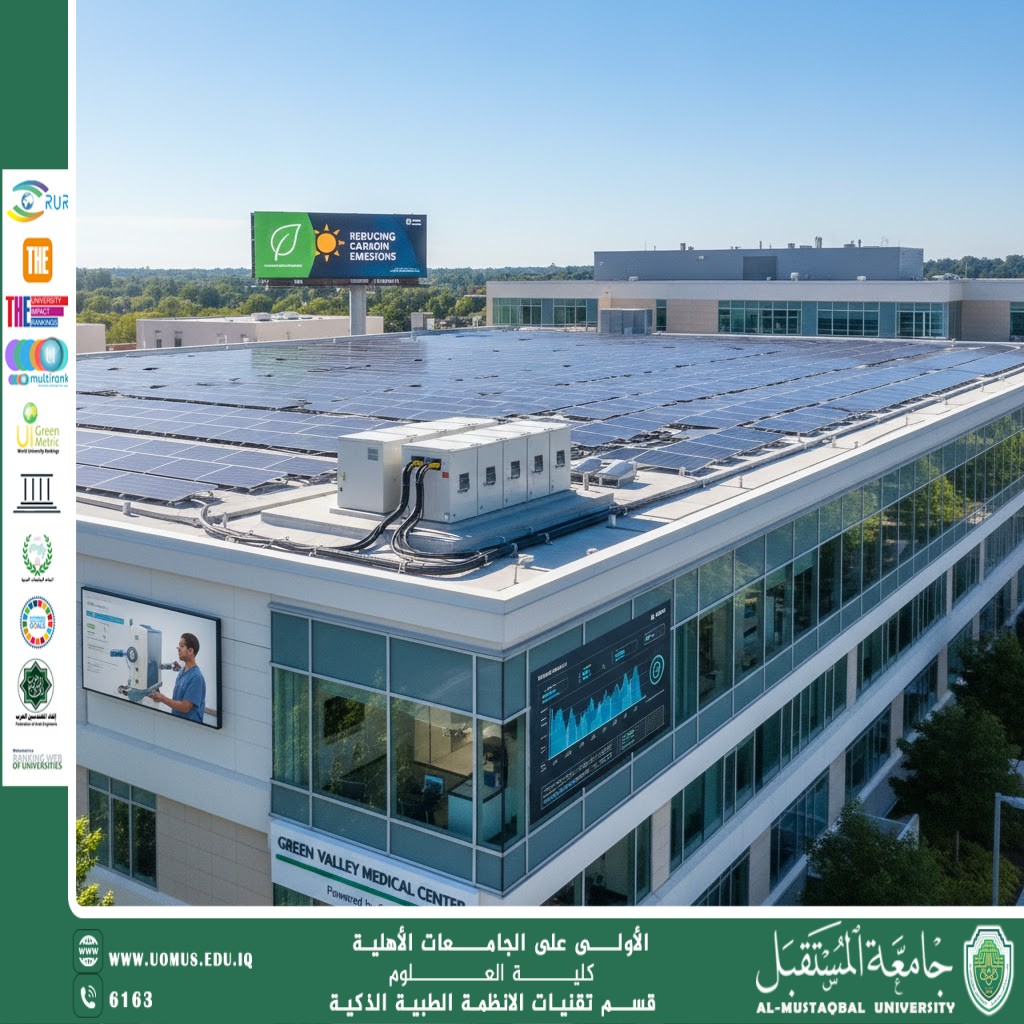
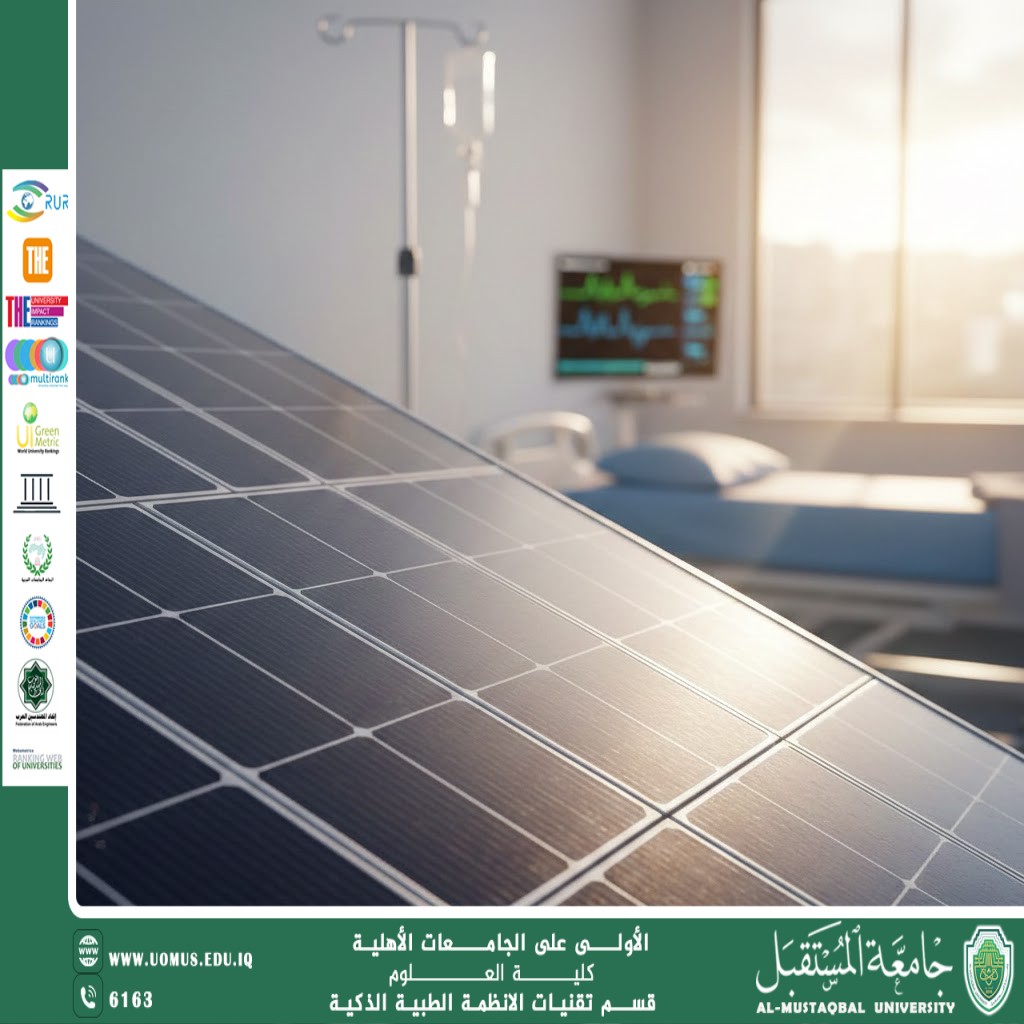
Solar energy is one of the most prominent sources of renewable energy, capable of reducing reliance on the conventional electrical grid in hospitals and healthcare centers. Solar power is used to operate lighting, air conditioning, biomedical devices, and even laboratory and sterilization systems, ensuring the continuous provision of healthcare services with high efficiency.
The use of solar energy contributes to reducing carbon emissions and lowering operational costs. It can also be integrated with energy storage systems (batteries) to ensure electricity availability during emergency outages, which is critical in urgent situations.
Moreover, solar energy can be utilized to power water heating systems, indoor lighting, and other electrical equipment, enhancing resource efficiency and minimizing waste. These systems can be connected to smart energy monitoring technologies to track consumption and analyze data for continuous performance improvement.
Adopting solar energy is not only an environmentally friendly choice but also a long-term strategic investment. It ensures the autonomy of healthcare facilities, strengthens their ability to provide high-quality medical care, and reduces their negative environmental impact.