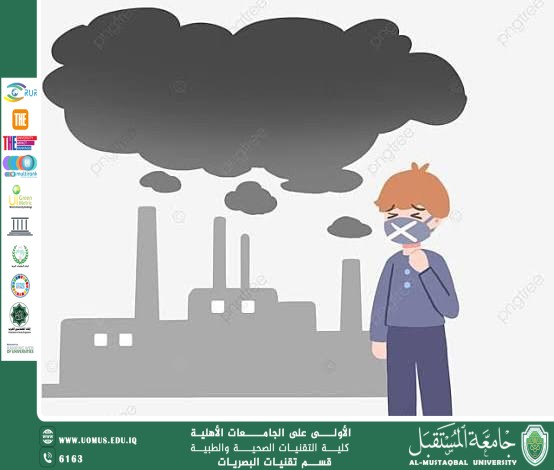

"A Scientific Article by Ms. Islam Fadel Mousa Entitled: “The Effect of Air Pollution on Lung Function in Children
Nature and Sources of Air Pollution
Air pollution consists of a mixture of harmful particles and gases released from various sources, including:
• Vehicle emissions (car and truck exhaust)
• Industrial emissions
• household combustion such as wood or coal burning
• Secondhand smoke
• Dust storms and airborne particulate matter
The most harmful pollutants affecting children include:
• Particulate matter PM2.5 and PM10
• Ground-level ozone (O₃)
• Nitrogen oxides (NOx)
• Sulfur dioxide (SO₂)
Effects of Air Pollution on Lung Function
1. Reduced Lung Capacity
Research shows that long-term exposure to fine particulate matter is associated with a significant reduction in lung capacity among children, which may affect their future respiratory health and increase susceptibility to diseases in adulthood.
2. Increased Respiratory Inflammation
Air pollutants irritate the mucous membranes of the airways and trigger inflammatory responses, increasing the risk of recurrent respiratory infections such as:
• Bronchitis
• Pneumonia
• Upper respiratory tract infections
3. Worsening of Asthma and Breathing Disorders
Children with asthma are the most affected, as polluted air can cause:
• More frequent asthma attacks
• Shortness of breath
• Chronic cough
• Increased need for bronchodilators
Impaired Lung Development
Continuous exposure to pollutants may hinder the growth and development of lung tissue, potentially leading to long-lasting impairment of lung function that can persist into adulthood.
Factors That Increase Children’s Sensitivity to Air Pollution
• Small airway diameter, making obstruction more likely
• Immature immune system
• Higher physical activity levels
• Living near highways or industrial areas
• Exposure to secondhand smoke indoors
Short-Term and Long-Term Effects
Short-Term Effects
• Coughing
• Wheezing
• Eye and nasal irritation
• Difficulty breathing
• Increased school absences due to respiratory illness
Long-Term Effects
• Reduced lung growth
• Higher risk of developing chronic asthma
• Greater susceptibility to heart and lung diseases later in life
• Lower physical performance due to respiratory limitations
Prevention and Protective Measures
Several strategies can help protect children from the harmful effects of air pollution, including:
• Avoiding outdoor activities during high pollution periods
• Using air purifiers at home
• Keeping children away from smoking areas
• Planting trees around homes and schools
• Monitoring local air quality reports and adjusting activities accordingly
• Encouraging governments to implement policies that reduce industrial and vehicle emissions
Conclusion
A growing body of scientific evidence indicates that air pollution poses a significant risk to children’s lung function, negatively impacting their respiratory development and overall health. Prevention requires a collective effort starting from the family and extending to communities and policymakers, with the goal of reducing pollution levels and improving air quality to protect future generations from lifelong health complications.