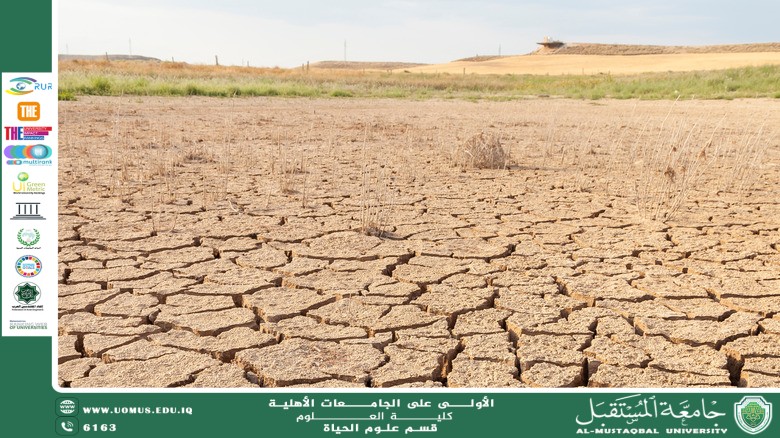
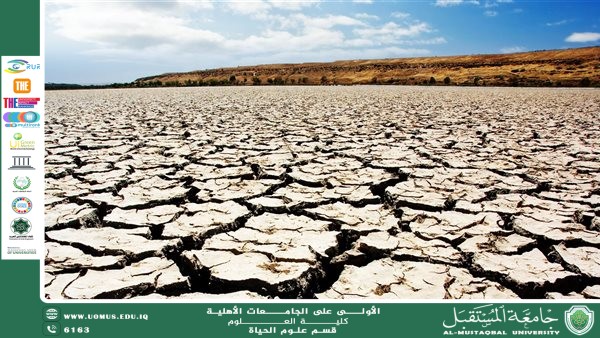
"A scientific article by Ms. Ola Adel Rasmi entitled" "Improving Dry Soils to Enhance Water-Use Efficiency
Arid and semi-arid regions face harsh climatic conditions characterized by high temperatures and low rainfall, making water loss one of the most significant challenges affecting agricultural productivity. To reduce this loss and ensure more efficient use of water, a set of techniques and strategies is employed for sustainable soil management.
1. Improving the Physical Structure of the Soil
Soil structure plays an important role in determining its ability to retain water. Sandy soils, which are common in dry areas, have high permeability that causes water to drain quickly. Therefore, it is recommended to:
Add organic materials such as manure and compost to increase soil cohesion.
Use agricultural polymers (hydrogels), which act like sponges that absorb water and release it gradually.
Adopt conservation agriculture practices that reduce soil fragmentation and preserve surface cover.
2. Reducing Evaporation from the Soil Surface
Evaporation is the main factor contributing to water loss in hot environments, and it can be reduced by:
Mulching:
Using straw, plant residues, or even agricultural plastic to protect the soil surface from sunlight.
This method can reduce evaporation by up to 70%.
Intercropping, which provides shade for the soil and thus lowers its temperature.
3. Water Harvesting and Redistribution
Several techniques are used to make the most of limited available water:
Digging small trenches (micro-catchments) around plants to collect rainwater.
Constructing terraces in sloped areas to prevent soil erosion and reduce runoff.
Collecting rainwater from roofs and using it for supplementary irrigation.
4. Improving the Chemical and Biological Properties of the Soil
Healthy soil can store water more efficiently. Therefore:
It is recommended to increase beneficial microorganisms that improve soil aeration and moisture retention.
Use biofertilizers that enhance the plant’s ability to utilize available water.
Maintain soil pH at an appropriate level to ensure nutrient availability.
5. Selecting Plants Suitable for Dry Environments
Crop type plays an important role in managing water loss. Examples of drought-resistant plants include:
Barley
Millet
Sorghum
Certain tree species such as acacia and olive
These plants have deep roots and high water-use efficiency.
6. Modern Irrigation Techniques
Controlling the amount of water added to the soil is one of the most important aspects of management:
Drip irrigation: reduces evaporation and ensures water reaches the roots directly.
Smart irrigation with sensors: precisely measures moisture levels and prevents over-irrigation.
Subsurface irrigation: reduces evaporation and improves water distribution.
Conclusion
Soil management in arid regions is not merely a set of isolated practices but rather an integrated system that includes improving soil properties, reducing evaporation, harvesting water, and selecting suitable crops. Combined, these measures contribute to enhancing water-use efficiency and achieving sustainable agricultural production in environments with limited water resources.
Al-Mustaqbal University is the first university in Iraq.