Environmental and Biological Indicators in Forensic Entomology for Estimating Time of Death (M.M. Howayda Nazzal Hussein)
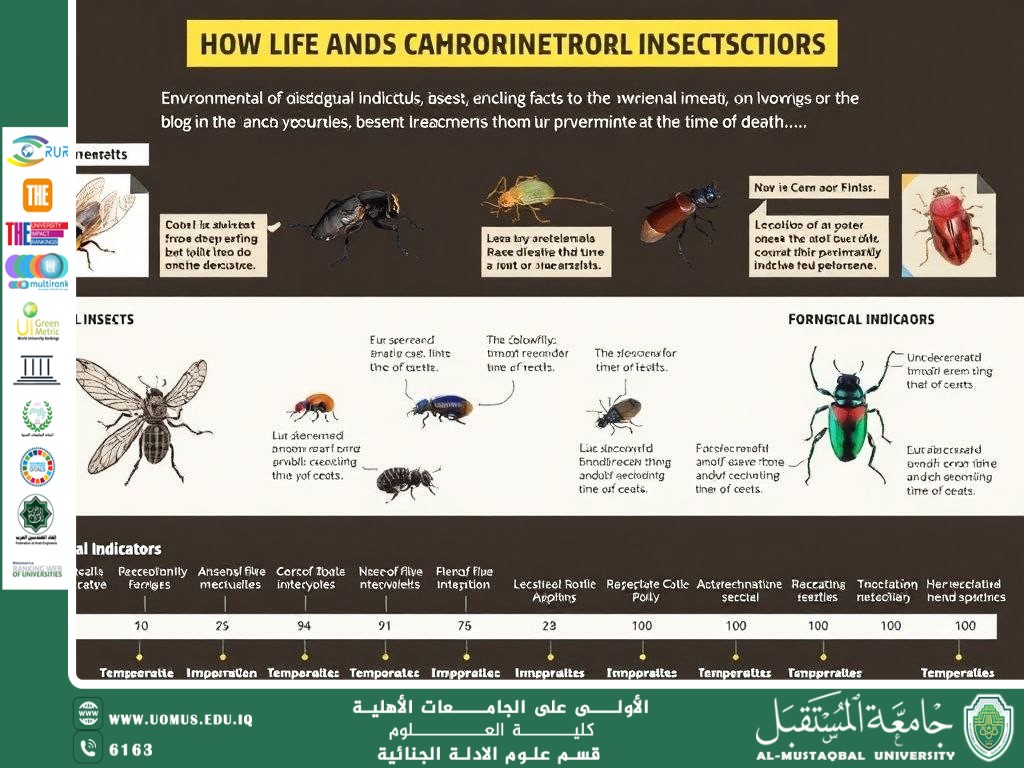
Forensic entomology is a vital branch of forensic science that uses insect activity on decomposing bodies to estimate the postmortem interval (PMI). To determine time since death accurately, specialists rely on a combination of environmental and biological indicators that influence the growth, development, and succession of insects.
1. Environmental Indicators
The environment surrounding the body plays a crucial role in insect colonization and development. Key environmental factors include:
a. Temperature
Temperature is the most influential factor in insect growth.
Higher temperatures accelerate larval development.
Lower temperatures slow or halt the life cycle.
Forensic entomologists record temperature patterns before and after the discovery of the body to calculate insect age and estimate PMI.
b. Humidity
Humidity affects insect activity and reproductive success. Some species thrive in moist environments, while others prefer drier conditions. Humidity also influences the rate of decomposition, which in turn attracts specific insect species.
c. Body Location
Whether the body is outdoors, indoors, submerged in water, or buried significantly affects insect access and colonization rates. Exposed bodies attract blowflies quickly, while buried or enclosed bodies experience delayed insect activity.
d. Light and ShadeDifferent fly species prefer sunlit or shaded areas, and this preference helps investigators infer the environmental conditions of the body prior to discovery.
---
2. Biological Indicators
Biological indicators—derived from insect species and their life cycles—form the core of PMI estimation.
a. Stages of Fly Development
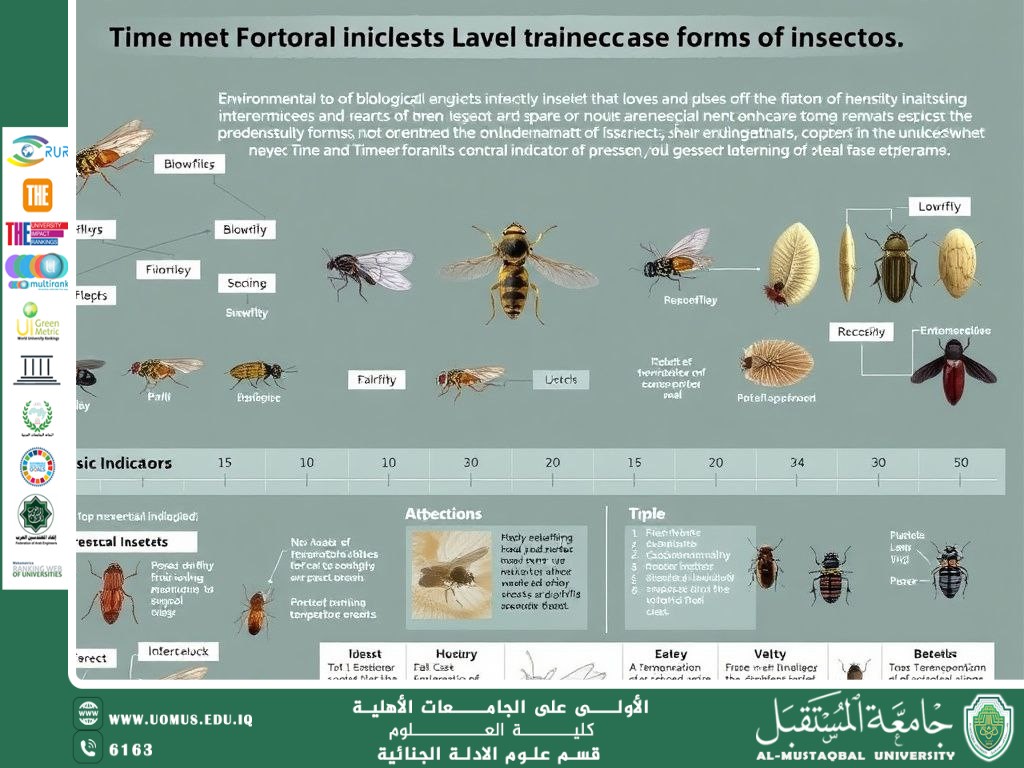
Blowflies are typically the first insects to colonize a corpse. Their predictable development stages include:
Egg
Larva (three instars)
Pupa
Adult fly
By determining the age and developmental stage of larvae collected from the body, investigators can estimate the minimum time since death.
b. Insect Succession Patterns
As decomposition progresses, different insect species appear in a specific sequence. This ecological succession helps determine PMI in advanced decomposition stages where larval development alone is insufficient.
c. Larval Gut Content and Chemical Analysis
Larvae feeding on the body may contain traces of drugs, toxins, or chemicals present in the deceased. These substances can accelerate or delay insect growth, and analyzing them helps refine PMI estimates.
---
Conclusion
By combining environmental and biological indicators, forensic entomologists can produce accurate and scientifically supported estimates of time of death. As analytical technologies advance, the field continues to improve, providing increasingly reliable insights for criminal investigations.
Al-Mustaqbal University – the first university in Iraq.
SDG4