A scientific article by Lecturer M.M. Zainab Nazim Aziz entitled "Medicinal Plants"
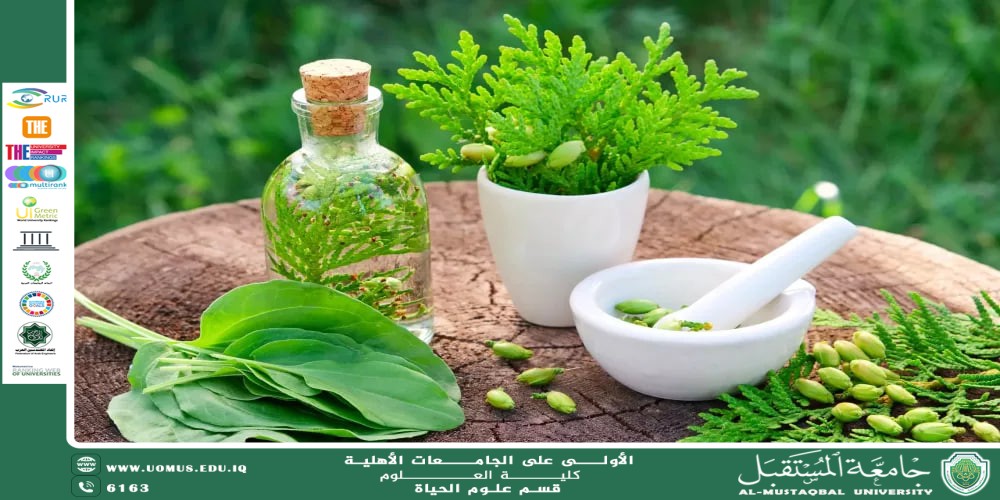
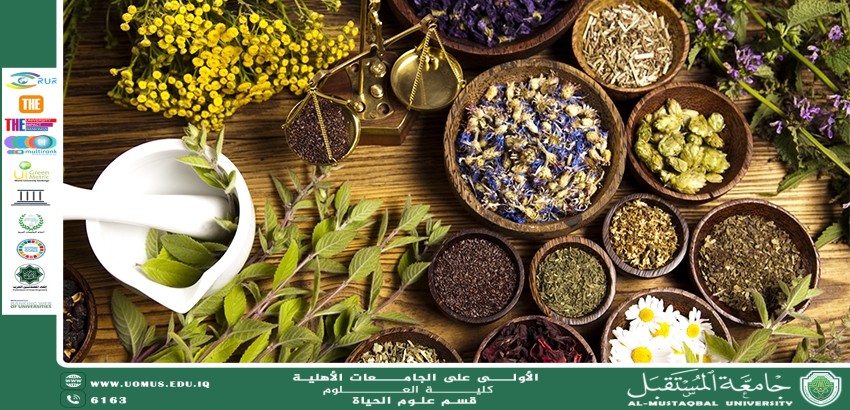
Medicinal plants are among the earliest sources of treatment known to humans throughout history. Since ancient times, people have relied on plants to cure diseases and relieve pain, and this knowledge gradually developed into a scientific field studied within life sciences, which focuses on living organisms and all related aspects.
Medicinal plants play an important role in modern drug production, as they contain natural chemical compounds used to treat numerous diseases. For example, morphine—an effective painkiller—is extracted from the poppy plant, while quinine, used to treat malaria, is obtained from the cinchona tree.
The benefits of medicinal plants are diverse; they are not limited to treatment alone but also support prevention and overall health improvement, as they contain antioxidants, vitamins, and minerals that strengthen the immune system and help maintain the body’s balance.
The scientific study of medicinal plants is known as Pharmacognosy, a branch of life sciences concerned with examining and analyzing plant compounds to identify their medicinal properties and effects on humans. This science deals with studying the chemical composition of plants, methods of extracting active substances, as well as evaluating their safety and effectiveness.
Beyond the scientific aspect, medicinal plants also hold environmental and cultural significance, as they are linked to the traditions and practices passed down through generations. Therefore, preserving plant diversity and protecting the environment are essential to ensuring the continuation of these valuable natural resources.
Medicinal plants form a bridge between nature and modern medicine, opening wide opportunities for research and discovery in life sciences, and enhancing our ability to address health challenges using natural and safe methods.