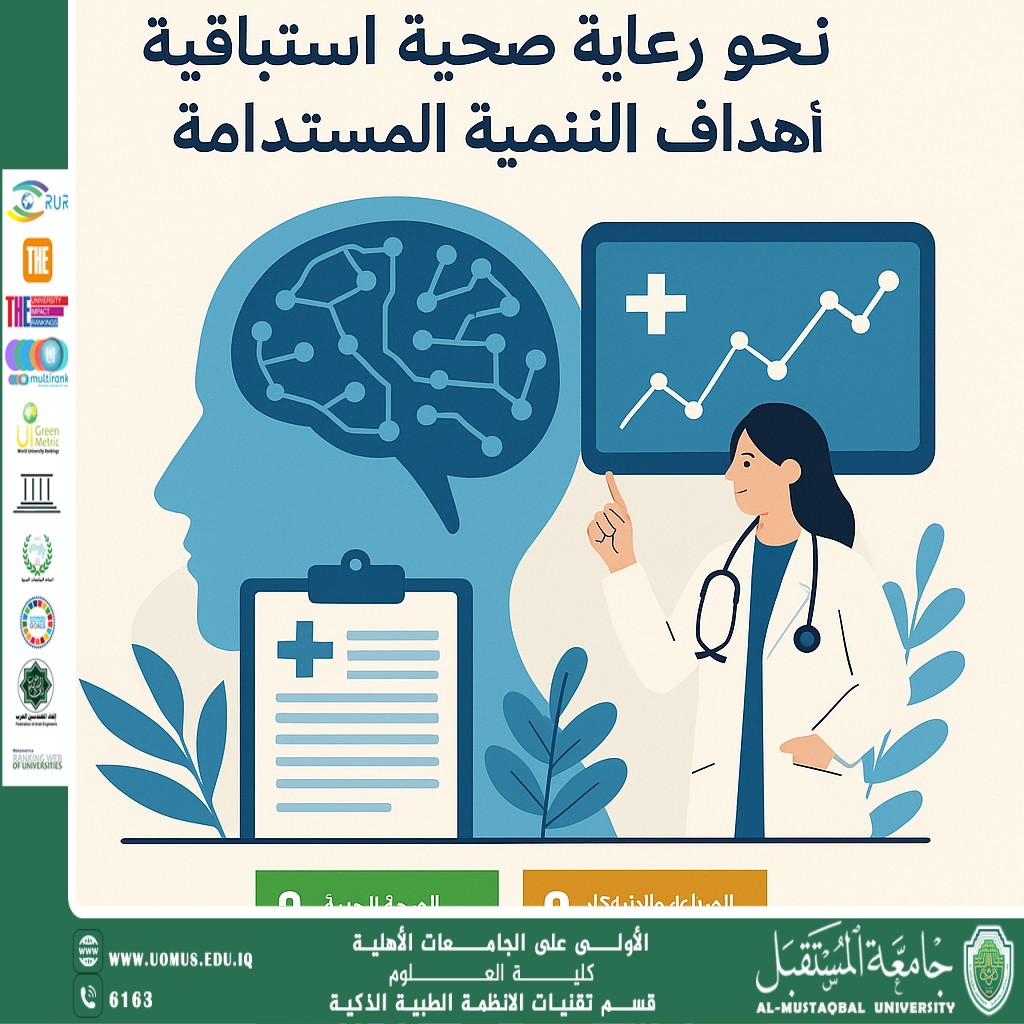
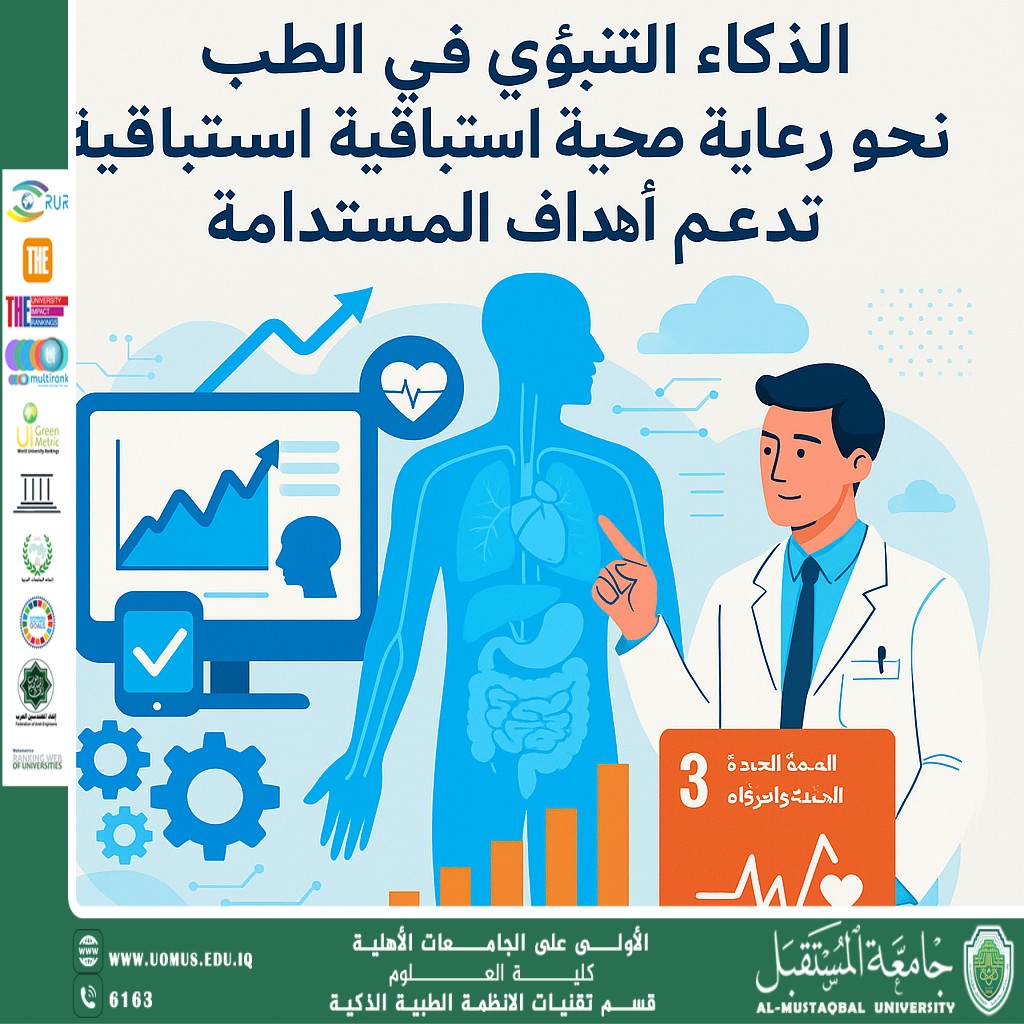
Predictive Intelligence in Medicine: Toward Proactive Healthcare that Supports the Sustainable Development Goals (Prof. Dr. Mehdi Ebady Manaa)
intelligence technologies, which have become a fundamental part of modern healthcare practices. Physicians are no longer limited to treating diseases after they occur; instead, they now rely on smart systems capable of predicting illnesses before symptoms appear, identifying patients at highest risk of complications, and guiding clinical decisions with remarkable precision. This transformation not only enhances treatment efficiency but also directly supports Sustainable Development Goal 3 – Good Health and Well-being, which focuses on prevention, reducing mortality, and improving the quality of care.
Predictive algorithms rely on analyzing millions of health data points collected daily in hospitals—ranging from laboratory results and medical imaging to vital-sign monitoring device recordings. Through this massive data flow, AI systems can detect subtle patterns that may not be easily noticed by physicians, such as slight changes in heart rhythm, early inflammatory markers, or signs of reduced blood perfusion. When the system identifies a potential risk, it immediately alerts the medical team to intervene before the condition worsens.
The applications of predictive analytics go beyond clinical diagnosis and extend into hospital operations management. By analyzing data from previous years, the system can predict patient admission rates on specific days, enabling administrators to allocate resources, organize wards, and determine staffing and supply needs. This type of planning enhances the efficiency of healthcare systems, reduces waste, and supports Sustainable Development Goal 9, which focuses on innovation and infrastructure development.
This technology also helps reduce deaths associated with chronic diseases such as diabetes and heart disease by providing patient-specific algorithms based on individual health profiles. For example, the system can anticipate a sudden spike in blood glucose before it occurs, or the likelihood of a cardiac event based on the patient's behavior and physiological activity — giving the medical team the opportunity to prevent the issue rather than treat it afterward.
One of the most important advantages of this technology is its contribution to achieving health equity. It can identify the most vulnerable patients, especially the elderly and those with chronic illnesses, giving them priority in care and follow-up. Predictive systems also enable continuous monitoring of patients in rural or remote areas through data transmitted remotely, thus enhancing the inclusiveness of healthcare and reducing regional health disparities.
Amid growing global health challenges—from the rise of chronic diseases to increasing pressure on healthcare systems—predictive intelligence represents a strategic step toward building a health model based on prevention, prediction, and proactive decision-making. It is not merely a technological tool, but rather a new vision for the future of medicine—one that aligns perfectly with the aspirations of Sustainable Development Goal 3 to achieve better health for all by 2030.
Al-Mustaqbal University — The First University in Iraq.