Smart Patient Monitoring Systems: From Hospital to Home Through the Internet of Health Things (M.M. Ali Saleem Haleem)
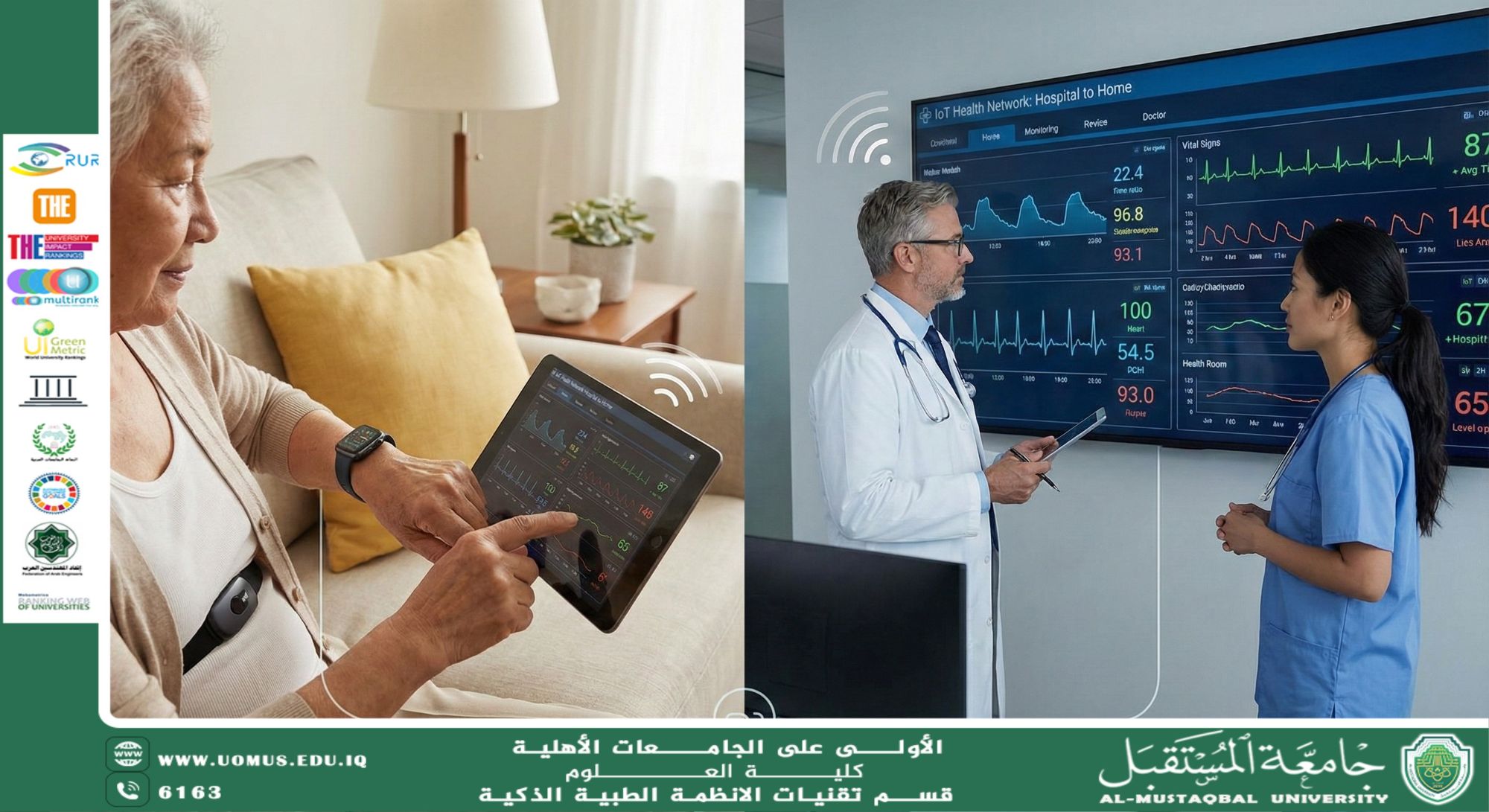
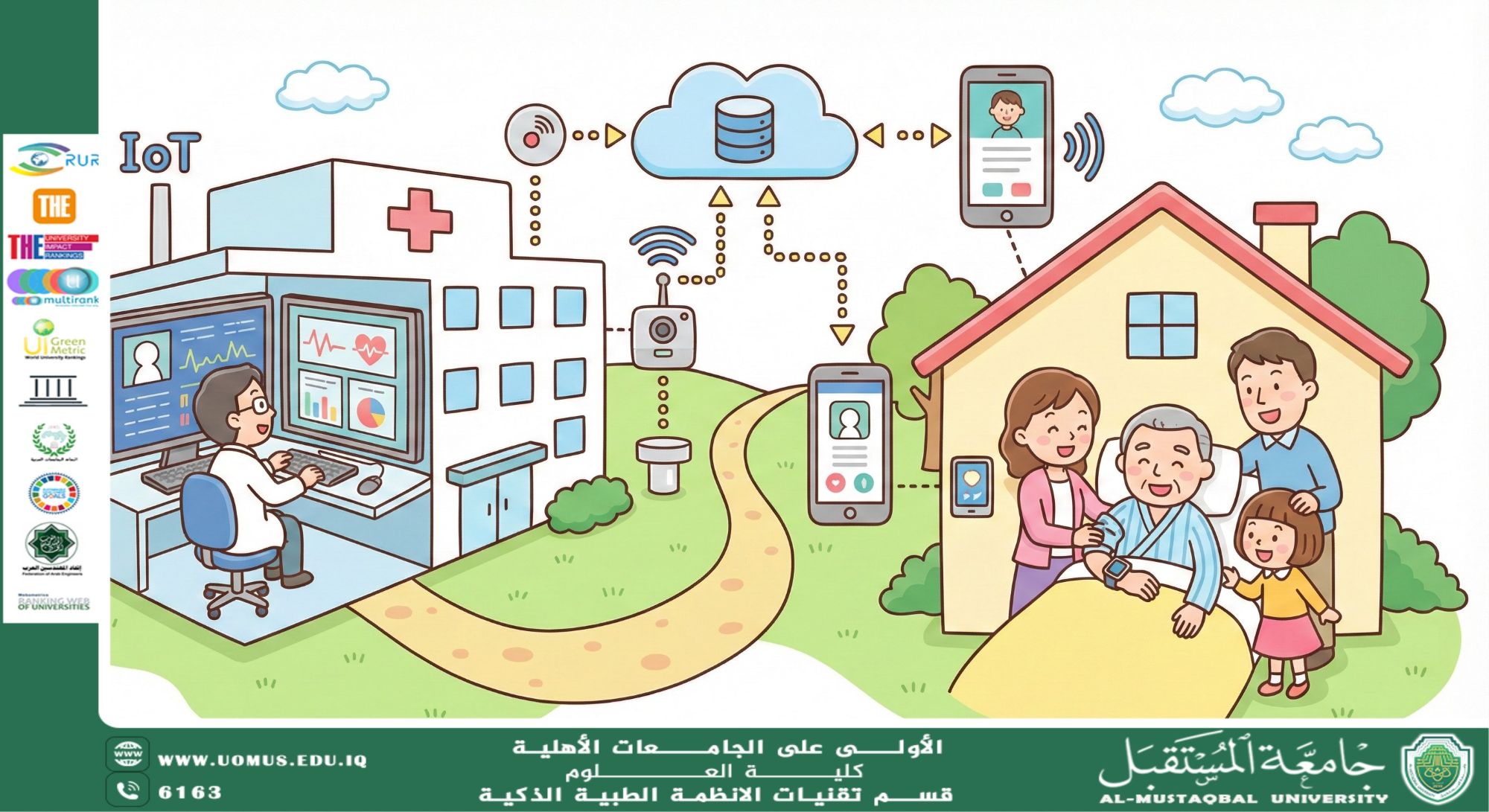
Smart patient monitoring systems represent a significant leap in healthcare management, as patient follow-up is no longer limited to hospitals but now extends into the home through sensors connected to the Internet of Health Things. These systems enable continuous, around-the-clock monitoring of vital signs—such as heart rate, oxygen saturation, blood pressure, and physical activity.
Smart devices automatically transmit data to digital medical platforms, where it is analyzed using artificial intelligence algorithms to detect any abnormal changes that may require immediate medical intervention. This contributes to early prevention, reduces emergency cases, and improves the overall quality of care.
Among the key benefits of these systems is reducing the burden on hospitals by decreasing unnecessary patient visits, enabling individuals to receive care from within their homes, increasing their comfort, and enhancing the quality of life for chronic patients and the elderly.
With the expansion of the Internet of Health Things, it has become possible to build an integrated care system that relies on real-time data and enables rapid response, making healthcare more interactive and efficient than ever before.