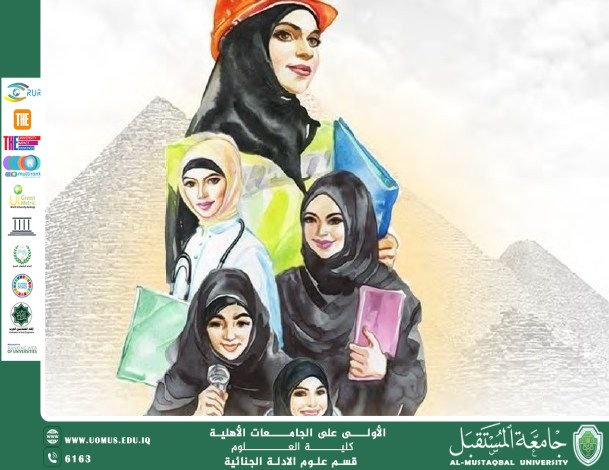

Empowering Women in Iraq Challenges and Solutions(M.M. Fatima Abbas Barhi)
The issue of empowering women in Iraqi society represents a complex challenge that combines legal and social dimensions. It Is not merely a social demand but a right enshrined in Iraqi law. Despite the achievements of Iraqi women in various fields, they still face a set of challenges that hinder their full participation In society and public life.
The Iraqi Constitution of 2005, Article 14, states:
"All citizens are equal before the law without discrimination based on gender, race, or religion."
This provision forms the fundamental legal basis guaranteeing women equality with men In rights and duties, obliging the state to protect them from any discrimination. It also reflects Iraq’s commitment to international treaties it has ratified, such as the Convention on the Elimination of All Forms of Discrimination Against Women (CEDAW).
Furthermore, Personal Status Law No. 188 of 1959 and its amendments addresses some aspects related to women’s rights In marriage, divorce, and inheritance. The law grants women the right to choose their spouses and sets legal protections in cases of divorce or alimony, ensuring legal and social stability. Additionally, Iraq’s Labor Law No. 37 of 2015 protects women In the workplace, including prohibiting employment discrimination, ensuring maternity leave, and providing safe working conditions.
However, Iraqi society faces cultural and social challenges that impede the full implementation of these laws. Traditional norms and societal customs often limit women’s ability to exercise their rights In education, employment, or political participation. In this context, raising legal awareness within society is crucial, so that every individual understands women’s rights and their responsibilities toward them.
Supporting civil society institutions and encouraging educational and training programs for women play a key role In bridging the gap between legal texts and practical application. Empowering women is not limited to enacting laws; it also Involves creating a social and cultural environment that accepts women’s participation in all areas of life and supports their ability to exercise their rights freely and safely.
In conclusion, empowering women in Iraq requires a combined effort from both the law and society. Iraqi laws provide a solid foundation for protecting women’s rights, but achieving actual equality requires social awareness and gradual cultural change to ensure that women can occupy their natural role as active participants in building and advancing society.
Al-Mustaqbal University – the first university in Iraq.
SDG4