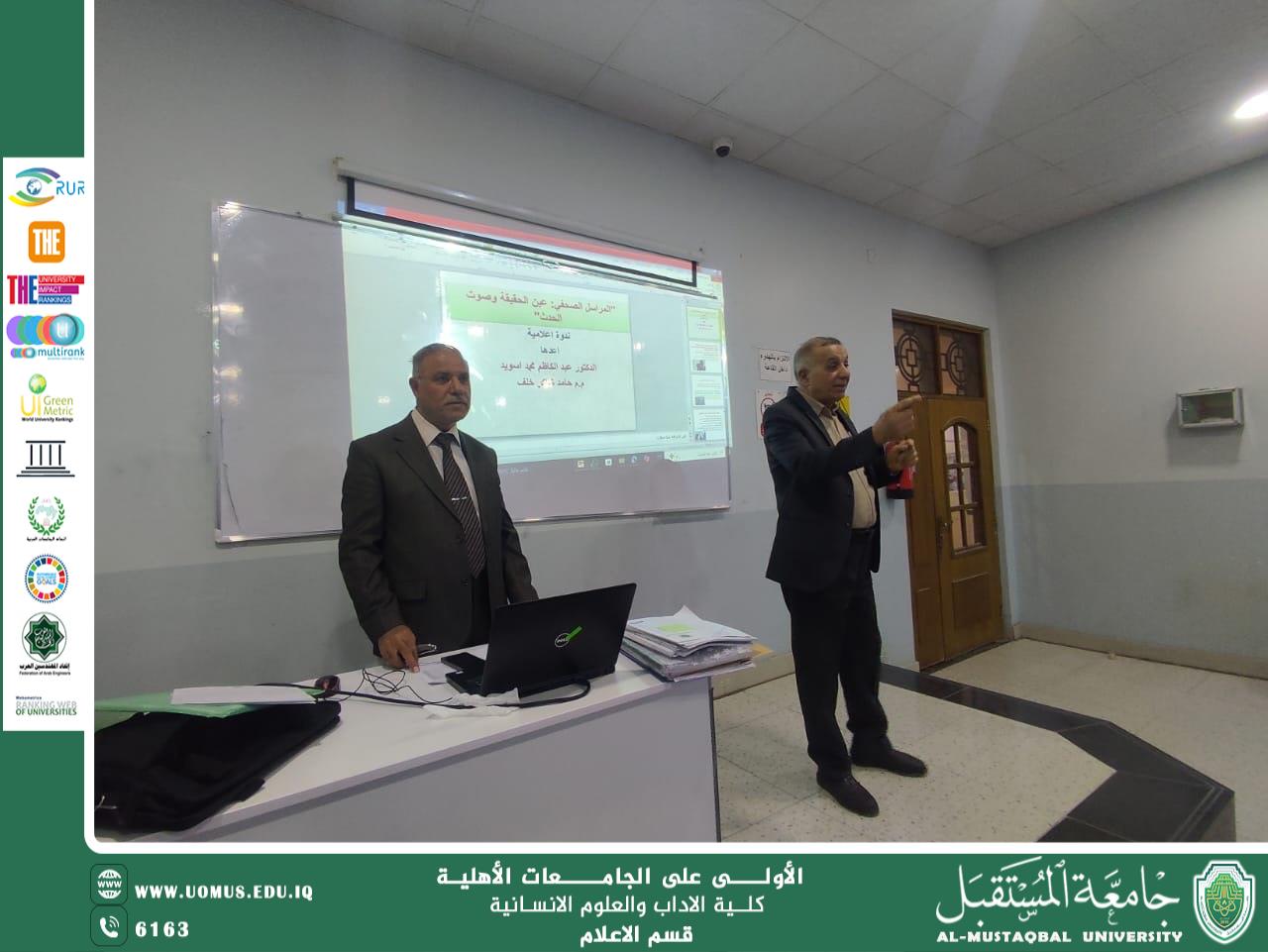
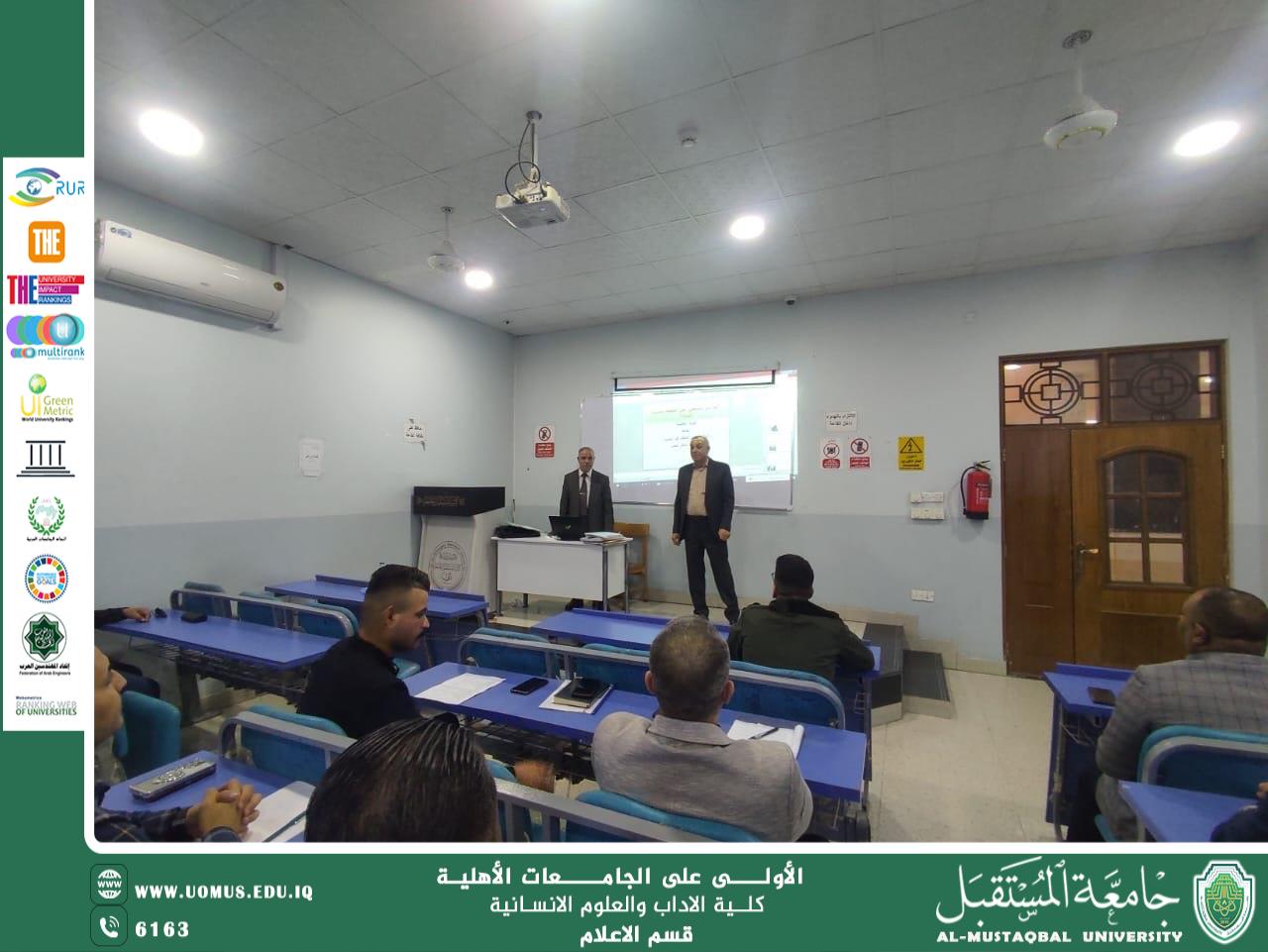
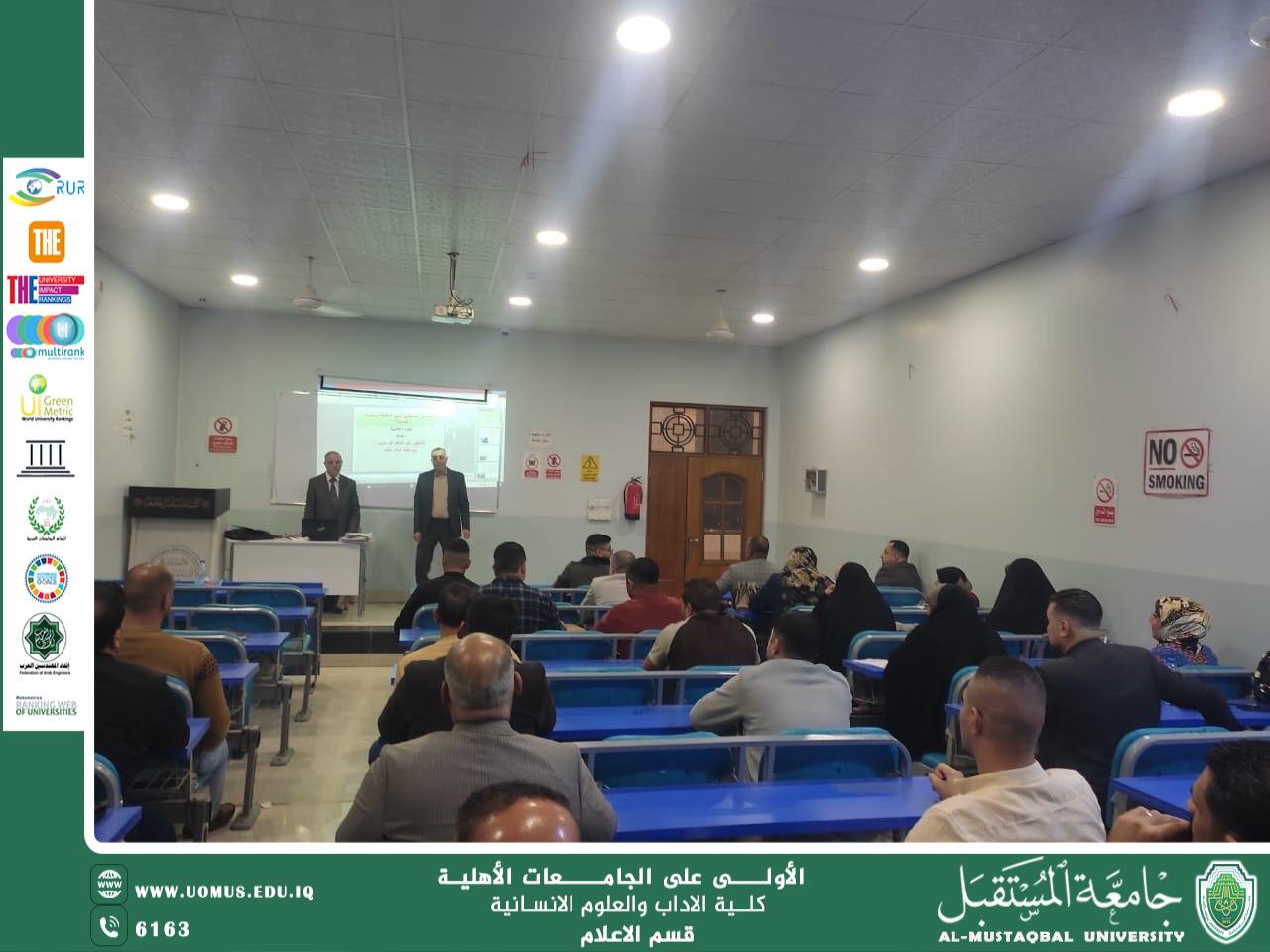
Scientific Seminar at Al-Mustaqbal University Entitled: “The News Correspondent: The Eye of Truth and the Voice of the Event”
The Iraqi electoral scene in its latest cycle was not merely an ordinary political contest; it was closer to a process of recalibrating the governing system—an operation carried out quietly yet with calculated precision, enabling the ruling parties to reinforce their presence despite the social and service-related decline the country is experiencing.
This apparent contradiction between the deteriorating reality and the electoral results opens the door to a question still resonating in Iraqi society:
How did the ruling forces manage to secure this victory?
The parties did not enter the elections merely as political actors, but as forces possessing the tools and resources of the state. Stadiums, government facilities, and heritage sites were transformed into stages for electoral advertising, giving partisan campaigns a magnitude that competing forces could not match.
Additionally, there was—unofficially yet tangibly—a mobilization of public-sector employees and their direction toward participation in mass gatherings, indicating the use of governmental influence to serve the electoral race.
At the level of the new voting bloc, it was evident that parties viewed those born in 2006–2007 as an untapped electoral reservoir. These young voters were entering the political experience for the first time, driven by direct aspirations for employment and stability. These aspirations were exploited through promises of job appointments and financial incentives, fostering a sense that the quickest route to a career lies in proximity to influential political forces.
As for the groups emerging from the Tishreen movement, they faced a form of “soft containment” rather than direct confrontation. The ruling parties succeeded in dismantling these groups by co-opting their leaders through positions and privileges, while the remaining factions suffered from weak organization and an inability to transform their slogans into a resilient political project.
The political vacuum deepened further as several influential MPs refrained from running in the elections, giving traditional forces greater space to reshape the political landscape according to their interests.
Thus, the victory of the ruling parties was not a coincidental event but the product of an integrated system of influence, strategic planning, and seizing the moment. This strong return is likely to reinforce the existing governance model for at least the next four years, with the roots of authority extending deeply into the state’s institutions.
Yet, despite this seemingly stable landscape, a question remains open regarding the prospects for reform—a prospect that appears weak unless a new national project emerges, capable of breaking the circle of influence and steering the state toward serving society rather than merely reproducing power.
By: Diaa Sami – Student in the Media Department
Al-Mustaqbal University – the first private university in Iraq