A Scientific Article by Assistant Dr. Karrar Majeed Obaid Title:Adaptive Chemistry in Nanomaterials and Its Role in Achieving Environmental and Technological Sustainability
Sustainability in the modern scientific concept is no longer limited to reducing pollution or rationalizing resource use alone. Instead, it has become directly linked to designing intelligent materials capable of adapting to their environment and operating with high efficiency while minimizing energy and material waste. In this context, adaptive chemistry in nanomaterials has emerged as one of the scientific approaches most aligned with sustainability principles. It focuses on designing nanoparticles and nanomaterials that can autonomously modify their physical and chemical properties in response to their surrounding medium, without the need for continuous external intervention or additional energy consumption.
At the nanoscale, the traditional laws governing material behavior change, with surfaces becoming the decisive factor in interactions. The proportion of surface atoms increases significantly, granting nanoparticles high sensitivity to environmental variables such as pH, ion concentration, and temperature. This sensitivity enables the material to reorganize its surface charge or the nature of its chemical bonds in an adaptive manner, maintaining its functional effectiveness under changing conditions, which constitutes the core of adaptive chemistry. This autonomous behavior reduces the need for repeated activation processes or the addition of new auxiliary materials, directly contributing to the reduction of material and energy consumption—two fundamental pillars of sustainability.
In the field of environmental remediation, adaptive nanomaterials are among the most promising means to achieve genuine sustainability in water and air purification. These materials can alter their surface nature according to the type of pollutant present in the environment. In the presence of organic dyes or heavy metals, the material reorganizes its active sites to match the pollutant type, achieving the highest possible adsorption efficiency with the minimum amount of material. When the medium’s composition changes, the material gradually returns to its original state without the need for harsh chemical regeneration processes. This reduces the generation of secondary waste and makes the treatment process more compatible with the principles of the circular economy.
In energy applications, adaptive chemistry contributes to enhancing the efficiency of sustainable systems by improving the performance of solar cells and nanobatteries. In solar cells, some nanomaterials possess the ability to adapt to radiation intensity, changes in the angle of incidence, and surface charge distribution, maintaining the highest energy conversion efficiency under varying environmental conditions. In batteries, adaptive nanoelectrodes reorganize their structure during charge and discharge cycles, reducing structural degradation, extending the battery’s operational lifespan, and minimizing the need for frequent replacements, which directly contributes to reducing the depletion of natural resources.
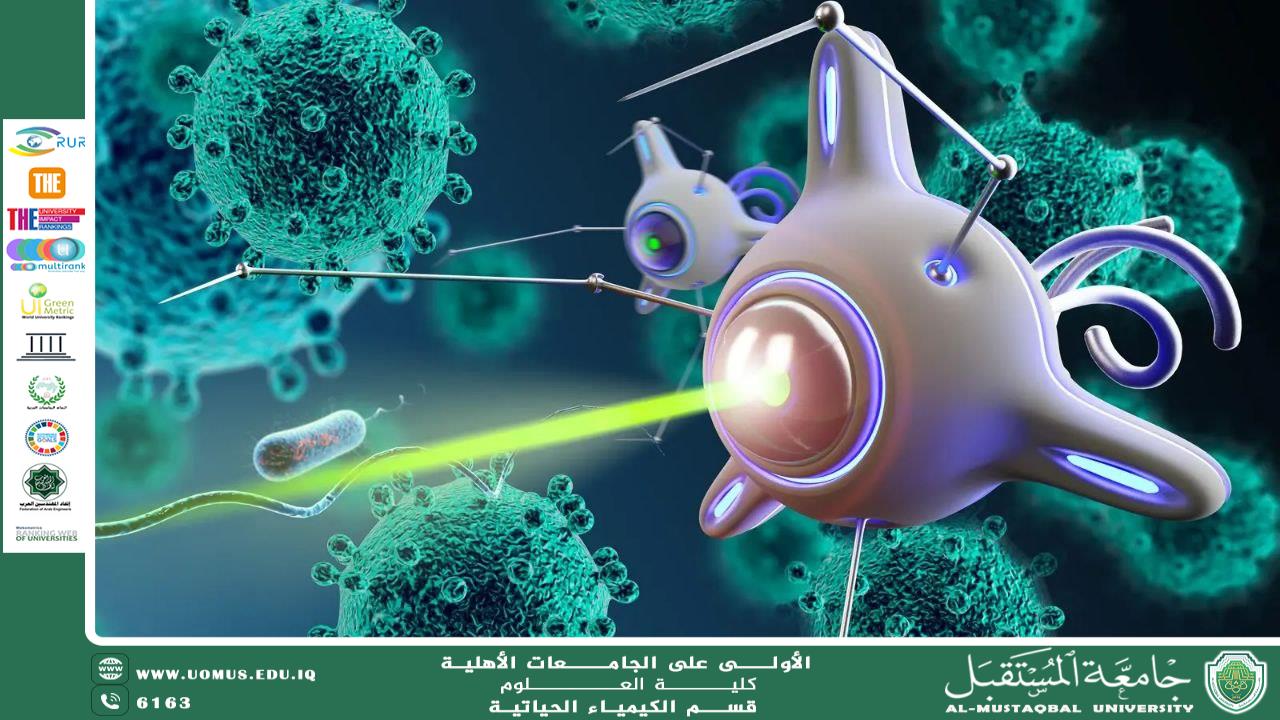
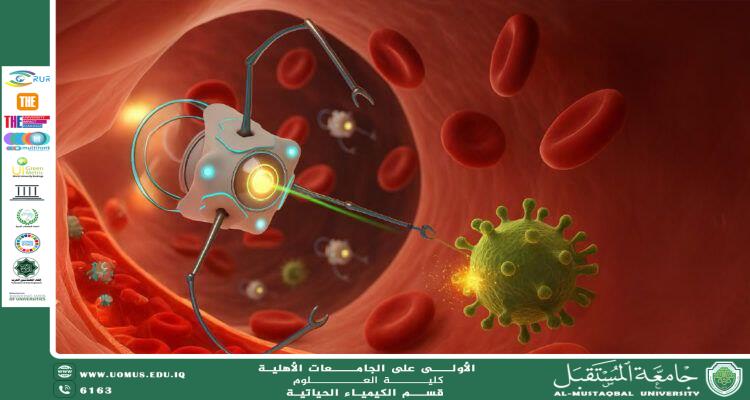
In the medical field, adaptive nanodrug carriers are considered one of the future pillars of sustainable medicine, enabling highly precise drug delivery to target cells without affecting healthy tissues. This selective behavior reduces the quantities of drugs used and limits the release of pharmaceutical compounds into the environment after use, addressing one of the growing environmental challenges of the modern era. Moreover, relying on natural environmental changes within the body, such as pH or enzyme activity, reinforces the concept of environmentally low-impact smart therapy.
Studying adaptive chemistry in nanomaterials relies on advanced analytical techniques capable of monitoring real-time changes in structure, surface, and electronic behavior, allowing for a precise understanding of adaptation mechanisms.
However, the greatest challenge remains linking these complex behaviors to comprehensive mathematical and quantum models that can be adopted in large-scale industrial design. Despite this, rapid advancements in nanotechnology and computing are increasingly contributing to transforming these concepts from laboratory frameworks to real-world industrial applications that support sustainability.
Today, adaptive chemistry in nanomaterials represents one of the fundamental bridges linking technological development, environmental protection, and resource rationalization. It not only offers more efficient materials but also proposes a new philosophy for designing chemical systems based on intelligent interaction with the environment rather than resisting it, making it one of the fields of nanotechnology most closely aligned with the spirit of sustainability in both science and application.
Al-Mustaqbal University is the top-ranked private university in Iraq.