A scientific article for Lecturer M.M. estabraq Arif Mohammad entitled: Post-Lithium Batteries: The New Chemistry for the Coming Energy Revolution
Introduction:
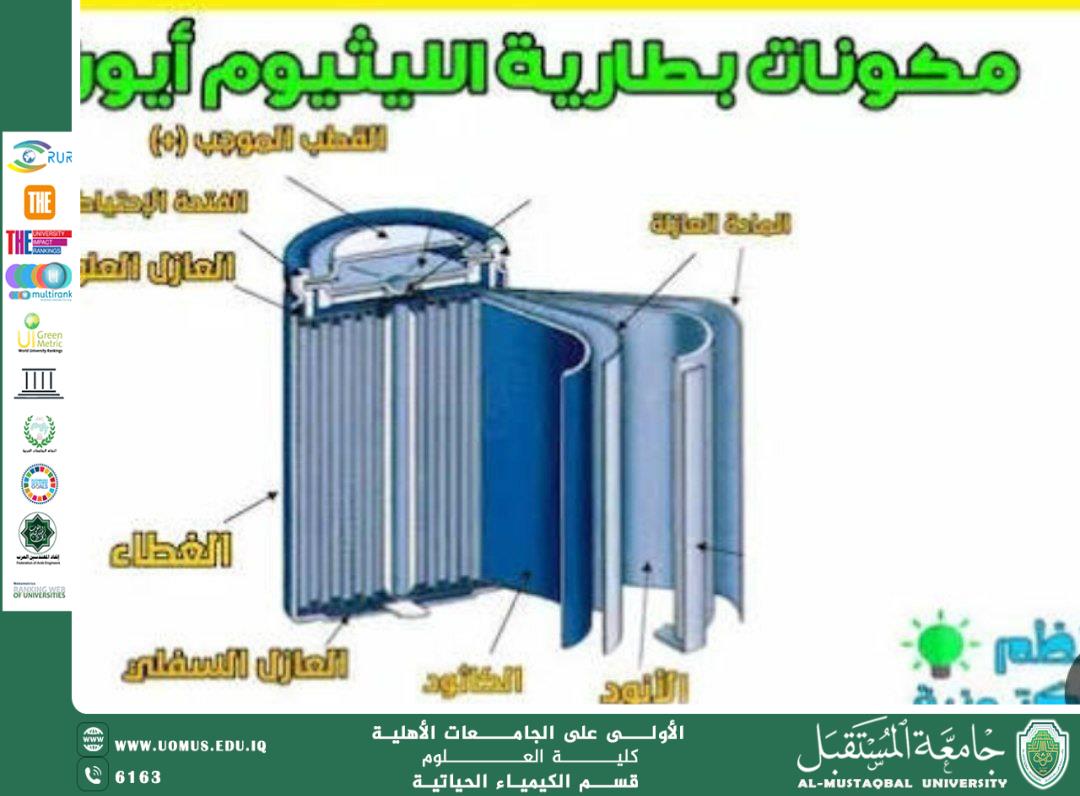
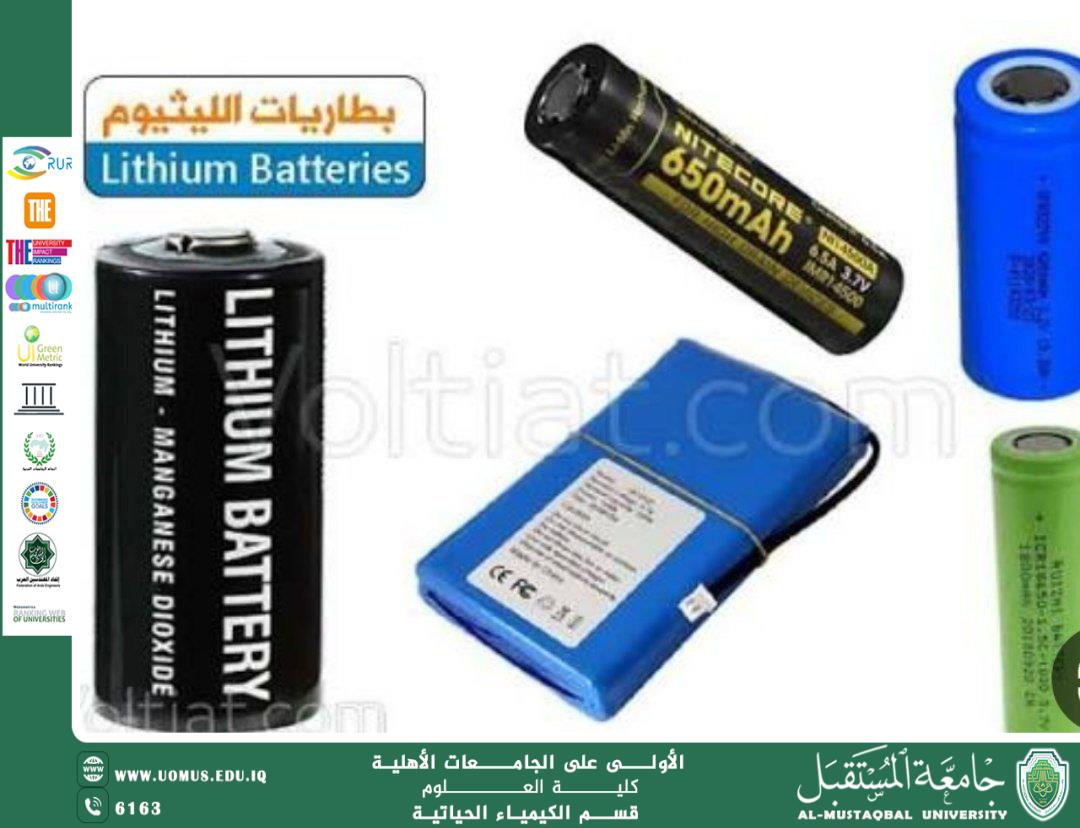
Over the past two decades, lithium-ion batteries have dominated the energy storage market, supported by their advanced technology and high efficiency. However, with the increasing global demand for electric vehicles, electronic devices, and large-scale power grids, challenges in lithium availability have begun to emerge. Lithium is considered a limited resource, geographically unevenly distributed (70% of reserves are in the "Lithium Triangle" in South America), and its extraction poses environmental challenges. This has driven researchers to seek chemical alternatives that are more abundant, sustainable, and safer.
Major Candidates and Their Chemical Characteristics
1. Sodium-Ion Batteries (Sodium-Ion)
Chemical Principle:
They operate on the same principle as lithium-ion batteries, where sodium ions (Na⁺) move between the positive and negative electrodes during charging and discharging.
Advantages:
· Abundance: Sodium is the sixth most abundant element in the Earth's crust.
· Cost: 20-30% cheaper than lithium counterparts.
· Safety: Less prone to dendritic formation, which causes short circuits.
Challenges:
· Energy Density: 30-40% lower than lithium batteries due to the higher atomic weight of sodium.
· Voltage: 0.3 volts lower compared to lithium.
· Electrode Development: Need for new electrode materials that accommodate larger sodium ions.
Latest Developments (2024):
· Use of sodium iron phosphate (NaFePO₄) electrodes that offer high cycle stability.
· Development of solid polymer electrolytes that enhance safety and lifespan.
2. Magnesium-Ion Batteries (Magnesium-Ion)
Chemical Principle:
Transfer of divalent magnesium ions (Mg²⁺) between electrodes.
Unique Advantages:
· Theoretical Capacity: Twice that of lithium for the same volume (due to the double charge).
· Safety: Does not form metallic dendrites.
· Abundance: Magnesium is abundantly available in seawater.
Chemical Challenges:
· Kinetic Sluggishness: Mg²⁺ ions move slowly in most materials due to their high charge.
· Lack of Suitable Electrolytes: Most traditional electrolytes react with magnesium, forming passive layers on its surface.
Recent Innovations:
· Non-nucleophilic electrolytes: such as boron-based compounds.
· Electrodes from chalcogens (selenium and sulfur) that react directly with magnesium.
3. Zinc-Air Batteries (Zinc-Air)
Operating Mechanism:
Zinc ions react with atmospheric oxygen to produce energy.
Features:
· Theoretical Energy Density: 1086 Wh/kg (four times higher than lithium).
· Low Cost: Zinc is cheap and readily available.
· Environmental Safety: Non-toxic materials.
Development Obstacles:
· Slow Recharging: Difficulty in reversing the zinc oxidation reaction.
· Electrode Degradation: Formation of undesirable zinc carbonates over time.
Promising Technologies:
· Bimetallic catalysts (e.g., Fe-Co) to catalyze oxygen reactions.
· Three-dimensional porous zinc electrodes to increase active surface area.
---
4. Aluminum-Ion Batteries (Aluminium-Ion)
Basic Chemistry:
Use of trivalent aluminum ions (Al³⁺).
Positives:
· High Capacity: Due to the triple charge.
· Safety: Non-flammable.
· Fast Charging Capability: Up to 60 seconds.
Technical Hurdles:
· Ionic Sluggishness: Difficulty in inserting and extracting large Al³⁺ ions from crystal structures.
· Side Reactions: With most electrode and electrolyte materials.
---
Expected Future Applications
1. Sodium-Ion: Stationary storage for renewable energy, backup power systems.
2. Magnesium-Ion: Long-range electric vehicles, wearable electronics.
3. Zinc-Air: Home energy systems, implantable medical devices.
4. Aluminium-Ion: Ultra-fast charging for portable electronic devices.
---
Conclusion
Each alternative has unique advantages and technical challenges. Sodium is the most commercially mature, while magnesium promises the highest energy density. The future may witness a hybrid system where each technology is used in its appropriate application, reducing dependence on lithium and contributing to a more sustainable energy transition.
Al-Mustaqbal University is the top-ranked private university in Iraq.