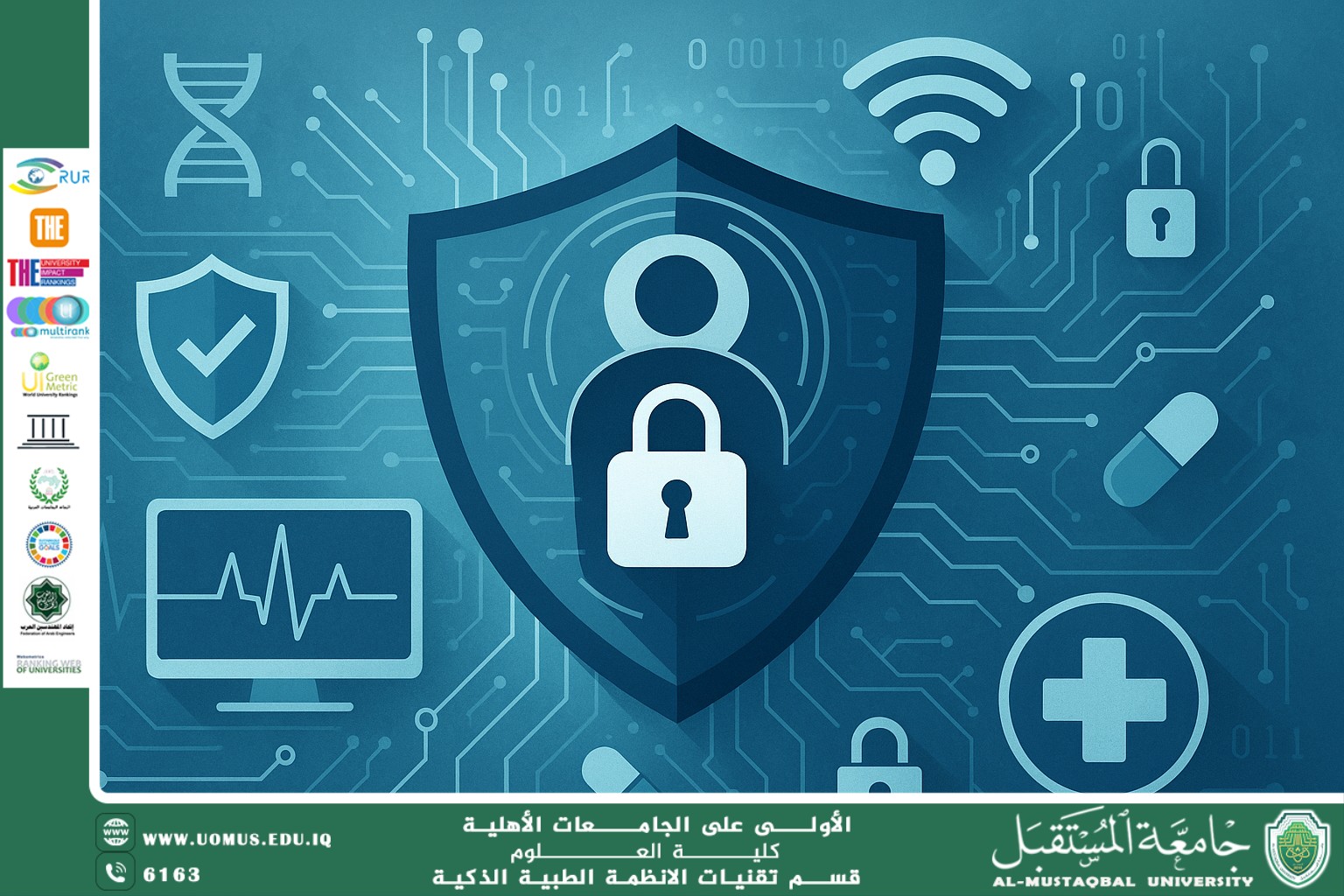

Cybersecurity and Its Vital Role in Protecting Intelligent Medical Systems (Prof. Dr. Mehdi Ebady Manaa )Manaa)
With the rapid expansion in the use of intelligent medical systems across hospitals, universities, and laboratories, protecting these systems has become a top priority to ensure patient safety and the reliability of medical data. Intelligent medical systems rely on data analytics, artificial intelligence (AI), and the Internet of Medical Things (IoMT), making them highly sensitive targets for cyberattacks. This highlights the crucial role of Network Security in safeguarding such systems.
Smart monitoring devices, AI-based diagnostic systems, and network-connected medical equipment form a complex ecosystem that requires robust protection. Any breach could potentially disrupt device functionality, manipulate medical results, or compromise patient information. For this reason, healthcare institutions employ several advanced security measures, including:
• Firewalls to protect the medical infrastructure
• Intrusion Detection and Prevention Systems (IDS/IPS) to block unauthorized access
• Data encryption to secure clinical information
• Traffic monitoring across intelligent medical devices
Securing the networks of intelligent medical systems is now one of the fastest-growing sectors due to the increasing number of cyberattacks targeting healthcare organizations worldwide. This field provides extensive opportunities for students of the Department of Intelligent Medical Systems, including roles in:
• Smart medical device security
• Healthcare cyberattack analysis
• Operating Security Operations Centers in hospitals (Healthcare SOC)
• Protecting Electronic Medical Record systems (EMR)
Investing in network security within intelligent medical systems ensures a safe digital healthcare environment, enhances patient trust, and improves the quality of technology-driven medical services.
Al-Mustaqbal University — the first university in Iraq.