
A Scientific Article Titled “Dual Diagnostic-Therapeutic Technology” by (Taqa Adel Aboud)
Dual Diagnostic-Therapeutic Technology: The Application of Gold Nanoparticles in Treating Gastrointestinal Cancer
Introduction
Gastrointestinal cancer—which includes tumors of the stomach, colon, and esophagus—is among the most difficult cancers to diagnose early and treat effectively due to its deep anatomical location and the absence of clear symptoms in the initial stages.
Gold nanoparticles (GNPs) have emerged as a promising technology capable of overcoming these challenges. Gold at the nanoscale possesses unique properties such as high biocompatibility and exceptional optical characteristics, making it an ideal theranostic platform that combines both diagnosis and therapy.
Applications and Uses
1. Diagnostic Applications
Gold nanoparticles are used as smart imaging agents that can directly reach cancer cells. As enhanced contrast agents, they can be conjugated with antibodies or molecules that specifically target cancer cells.
When used in advanced imaging techniques—such as CT imaging or photothermal imaging—they significantly increase contrast, allowing physicians to precisely locate tumors, especially small lesions that are difficult to detect.
They are also effective in early detection. Due to their unique interaction with light through Surface Plasmon Resonance (SPR), gold nanoparticles enhance the sensitivity of biosensors used to detect cancer biomarkers in blood or tissue samples at extremely low concentrations, enabling diagnosis at very early stages.
Therapeutic Applications of Gold Nanoparticles
1. Photothermal Therapy (PTT)
Gold nanoparticles are particularly effective in treatment through two main mechanisms.
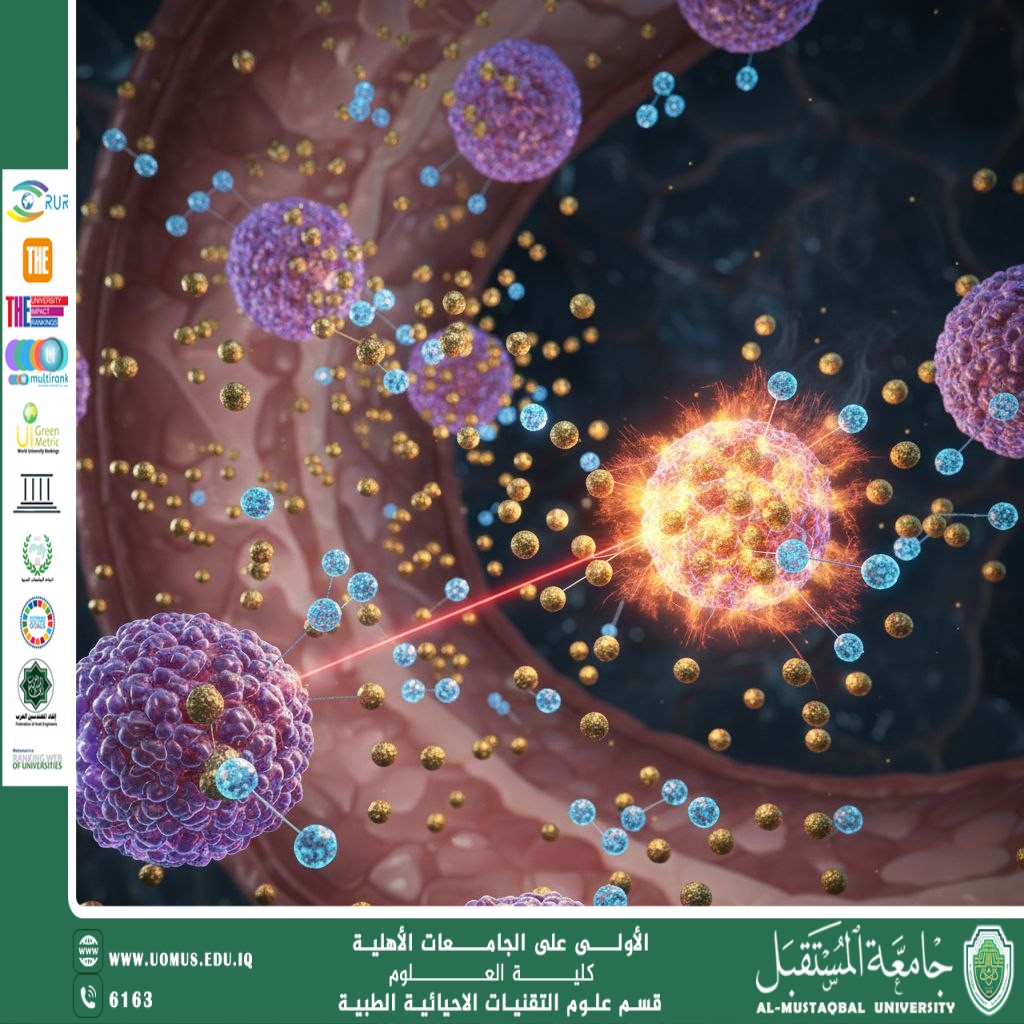
In photothermal therapy, gold nanorods or similar structures are injected into the tumor site. When exposed to near-infrared (NIR) laser light, the nanoparticles absorb the light and efficiently convert it into localized, concentrated heat.
This heat induces thermal ablation of surrounding cancer cells without causing significant damage to healthy tissue.
2. Targeted Drug Delivery
Gold nanoparticles are also used as nanocarriers for loading traditional chemotherapeutic drugs or nucleic acids such as siRNA.
Their surfaces are modified to selectively target gastrointestinal cancer cells, ensuring that the drug reaches the tumor at high concentration while reducing destructive side effects on healthy organs.
Conclusion
The use of gold nanoparticles (GNPs) represents a true breakthrough in managing gastrointestinal cancer, surpassing the limitations of conventional treatments such as systemic chemotherapy.
By integrating ultra-precise diagnostic capabilities with targeted photothermal therapy, nanogold technology provides tremendous hope for reducing side effects and enhancing treatment effectiveness.
Ongoing advancements in this field affirm that gold nanotechnology is a powerful and promising future tool capable of achieving comprehensive and lasting recovery for cancer patients.
References
This article was prepared based on a recent and reliable peer-reviewed scientific review:
The Applications of Gold Nanoparticles in the Diagnosis and Treatment of Gastrointestinal Cancer
Source: https://pmc.ncbi.nlm.nih.gov/articles/PMC8807688/
Al-Mustaqbal University – The First University in Iraq