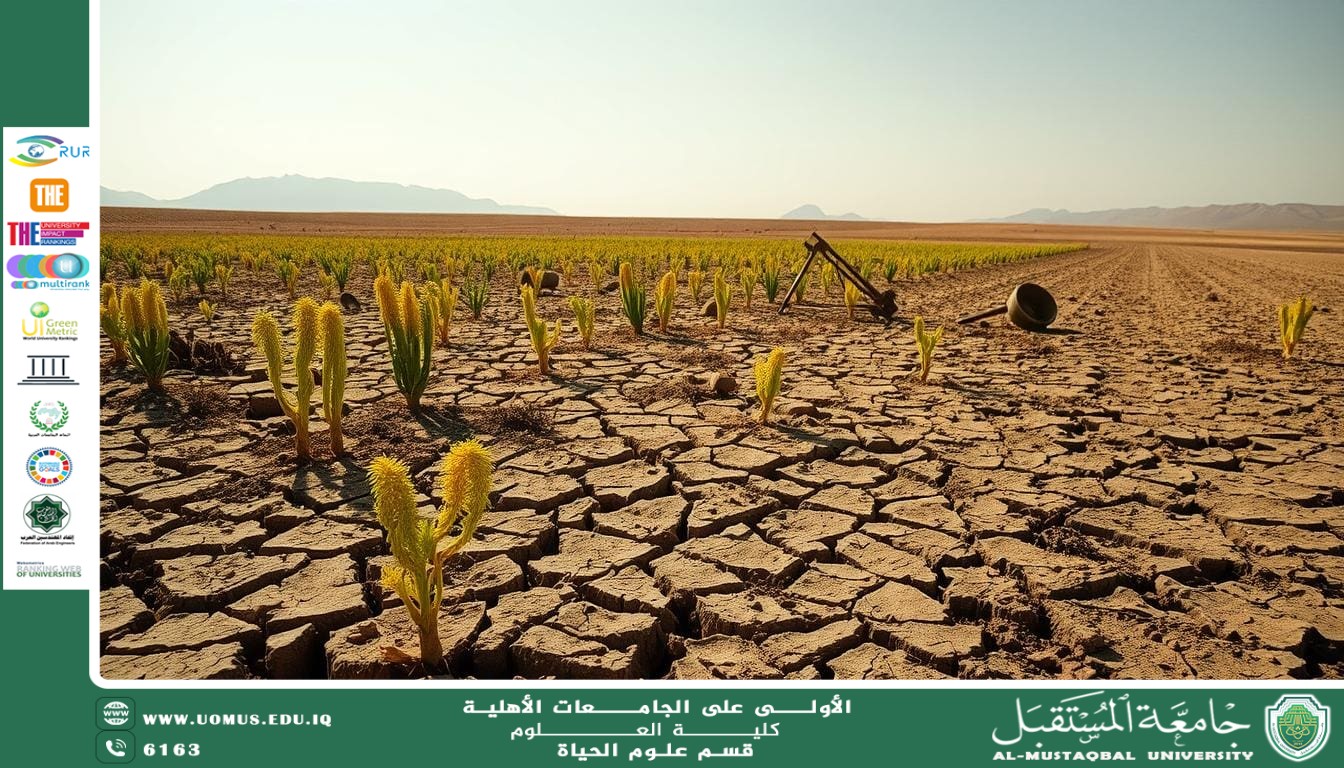
"A scientific article by Ms. Noor Alhuda Azmi titled “The Impact of Soil Degradation on Food Security
environmental challenges threatening agricultural production and global food security. Soil is the primary resource upon which plants depend to obtain nutrients and water. Therefore, any decline in soil quality directly affects crop quantity and quality, ultimately impacting a nation’s ability to provide sufficient food for its population.
1. Causes of Soil Degradation
Several factors contribute to soil degradation, including:
Water and wind erosion, which remove the nutrient-rich topsoil.
Excessive use of agricultural chemicals, such as fertilizers and pesticides.
Improper irrigation practices, leading to soil salinization or dryness.
Deforestation and reduction of vegetative cover.
Uncontrolled human activities, such as converting farmland into construction areas.
2. Impact of Soil Degradation on Food Security
Soil degradation has significant consequences for food production, including:
Reduced soil fertility, resulting in poor plant growth.
Decreased productivity of major agricultural crops.
Increased reliance on fertilizers and water resources to compensate for lost soil quality.
Rising food prices due to lower crop yields and supply shortages.
Threats to long-term agricultural sustainability, especially in arid regions.
3. Strategies to Reduce Soil Degradation
To mitigate soil degradation, several measures can be implemented:
Applying sustainable agricultural practices and preventing soil erosion.
Improving irrigation systems and using modern irrigation technologies.
Using organic fertilizers and reducing chemical inputs.
Reforesting areas that have lost their vegetative cover.
Increasing awareness of soil conservation and its importance.
Al-Mustaqbal University is the first university in Iraq.