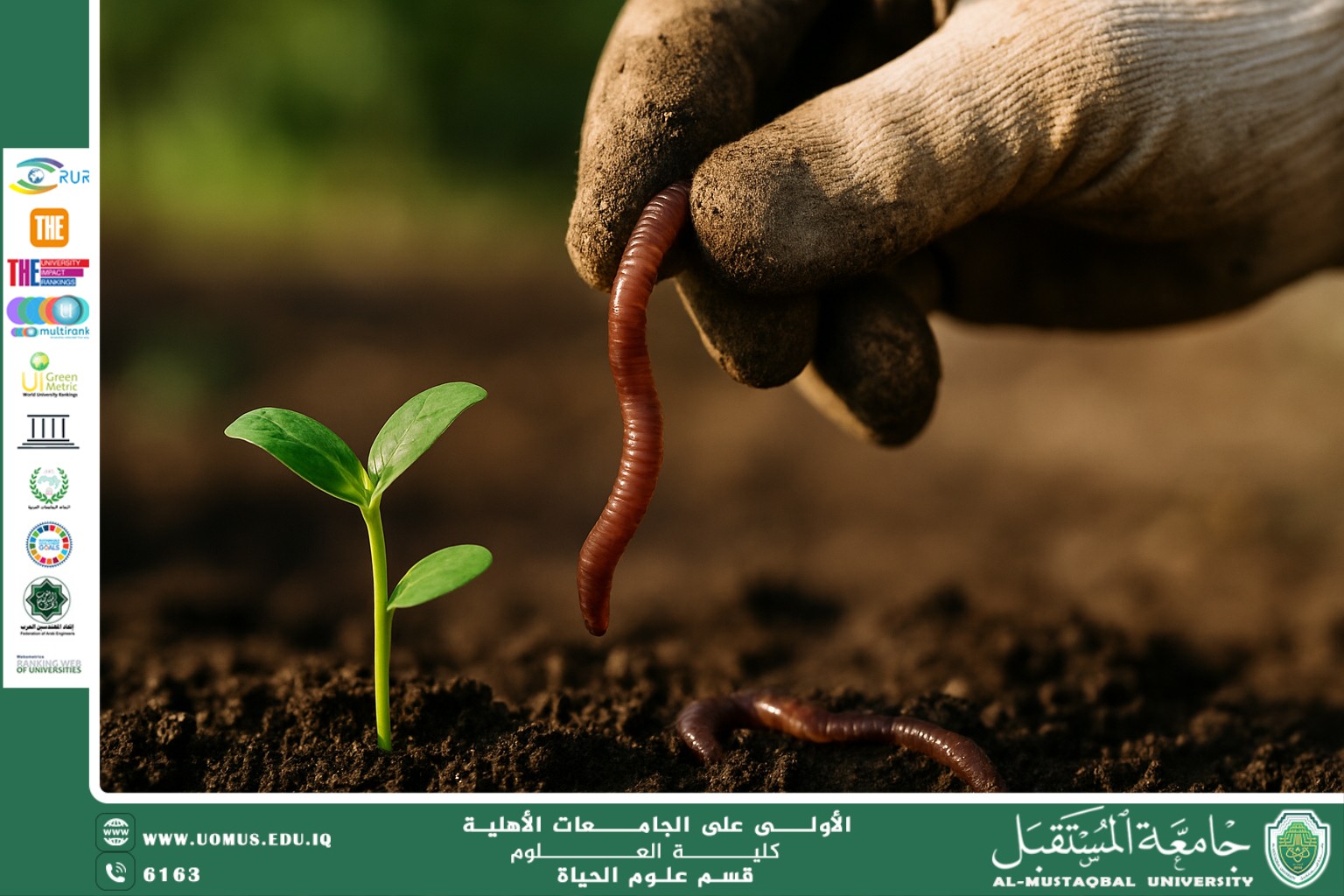

A scientific article by Ms. Noor Alhuda Azmi Hassan titled “The Role of Microorganisms in Enhancing Soil Fertility.”
Microorganisms play a fundamental role in maintaining soil health and enhancing its fertility. They form a vital part of the soil ecosystem on which plants depend for growth and productivity. These microorganisms include bacteria, fungi, algae, and protozoa, all of which work together to improve the physical, chemical, and biological properties of the soil.
1. Decomposition of Organic Matter
Microorganisms break down plant and animal residues in the soil, converting them into nutrient-rich simple components. This process increases organic matter content and boosts soil fertility.
2. Nitrogen Fixation
Certain bacteria, such as Rhizobium, fix atmospheric nitrogen and convert it into a form that plants can absorb. This is one of the most crucial functions that naturally enhances agricultural productivity without excessive reliance on chemical fertilizers.
3. Solubilization of Phosphates and Minerals
Some bacteria help dissolve unavailable phosphates in the soil, turning them into absorbable forms for plants. Other microorganisms contribute to releasing essential nutrients such as iron, zinc, and potassium.
4. Improving Soil Structure
Fungi, particularly mycorrhizal fungi, improve soil aeration and water retention by forming networks that attach to plant roots. These networks enhance the plant’s ability to absorb water and nutrients.
5. Controlling Plant Pathogens
Beneficial microorganisms help protect plants from diseases by producing antifungal and antibacterial compounds, reducing the spread of harmful pathogens.
Al-Mustaqbal University is the first university in Iraq.