"A scientific article by Lecturer Zahraa Jawad Kazem titled “Soil Salinity and Its Impact on Agricultural Production
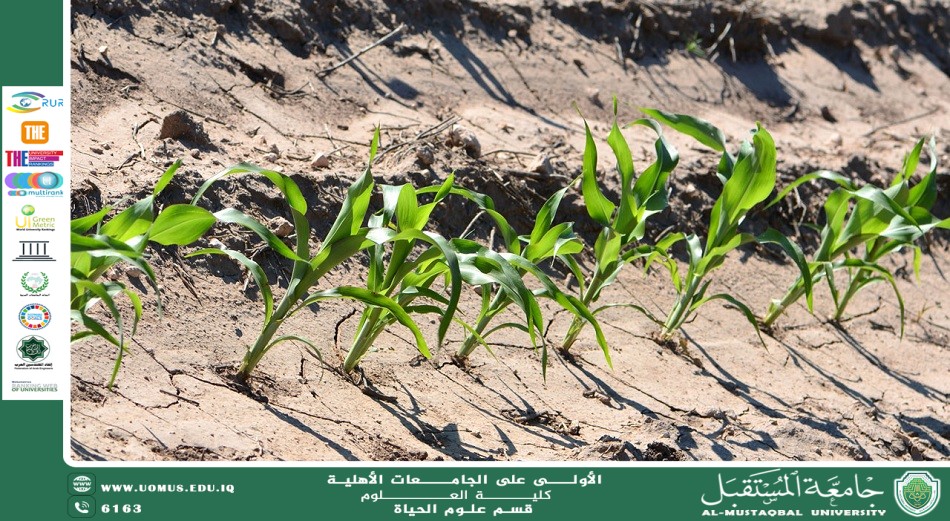
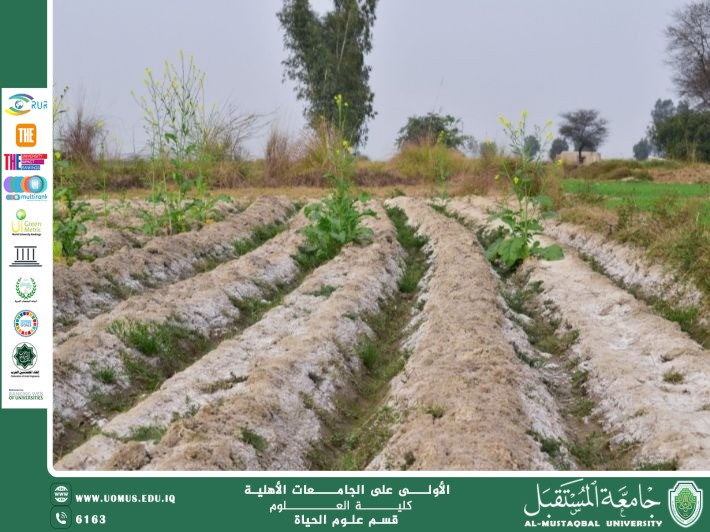
Soil salinity is one of the most significant environmental and agricultural challenges that directly affect crop yield and quality. This problem arises when soluble salts accumulate in the soil at levels that hinder plant growth and reduce the plant’s ability to absorb water and essential nutrients.
1. Causes of Soil Salinity
Several factors contribute to soil salinity, including:
Irrigation with highly saline water, such as degraded groundwater.
High evaporation rates, which leave salt deposits on the soil surface, especially in arid regions.
Poor irrigation and drainage management.
Intrusion of seawater or salty river water into agricultural lands.
Excessive use of chemical fertilizers.
2. Effects of Soil Salinity on Agricultural Production
Soil salinity affects plant growth in several ways:
Reduced water uptake by roots due to high osmotic pressure.
Inhibition of plant growth and reduced photosynthetic activity.
Decreased crop productivity and poor quality yield.
Nutrient imbalances, as plants struggle to absorb essential elements such as potassium and magnesium.
Plant death in severe cases.
3. Strategies to Reduce Soil Salinity
To mitigate soil salinity, the following measures can be applied:
Improving drainage systems to prevent salt accumulation.
Using modern irrigation techniques, such as drip irrigation.
Leaching salts from the soil using good-quality water.
Growing salt-tolerant crops, such as barley, cotton, and certain forage plants.
Adding organic matter to improve soil structure and water retention.
Al-Mustaqbal University is the first university in Iraq.