
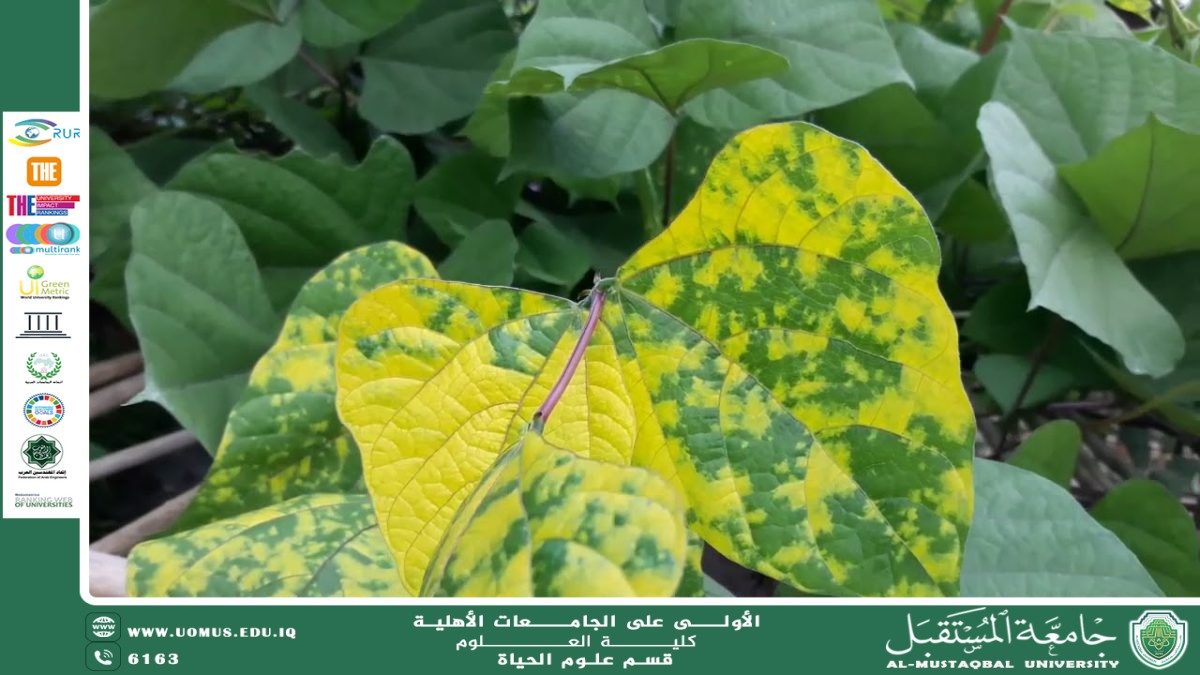
A scientific article by Lecturer Zeinab Nazem Azeez titled “The Impact of Viral Infections on Leaf Yellowing and Growth Disorders in Plants.”
Viral plant diseases are among the most serious threats to global agricultural production, causing substantial annual losses as they disrupt normal physiological functions within plants. One of the most common and significant symptoms of viral infection is viral yellowing, a visible discoloration of the leaves caused by a reduction in chlorophyll content and a decline in photosynthetic efficiency.
1. Nature of Plant Viruses and Mechanisms of Infection
Plant viruses are microscopic pathogens composed mainly of genetic material encased in a protein coat. Once they invade plant cells, they reprogram the cellular machinery to produce more viral particles at the expense of the plant’s normal functions.
These viruses typically spread through:
Insect vectors such as whiteflies, aphids, and leafhoppers.
Contaminated seeds.
Unsterilized farming tools.
Direct contact between infected and healthy plants.
2. Mechanism of Viral Yellowing
When a virus enters leaf tissues, it disrupts chlorophyll production and damages chloroplast structures essential for photosynthesis. It also interferes with nutrient transport within the plant, leading to visible symptoms such as:
General or localized yellowing of leaves.
Mottling or patchy discoloration.
Reduced photosynthetic efficiency.
Slowed vegetative and root growth.
3. Effects on Crop Productivity
Viral yellowing can result in:
Growth retardation and stunted plants.
Reduced flower and fruit formation.
Lower crop quantity and quality.
Increased susceptibility to secondary pests and diseases.
In severe cases, yield losses may exceed 80%.
4. Diagnosis and Control Strategies
Early detection is crucial and can be achieved through:
Visual inspection of symptoms.
Immunological tests such as ELISA.
Molecular detection using PCR.
Effective control strategies include:
Managing insect vectors using environmentally friendly methods.
Planting virus-resistant crop varieties.
Removing infected plants to limit spread.
Using protective nets to reduce insect entry.
Applying integrated pest and farm management practices.
Viral yellowing is not merely a simple discoloration but a sign of profound disruption in the plant’s physiological processes, directly impacting crop yield and quality. Understanding viral behavior, transmission ways, and prevention methods is essential for maintaining agricultural sustainability and enhancing food security in the face of growing environmental challenges.
Al-Mustaqbal University is the first university in Iraq.