
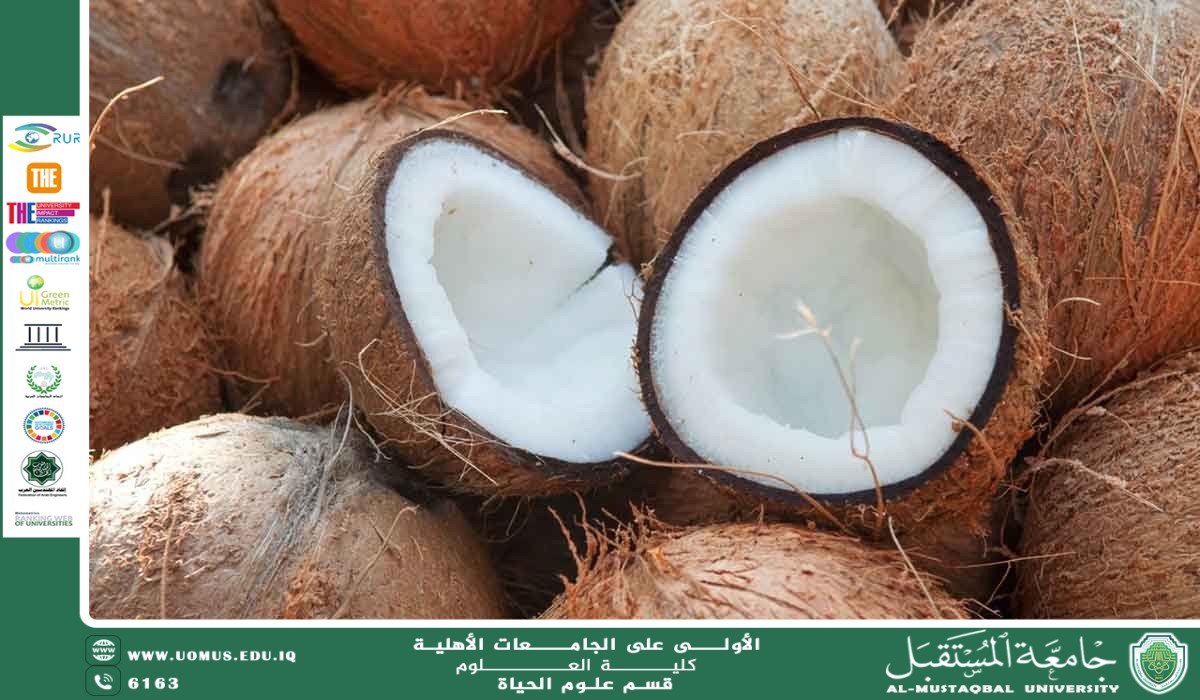
"Scientific article by the lecturer Ms. Zainab Nazim Aziz title" ‘Coconut Plant and Its Importance
The coconut plant is one of the most well-known tropical plants widely spread across coastal regions around the world. It is highly adaptable to various environmental conditions, earning it the nickname "The Tree of Life" due to its numerous benefits and diverse uses.
1. General Description
The coconut plant is characterized by its tall, straight trunk and large feather-like leaves. It produces oval-shaped fruits that contain coconut water, flesh, and oil—each of which plays a vital role in the food and pharmaceutical industries.
2. Nutritional Importance
Coconut has a high nutritional value, containing:
Healthy fats
Dietary fiber
Essential minerals such as potassium and magnesium
B vitamins
Coconut water is also used as a natural drink to hydrate the body and replenish lost electrolytes.
3. Health Benefits
Thanks to its antioxidant and antibacterial properties, the coconut plant helps:
Support heart health
Improve digestion
Boost immunity
Enhance skin and hair health
Reduce inflammation
4. Economic and Industrial Importance
Coconut is utilized in several industries, including:
Coconut oil production
Cosmetic and skincare products
Soap and detergent manufacturing
Production of ropes and baskets from the fibrous husk
Food industries such as coconut milk and flour
These uses make the coconut plant a valuable economic crop in tropical countries.
Conclusion
The coconut plant is a highly beneficial species that offers nutritional, health, and economic advantages, making it essential for coastal communities and an important component of many global industries.
Al-Mustaqbal University is the first university in Iraq.