

Forensic Evidence Department Holds Scientific Workshop on "Forensic Insect Dissection" in Support of Sustainable Education
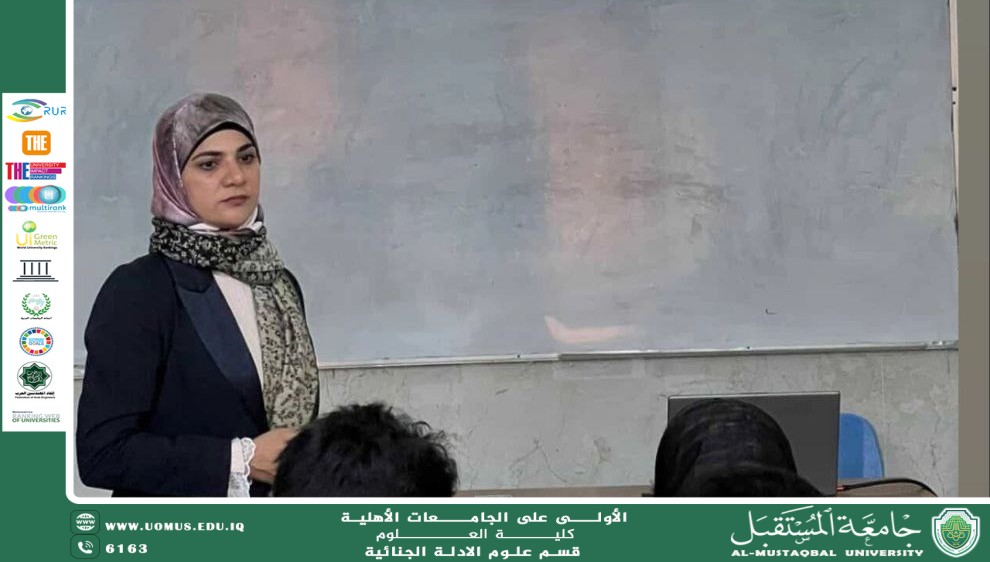
The Forensic Evidence Department at the College of Science – Al-Mustaqbal University organized a specialized scientific workshop titled “Forensic Insect Dissection”, as part of its academic program dedicated to enhancing students’ skills in modern forensic sciences.
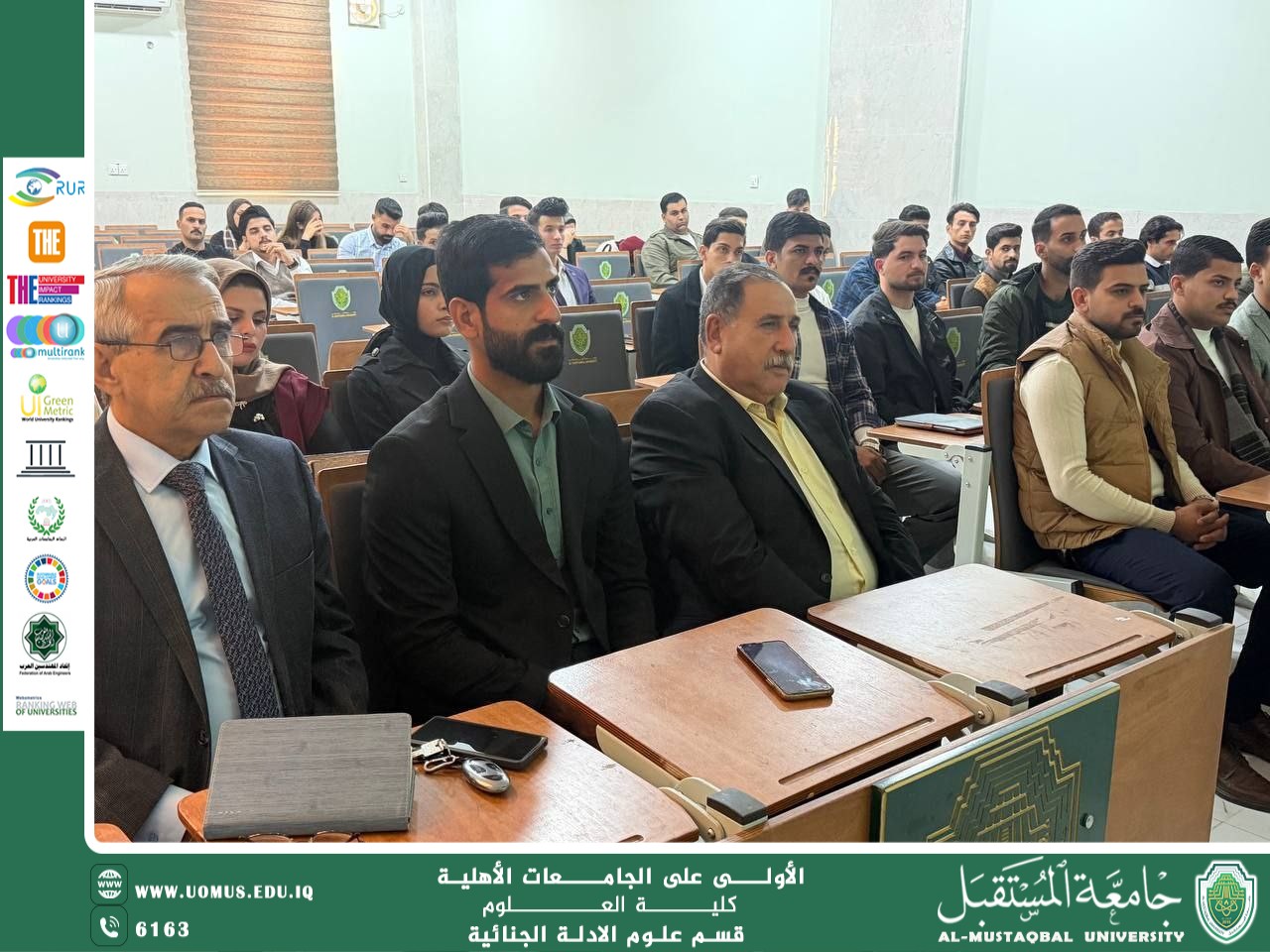
The workshop was delivered by experts in forensic entomology, with the attendance of the department head and several faculty members from the College of Science.
The workshop aimed to introduce students to the concept of forensic insects and their crucial role in estimating the postmortem interval, analyzing decomposition stages, and understanding the relationship between environmental conditions and the insect species that appear at crime scenes. It also covered modern techniques used in forensic insect dissection and methods of extracting precise biological data that support criminal investigations.
The workshop included a comprehensive scientific presentation, practical training on insect dissection and identification of forensically significant species, along with interactive discussions that enriched students’ practical understanding of forensic entomology.
This workshop aligns with several United Nations Sustainable Development Goals (SDGs), particularly:
Goal 4: Quality Education – through providing specialized training and enhancing academic excellence.
Goal 3: Good Health and Well-being – by strengthening the role of forensic sciences in community safety.
Goal 10: Reduced Inequalities – through offering equal learning opportunities for all students.
Goal 17: Partnerships for the Goals – by fostering collaboration between the college and scientific institutions.
This initiative reflects Al-Mustaqbal University’s commitment to advancing scientific education and preparing qualified graduates capable of serving society and supporting the justice system.
Al-Mustaqbal University – The Leading University in Iraq
SDG4