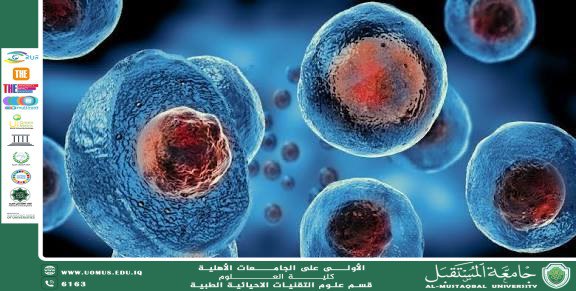

A scientific article entitled "Stem Cell Therapy" by Teaching Assistant (Madloula Mu'ayyad Fayeq)
What are Stem Cells?
Stem cells are undifferentiated primitive cells that have the ability to divide for extended periods and differentiate into various specialized cell types. The most important types are:
1. Embryonic Stem Cells – capable of differentiating into all cell types.
2. Adult Stem Cells – found in bone marrow and blood, they have a limited ability to differentiate but are clinically important.
3. Induced Polymorphic Stem Cells (iPSCs) – obtained through genetic engineering techniques, where somatic cells are reprogrammed to resemble embryonic stem cells.
Stem Cell Therapy in Hematology
Bone marrow or hematopoietic stem cell transplantation is used to treat various blood disorders, such as:
Leukemia (blood cancer)
Lymphoma (lymphoma)
Aplastic anemia
Thalassemia and sickle cell anemia