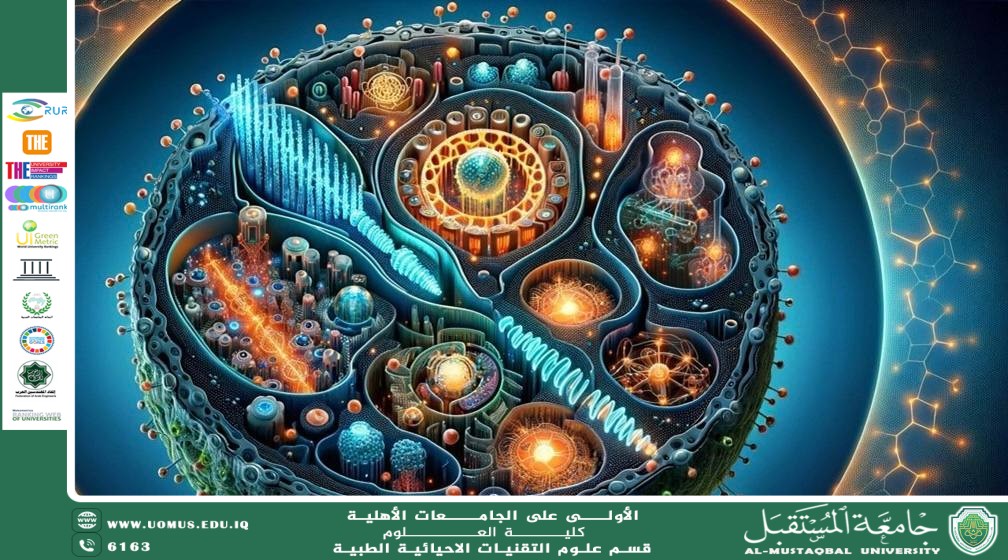
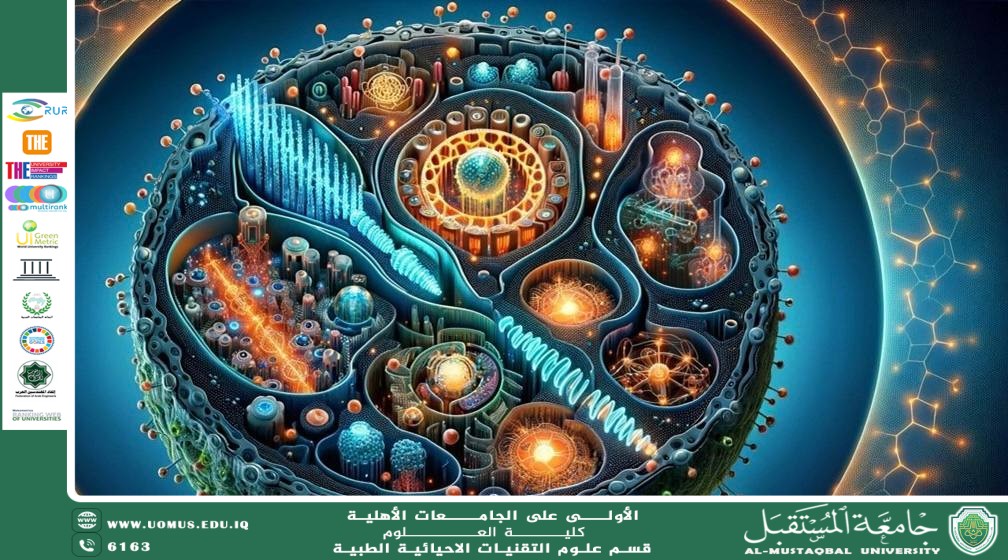
A scientific article by teaching assistant (Ahmed Jalal Naama) entitled "Synthetic Biology
Synthetic biology is a multidisciplinary field that combines biology, engineering, computer science, and chemistry. Its aim is to design and build new organisms or biological systems for beneficial purposes, or to reprogram existing biological systems to make them more efficient or give them new functions.
Key applications of synthetic biology include:
1. Biomedicine
Producing biopharmaceuticals such as insulin or antibiotics more efficiently.
Gene therapy through the design of genes that correct genetic defects.
Cancer-killing cells: Programming immune cells to target cancer cells (such as CAR-T cells).
2. Agriculture and Food
Developing drought- or pest-resistant plants using engineered genes.
Producing meat in the lab from animal cells without the need to raise livestock.
Producing nutritional supplements (such as vitamin B12 or omega-3) from genetically modified bacteria.
3. Environment and Energy
Organizations that consume pollution: such as bacteria that absorb heavy metals from water.
Producing biofuels from genetically modified microorganisms (such as algae or yeast). Recycling plastics using engineered enzymes.
4. Industrial Biotechnology
Manufacturing new materials such as synthetic spider silk or biodegradable plastics from biocomponents.
Biosensors detect toxins or diseases in different environments.
Al-Mustaqbal University, the leading university in Iraq.