
The Role of Forensic Evidence in Contributing to Crime Prevention
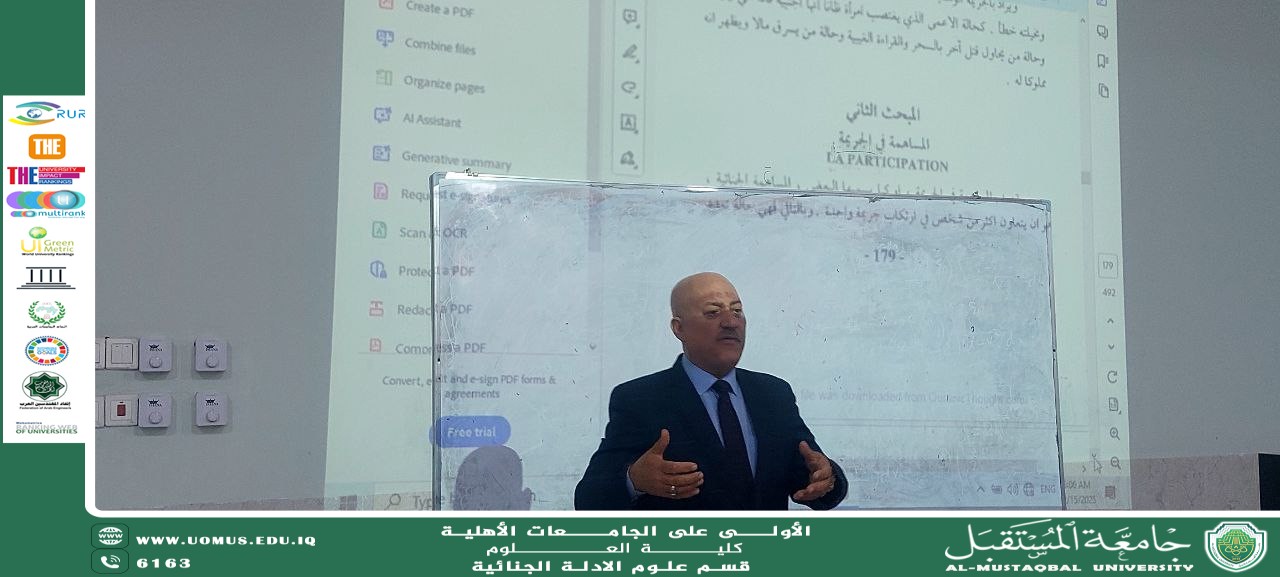
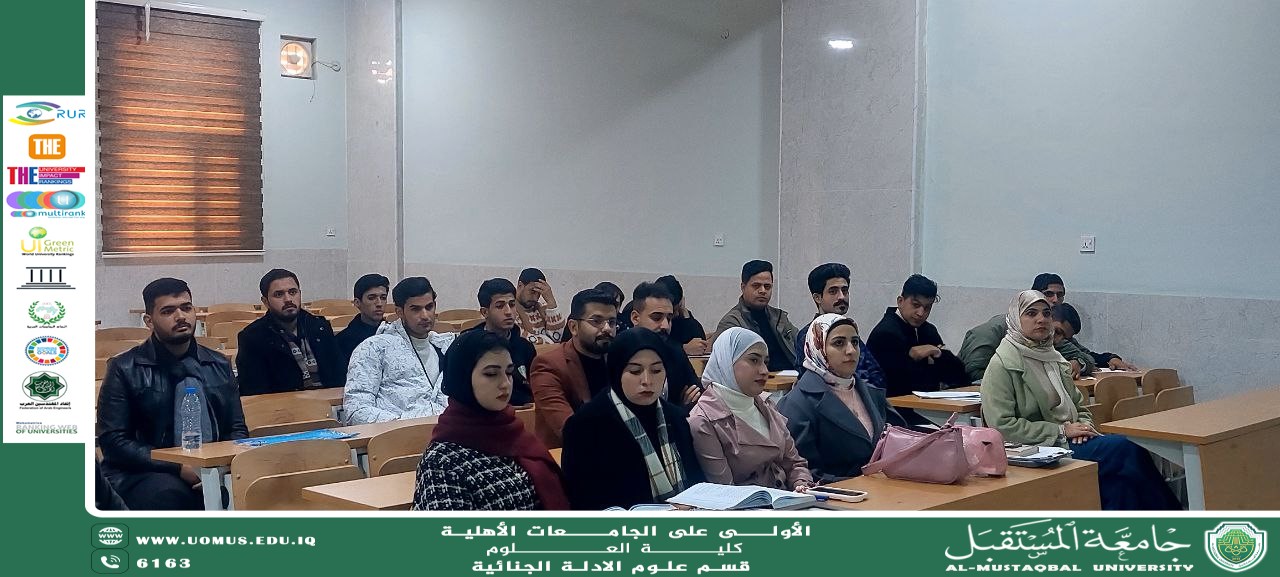
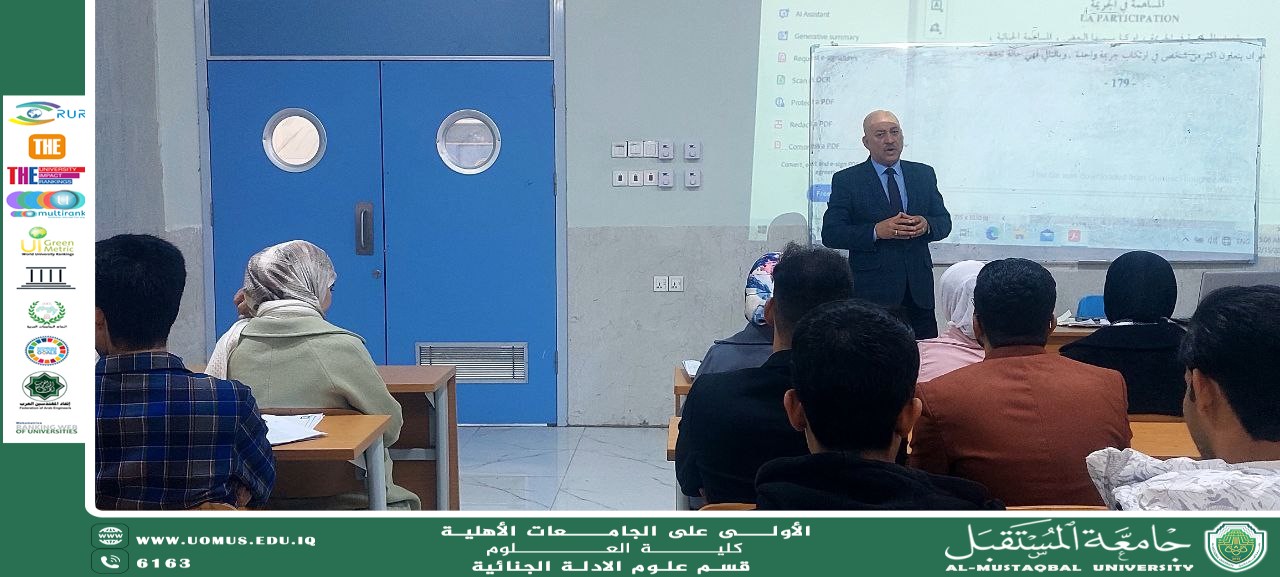
The Department of Forensic Evidence highlighted the critical role of forensic evidence in combating crime and strengthening the justice system through a scientific awareness activity that addressed modern scientific methods used in collecting and analyzing evidence, linking it to criminal incidents, and accurately identifying perpetrators.
The activity emphasized the importance of forensic evidence in supporting criminal investigations, reducing judicial errors, and enhancing public trust in legal procedures. It also underscored its role in crime prevention through early detection mechanisms and scientific analysis of criminal patterns, as well as the significance of qualified forensic professionals in upholding justice and the rule of law.
This activity contributes to achieving the Sustainable Development Goals (SDGs), particularly:
Goal 4: Quality Education, by promoting applied education and building specialized scientific capacities.
Goal 16: Peace, Justice, and Strong Institutions, by strengthening justice systems, combating crime, and promoting the rule of law.
Goal 3: Good Health and Well-being, by reducing crimes that threaten community safety and well-being.
The organizers emphasized the importance of advancing education and scientific research in forensic science due to its direct impact on community protection, security, stability, and sustainable development.
Al-Mustaqbal University – the first university in Iraq.
SDG4