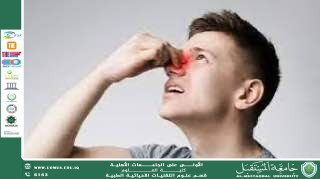
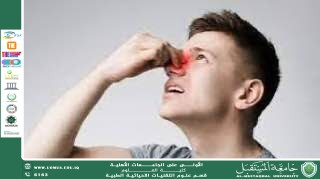
A scientific article (by Heba Salah Hadi) entitled "Nosebleeds"
Nosebleeds are bleeding from the nostrils or the inside of the nose into the throat, resulting from a rupture or tear in the tiny blood vessels lining the nasal cavity, an area rich in sensitive capillaries.
⸻
Types of Nosebleeds
1. Anterior Epistaxis:
This is the most common type of nosebleed. It originates from the front of the nasal septum and is usually easily controlled.
2. Posterior Epistaxis:
This is less common but more serious. The bleeding originates from deeper blood vessels, making it more difficult to control and requiring medical intervention.
⸻
Causes of Nosebleeds
Local Causes:
• Dry or cold air: This dries out the mucous membrane and causes blood vessels to rupture.
• Picking or forcefully blowing the nose.
• Trauma or facial injuries.
• Sinus or nasal infections.
• Prolonged use of nasal sprays.
Systemic Causes:
• High blood pressure. • Blood clotting disorders (such as hemophilia).
• Vitamin deficiencies (especially vitamin K).
• Use of blood thinners such as aspirin or warfarin.
• Chronic liver or kidney disease.
• Tumors in the nose or pharynx (rare).
⸻
First Aid for Nosebleeds
1. Have the person sit down and tilt their head slightly forward (not backward).
2. Apply pressure to the soft part of the nose (just above the nostrils) for 10-15 minutes.
3. Apply a cold compress or ice pack to the nose or the back of the neck.
4. Avoid blowing or cleaning the nose immediately after the bleeding stops.
If the bleeding lasts for more than 20 minutes, is heavy, or is caused by an injury, seek immediate medical attention.
⸻
When are nosebleeds serious?
• If they recur without an apparent cause.
• If they are severe or occur at night without warning.
• If accompanied by symptoms such as dizziness, rapid heartbeat, or general weakness.
• In the case of chronic diseases such as high blood pressure or blood disorders.
⸻
Preventing Nosebleeds
• Moisturize the nose using humidifiers or saline nasal sprays, especially in dry weather.
• Avoid picking your nose or blowing it forcefully.
• Use humidifiers at home.
• Reduce the use of nasal sprays containing corticosteroids.
• Control chronic diseases such as high blood pressure.
• See a doctor for regular nasal examinations, especially if nosebleeds are frequent.
Al-Mustaqbal University, the first university in Iraq