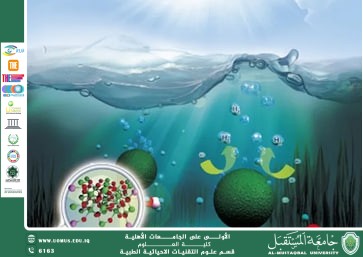
A scientific article by lecturer (M.M. Khitam Jamil Mushtaq) entitled "The effectiveness of nanomaterials in purifying polluted water"
Nanotechnology has become one of the most promising fields in wastewater treatment due to its unique properties at the atomic level. Nanomaterials such as carbon nanotubes, metal oxide nanoparticles, and silver nanoparticles offer effective solutions for removing organic and inorganic pollutants, bacteria, and heavy metals from water. This article aims to review the effectiveness of these materials, their mechanisms of action, and the challenges of their practical application.
Many regions of the world suffer from deteriorating water quality due to industrial and agricultural pollution and domestic waste. The limitations of traditional treatment technologies have led to the need for more efficient alternatives. In this context, nanomaterials offer an innovative solution thanks to their unique chemical and physical properties.
Types of Nanomaterials Used:
1. Carbon Nanotubes (CNTs):
They are characterized by a high surface area and superabsorbent capacity, making them effective in removing heavy metals such as lead and cadmium.
2. Nanomaterial Oxides:
Such as titanium oxide (TiO₂) and zinc oxide (ZnO), which are used in photocatalysis to break down toxic organic compounds in water.
3. Nanosilver:
Has antibacterial properties and is used to purify water from harmful microorganisms.
Water Purification Mechanisms Using Nanomaterials:
• Adsorption: Attracting pollutants to the surface of the nanomaterial.
• Photocatalysis: Breaking down toxic compounds using light and nanooxides.
• Microbial Killing: Destroying the cell walls of bacteria using nanoparticles.
Advantages of Nanotechnology in Water Treatment:
• High efficiency in removing micro-pollutants that are difficult to eliminate traditionally.
• Speed of treatment.
• Reduced need for chemicals.
Challenges and Limitations:
• High production cost.
• Difficulty in recovering nanomaterials after use.
• The need for further studies on long-term environmental and health impacts.
Conclusion:
Scientific studies have shown that nanomaterials represent a significant advancement in the field of wastewater treatment. Despite the challenges, they open up broad prospects for a better future in providing safe drinking water, especially in developing countries. However, further environmental and regulatory studies are necessary for the safe and effective application of this technology.
Al-Mustaqbal University, the leading university in Iraq.