Modern Construction Technologies and Their Impact on Improving Engineering Project Efficiency
Introduction
The construction sector is one of the most vital sectors in economic and urban development. With the increasing demand for fast-track projects with high quality, it has become essential to adopt modern construction technologies that keep pace with scientific and technological progress. These technologies have contributed to a qualitative shift in design methods, construction practices, and project management.
Concept of Modern Construction Technologies
Modern construction technologies refer to a set of advanced tools and methods that rely on digital technologies and advanced materials to improve structural performance, reduce errors, and increase execution speed compared to traditional construction methods.
Key Modern Construction Technologies
1. Modular Construction
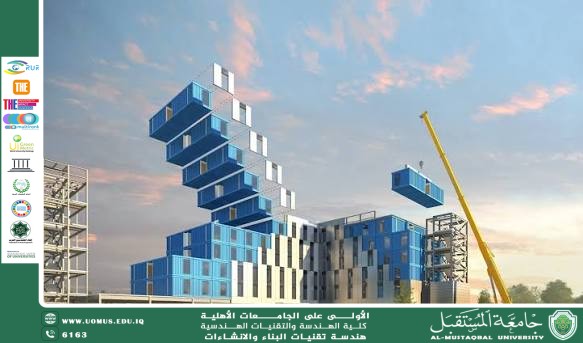
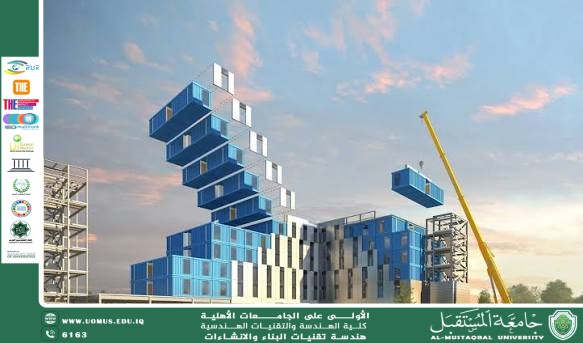
Modular construction is based on dividing the building into repetitive structural units that are manufactured off-site and then assembled at the final location. This approach offers:
Significant reduction in construction time
Better quality control
Reduced impact of weather conditions on construction activities
2. High-Performance Concrete
High-performance concrete is considered one of the most important developments in construction materials. It is characterized by high strength, low permeability, and longer service life, and it is widely used in bridges and high-rise buildings.
3. Use of Digital Technologies on Construction Sites
These technologies include Building Information Modeling (BIM), drones, and smart sensors, which contribute to:
Improved planning and monitoring
Reduced construction errors
Enhanced safety levels on construction sites
4. Smart Project Management
Smart project management relies on specialized software and artificial intelligence to organize resources, schedule activities, and predict risks, thereby improving project efficiency and reducing delays and unexpected costs.
Benefits of Implementing Modern Construction Technologies
The adoption of modern construction technologies contributes to:
Reducing the overall project duration
Lowering operational and execution costs
Improving the quality of constructed facilities
Minimizing negative environmental impacts
Enhancing occupational safety
Future Challenges
Despite their significant advantages, modern construction technologies face several challenges, including:
The need for updated regulations and standards
Lack of specialized local expertise
High costs of some advanced technologies
Limited awareness of the importance of digital transformation in construction
Conclusion
Modern construction technologies represent a fundamental step toward developing the construction sector and achieving more efficient and sustainable structures. Expanding their use requires strengthening engineering training, updating academic curricula, and encouraging scientific research and practical applications to support the future of urban development.