The role of life sciences in understanding genetic diseases and preventing them. (M.M. Howayda Nazzal Hussein)
Life sciences play a fundamental role in understanding genetic diseases and the mechanisms behind their occurrence and inheritance. These sciences focus on the study of genes, chromosomes, and DNA, which carry the genetic information responsible for both normal and abnormal traits. Through this knowledge, many previously unexplained genetic disorders have become well understood.
Advances in genetics have enabled scientists to identify genetic mutations responsible for diseases such as sickle cell anemia, hemophilia, and cystic fibrosis. Life sciences have also helped classify genetic disorders into dominant and recessive types, clarifying how they are inherited within families. This understanding has significantly improved early diagnosis and disease management.
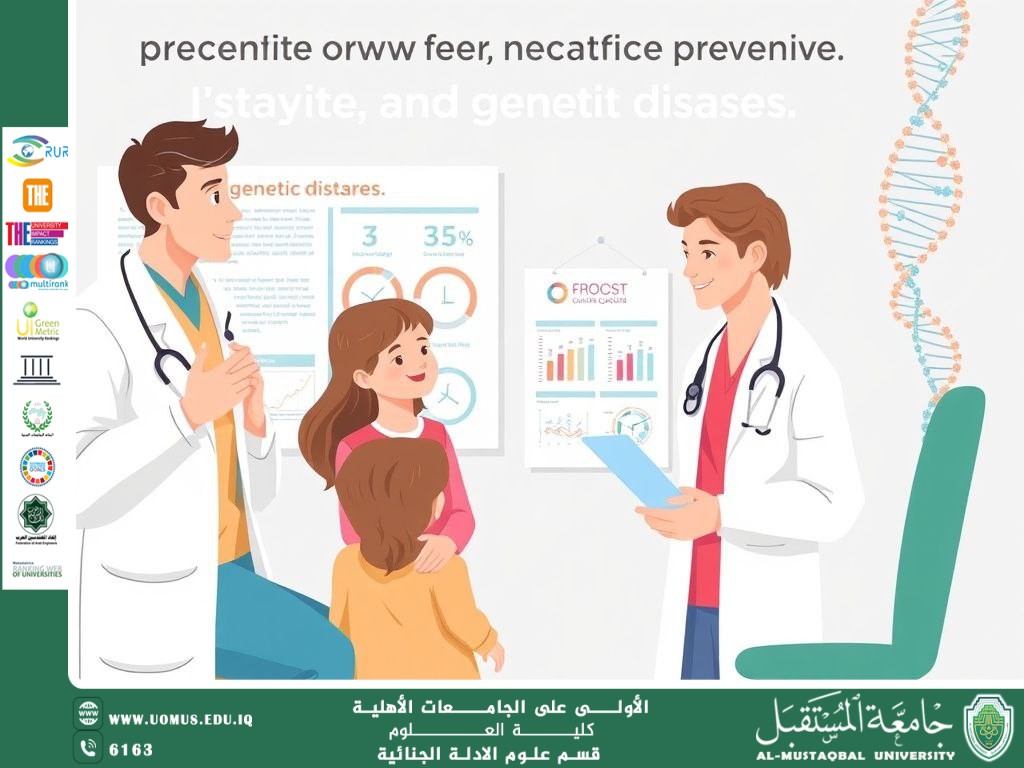
In terms of prevention, life sciences contribute through genetic screening programs, prenatal testing, and genetic counseling. These methods help reduce the incidence of genetic disorders and guide families in making informed health decisions. Moreover, modern developments such as gene therapy have opened new possibilities for treating genetic diseases at their source.
In conclusion, life sciences are essential in understanding and preventing genetic diseases, improving human health, and advancing modern medical care.
Al-Mustaqbal University – the first university in Iraq.
SDG4