Environmental balance from the perspective of life sciences.(M.M. Howayda Nazzal Hussein)
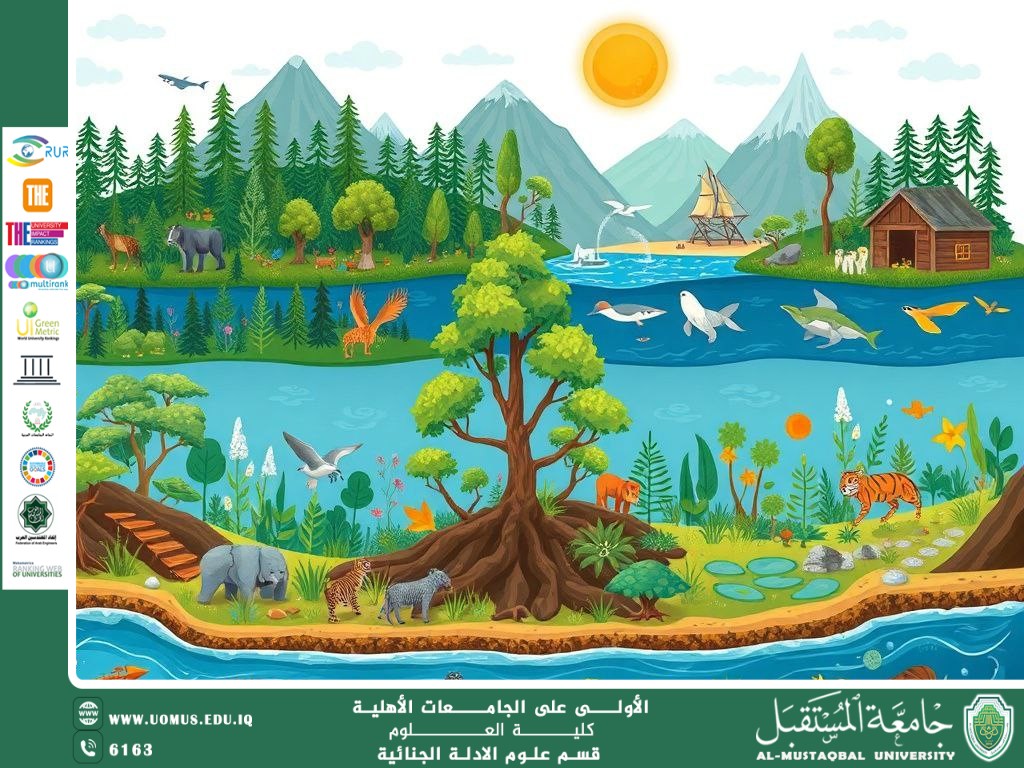
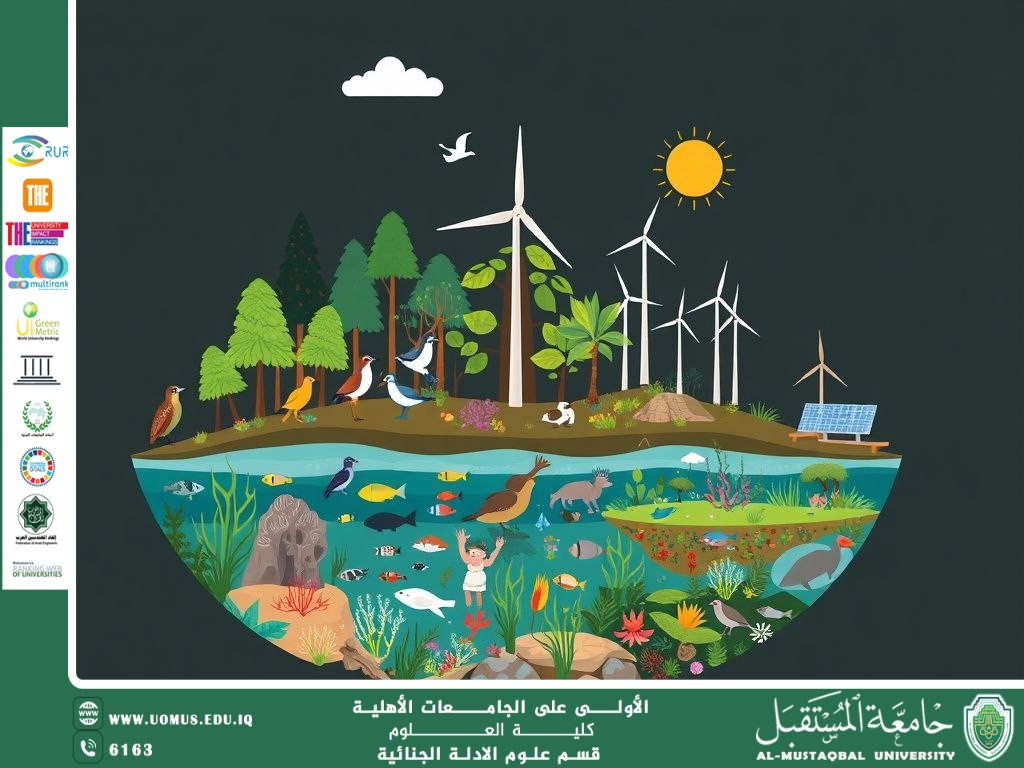
Environmental balance is a fundamental concept in life sciences, referring to the relative stability between living organisms and their surrounding environment. This balance depends on complex interactions such as food chains, nutrient cycles, and relationships between organisms and physical factors.
Life sciences explain how environmental balance is maintained through studying predator-prey relationships, producers, consumers, and decomposers. Each organism plays a specific role, and any disruption can lead to serious environmental consequences, including extinction or population explosions.
Human activities such as pollution, deforestation, and urban expansion have significantly affected environmental balance. Life sciences highlight how these actions disturb ecosystems and reduce biodiversity, emphasizing the importance of sustainable environmental management.
In conclusion, life sciences stress that maintaining environmental balance is essential for the survival of life on Earth.
Al-Mustaqbal University – the first university in Iraq.
SDG4