Article Title: Crimes of the Ba’ath Regime in Iraq and Their Impact on Human Rights Provisions
By Asst.lect : Zaid Abdul Wahab Ruzouqi
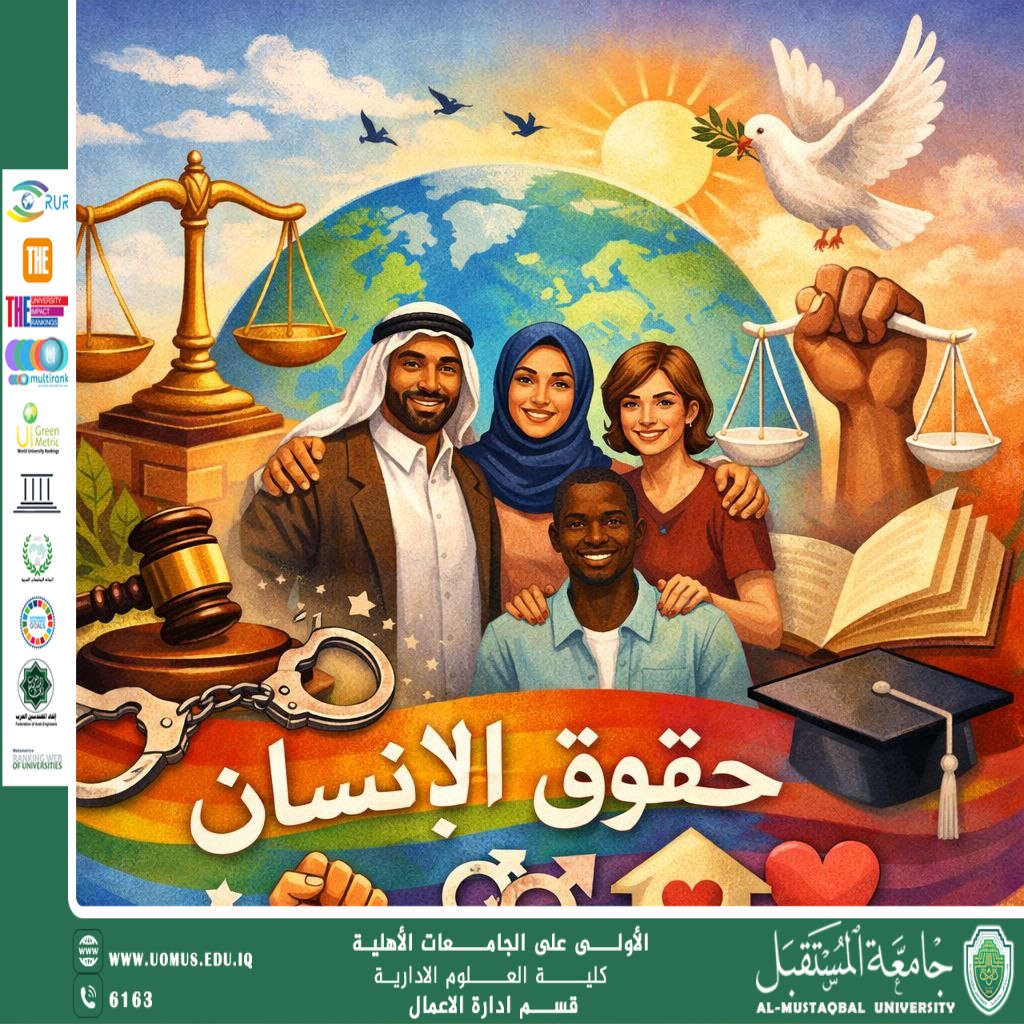
Human rights are considered fundamental principles guaranteed by international charters and national laws, as they represent the true safeguard for preserving human dignity and basic freedoms. However, these principles were severely violated during the rule of the Ba’ath regime in Iraq, which pursued a policy of oppression and authoritarianism, committing widespread crimes that constituted clear breaches of human rights provisions.
The Ba’ath regime relied on organized violence as a tool to govern the state, carrying out mass killings and physical eliminations of political opponents and civilians. It committed acts of genocide, most notably the Anfal campaigns and the Halabja massacre, in which chemical weapons were used against civilians. Additionally, the regime suppressed popular uprisings, resulting in large numbers of casualties, representing a direct violation of the right to life as stipulated in international human rights charters.
The regime’s policies were also characterized by arbitrary detention and torture in prisons and detention centers, where detainees were subjected to various forms of physical and psychological torture. Many were forced to confess under duress, and death sentences were executed following sham trials lacking the most basic guarantees of justice, in blatant violation of human rights relating to human dignity and fair trial.
Moreover, the Ba’ath regime employed enforced disappearance against thousands of citizens, with many vanishing without any knowledge of their fate. Mass graves discovered after the fall of the regime revealed the extent of these crimes, serving as tangible evidence of the severe violations committed against the Iraqi people.
The regime also violated freedom of opinion and expression by imposing strict media censorship, prohibiting independent political and intellectual activity, and criminalizing any opposition. This resulted in restrictions on public freedoms and widespread fear in society, in clear contradiction to human rights principles that guarantee freedom of thought and expression.
Additionally, the Ba’ath regime pursued policies of forced displacement and demographic change, revoked the nationality of large segments of the population, and deprived them of fundamental rights. This constitutes a blatant violation of human rights concerning nationality, movement, and residence.
The crimes committed by the Ba’ath regime are legally classified as crimes against humanity and are not subject to statutes of limitation under international law. Several figures from the former regime have been convicted by competent courts based on national laws and relevant international conventions.
In conclusion, the crimes of the Ba’ath regime represent a systematic and severe violation of human rights provisions, highlighting the importance of promoting a culture of human rights, establishing the rule of law, and ensuring that such crimes are never repeated, thereby achieving justice for victims and preserving human dignity.
Al-Mustaqbal University ranks first among private universities