Article Title: The Future of Agriculture in Iraq in Light of Water Scarcity
By Prof. Dr. Khalid Hussein Al-Marzouk
Iraq, the cradle of agricultural civilizations, faces an existential challenge in the form of escalating water scarcity, which has, at times, reached the level of actual shortage. This crisis results from multiple factors, the most prominent being climate change, declining water levels in the Tigris and Euphrates rivers due to dams and water policies in neighboring countries, and inefficient water use in the agricultural sector, which consumes the largest share of available water resources.
Water scarcity in the Tigris and Euphrates rivers is the result of three interrelated main factors:
1. Regional Factors: Dams and projects in upstream countries contribute significantly, as over 70% of Iraq’s water resources originate outside its borders (Turkey, Iran, and Syria). Upstream projects are the largest and most direct cause of reduced water inflow. Turkey, in particular, has implemented a series of massive dams on the Tigris and Euphrates rivers under the Southeastern Anatolia Project (GAP), such as the Ataturk, Keban, and Karakaya dams on the Euphrates, and the Ilisu Dam on the Tigris, which is the largest of its kind. Its operation and filling have led to a sharp reduction in Iraq’s share of Tigris water. Furthermore, Turkey considers the Tigris and Euphrates as transboundary rivers rather than international rivers, giving it the right to “optimally use” its water resources without adhering to international agreements guaranteeing water shares for Iraq and Syria.
Iran has also built numerous dams on tributaries of the Tigris feeding Iraq (such as the Lesser Zab, Karun, and Karkheh rivers) and diverted some of their courses, significantly reducing the water quantities reaching Iraq.
2. Climatic and Environmental Factors: Iraq is among the countries most affected by climate change. In recent years, unprecedented declines in rainfall and snowfall in Turkey and Iran (the rivers’ sources), as well as within Iraq, have led to natural water deficits in the rivers. Rising temperatures worldwide and regionally, due to ozone layer depletion, have increased evaporation from rivers, lakes, and reservoirs, wasting large amounts of stored water and accelerating desertification. Drought expands arid lands, increasing pressure on the remaining water resources for irrigation and agriculture.
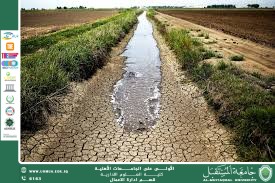
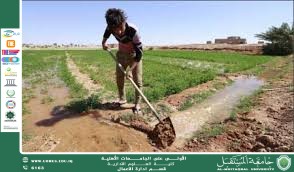
3. Internal Factors (Mismanagement and Inefficient Use): Despite the importance of external and climatic factors, poor water management within Iraq has exacerbated the crisis. Traditional irrigation methods are inefficient, with water losses estimated at 50–60% in some areas. The deterioration of infrastructure, including old and unlined canals and irrigation networks, causes massive water losses due to seepage and evaporation. Additionally, high levels of pollution from untreated sewage and industrial and agricultural waste further reduce water suitability for human and agricultural use.
The future of agriculture in Iraq depends critically on its ability to adapt to this new reality by adopting a comprehensive national strategy focused on the efficient management of water resources and the application of modern, water-saving agricultural technologies. To overcome the bottleneck, Iraq must implement an integrated set of scientific, technological, and managerial solutions, including modern irrigation systems:
Drip Irrigation: Delivers water slowly and directly to plant roots through perforated pipes, reducing evaporation and runoff, ideal for orchards and vegetables.
Sprinkler Irrigation: Sprays water in a rainfall-like manner, minimizing water losses compared to surface irrigation.
Hydroponics: Cultivates plants without soil in nutrient-rich water solutions, consuming far less water while allowing year-round production, reducing dependency on seasonal patterns, and enabling the development of drought- and salinity-resistant crops.
Transitioning from traditional surface irrigation to modern water-efficient systems is essential. The Ministry of Agriculture aims to significantly reduce water use (up to 60% in some plans) while maintaining and improving agricultural productivity.