
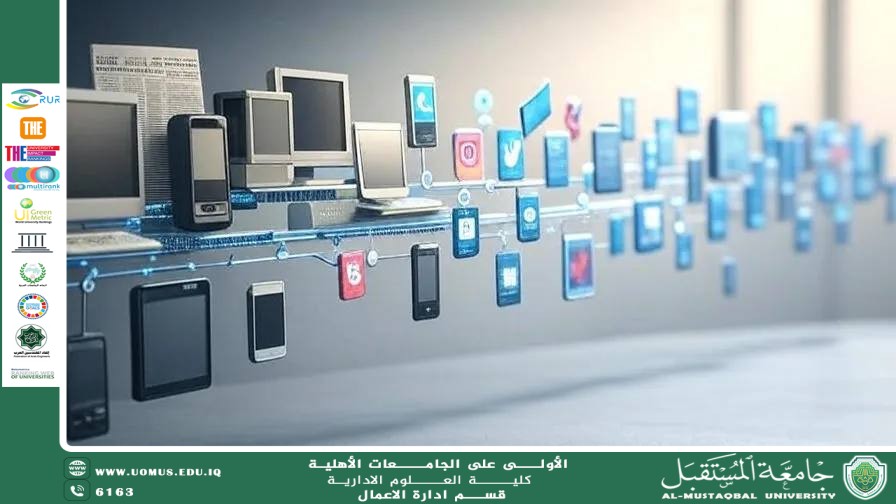
Digital Marketing in 2026: Scientific Transformations and Future Trends
By Assistant Lecturer: Anmar Thamer Ubaid Al-Sultani
Digital marketing is one of the fastest-evolving business fields of the 21st century, directly interacting with technological advancements and digital consumer behavior. By 2026, digital marketing is no longer just a promotional tool; it has become an ecosystem involving technology, data, content, and human experience, addressing issues such as privacy, artificial intelligence (AI), and immersive experiences.
1. Definition and Importance of Digital Marketing
Digital marketing involves using digital channels and platforms to reach target audiences, build brand awareness, and achieve sales objectives. It includes search engine marketing (SEO), social media, email, digital advertising, and e-commerce. Digital marketing relies on real-time data analytics to make decisions and optimize return on investment (ROI).
Its importance in 2026:
Direct linkage between data and consumer behavior.
Highly precise personalization of advertising messages.
Small businesses’ ability to compete globally at lower costs.
2. Artificial Intelligence as a Key Driver
AI is the most influential element driving digital marketing in 2026:
a. Hyper-Personalization:
AI can analyze consumer behavior and dynamically adjust advertising content according to individual needs.
Practical example: Ads automatically changing in real-time based on user behavior.
b. Content and Analytics Automation:
AI tools generate texts, reports, and campaigns at unprecedented speed, allowing marketers to focus on strategy rather than routine tasks.
c. Market Behavior Prediction:
Advanced AI models use big data to predict market trends and make data-driven decisions.
3. Short-Form Video and Immersive Experiences
Short-form video as a strategic tool:
Platforms like Reels and TikTok have become essential for quickly capturing attention and achieving wide organic reach.
Augmented Reality (AR) and Interactive Experiences:
AR allows consumers to digitally try products before purchase (e.g., clothes or furniture in their real environment), a technology expected to expand in 2026.
4. Voice Search Optimization and Platform Integration
Voice Search & SEO:
With widespread adoption of voice assistants like Siri and Alexa, optimizing content for voice search has become crucial for search engine ranking.
AI-driven SEO:
Modern digital marketing focuses on user experience (E-E-A-T) and long-form specialized content that provides immediate, clear answers to audience questions.
5. Data and Privacy
First-Party Data Importance:
As reliance on cookies declines, direct customer data has become essential for behavior analysis and precise targeting.
Privacy and Regulation:
Digital marketing in 2026 faces regulatory challenges related to consumer data protection, requiring marketers to adopt transparent and secure data practices.
6. Human Experiences and Digital Communities
User-Generated Content (UGC):
UGC gains importance over traditional advertising because it enhances trust and credibility between audiences and brands.
Focus on Communities:
Digital communities, such as forums and groups, are more valuable for sustaining engagement and building loyalty compared to regular followers.
7. Opportunities and Challenges in the Arab Market
Arabic content gap:
Despite the growing number of Arabic-speaking users, digital content in Arabic remains limited, offering marketers a huge opportunity to create culturally relevant content.
Smaller budgets and educational needs:
Arab companies invest less in digital marketing than Western counterparts, presenting opportunities for early adopters to implement innovative strategies at lower costs.
Conclusion:
By 2026, digital marketing becomes a dynamic system integrating AI, advanced data, interactive content, and human experiences. Marketing will go beyond merely promoting products, evolving into the art of behavior analysis, experience innovation, and delivering real value to consumers.
Success in this era requires a combination of strategic vision, technical agility, and attention to the human culture of consumers.
Al-Mustaqbal University ranks first among private universities